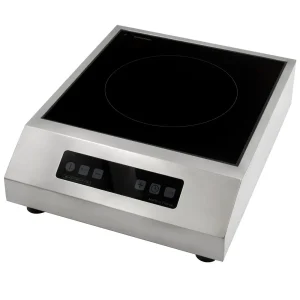
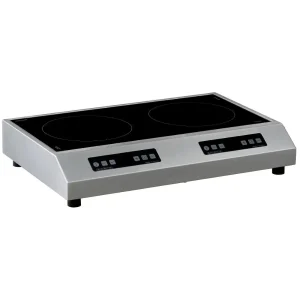
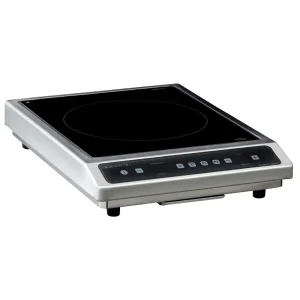
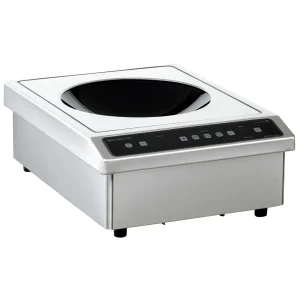
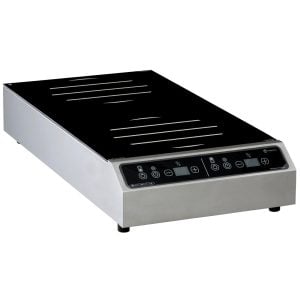
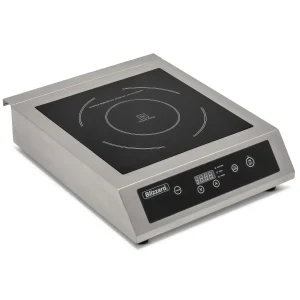
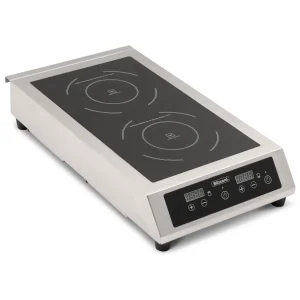
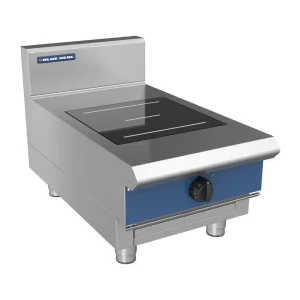
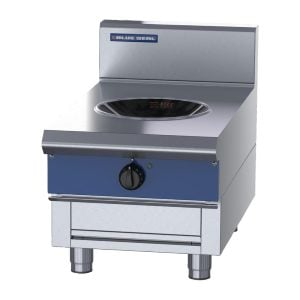
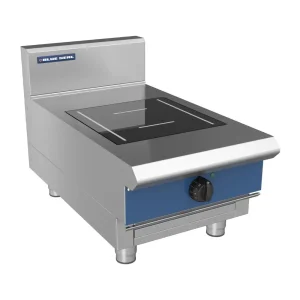
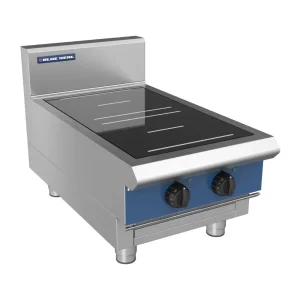
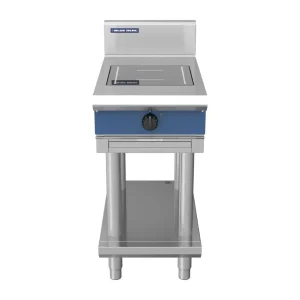
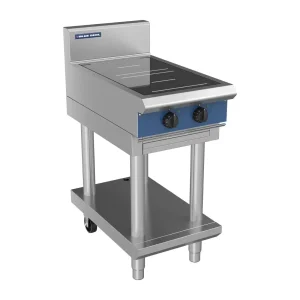
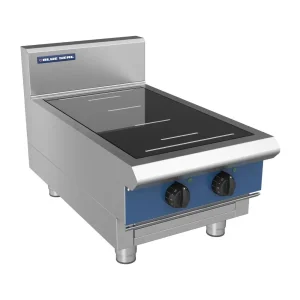
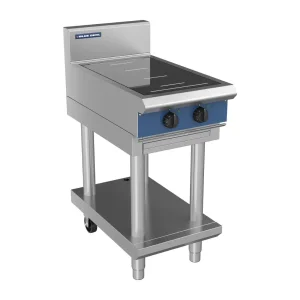
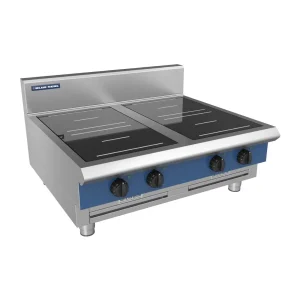
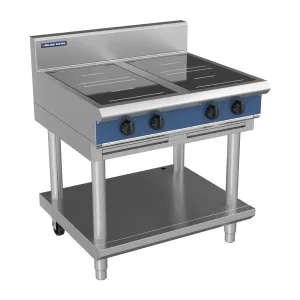
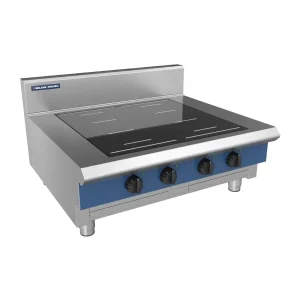
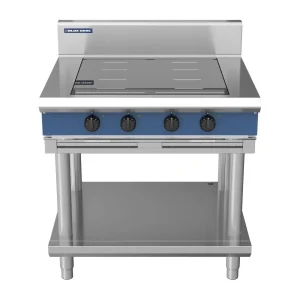
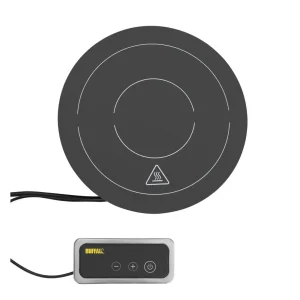
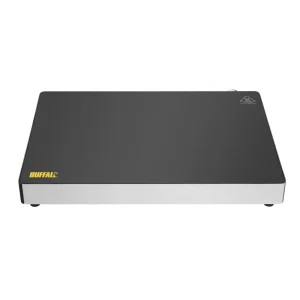
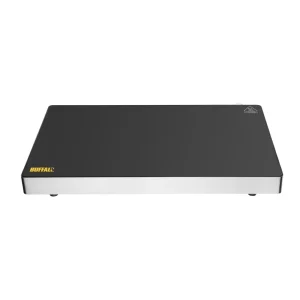
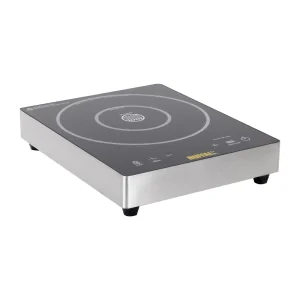
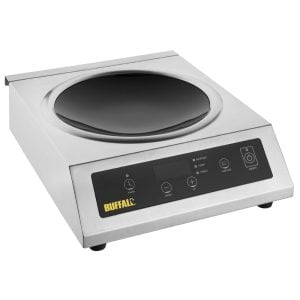
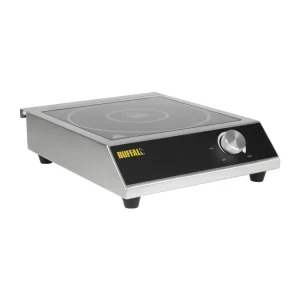
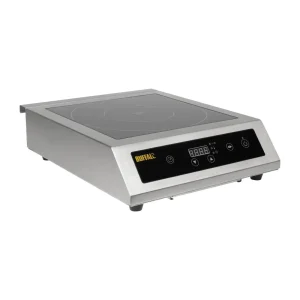
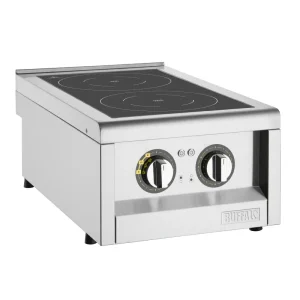
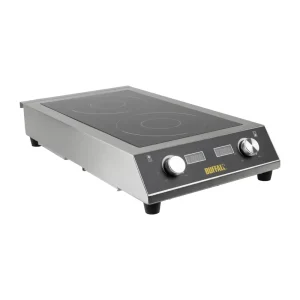
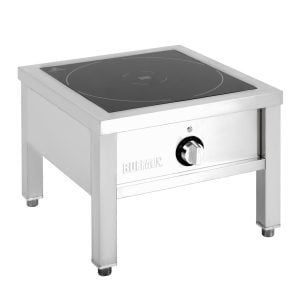
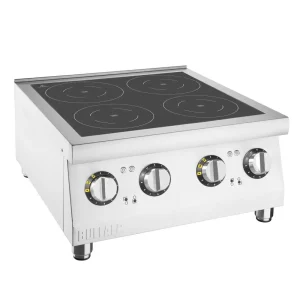
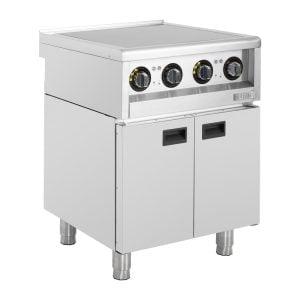
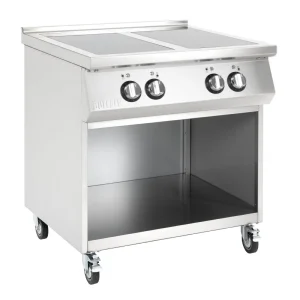
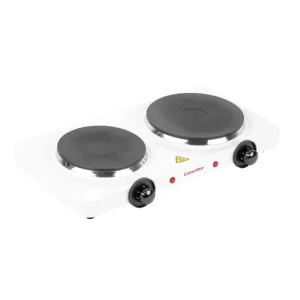
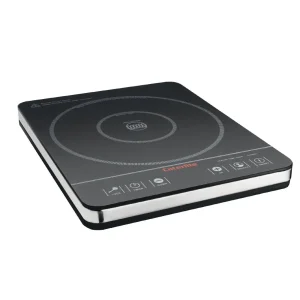
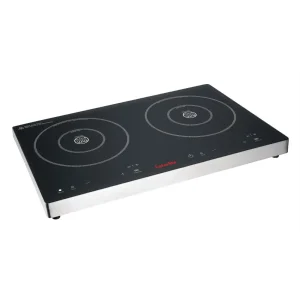
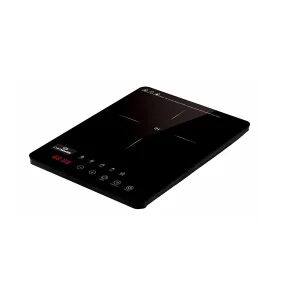
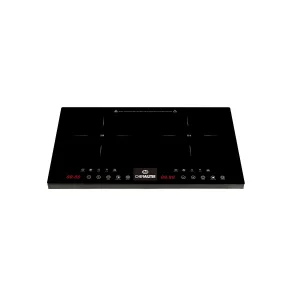
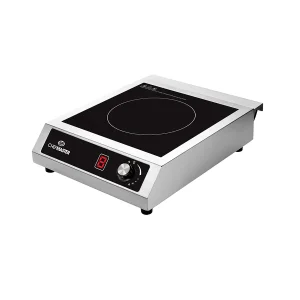
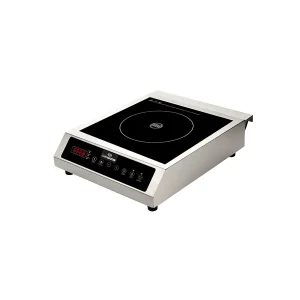
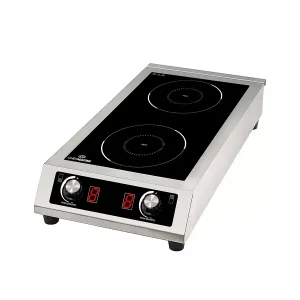
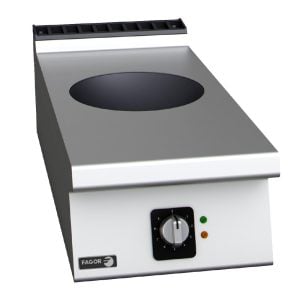
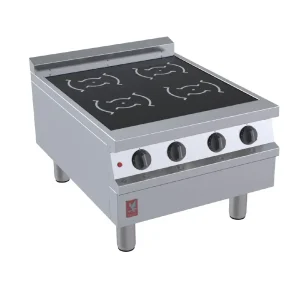
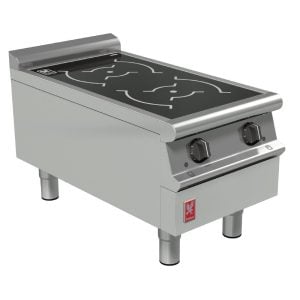
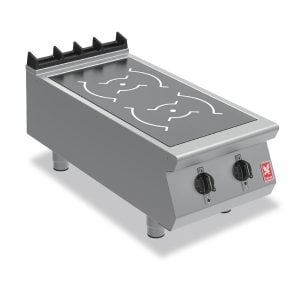
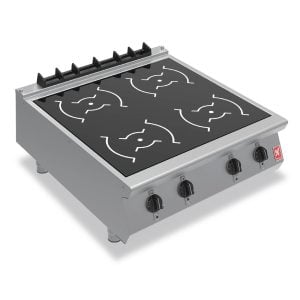
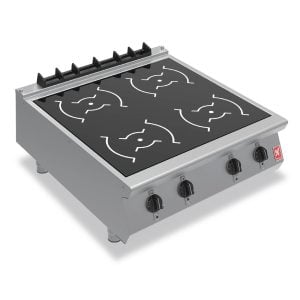
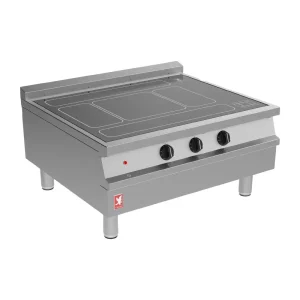
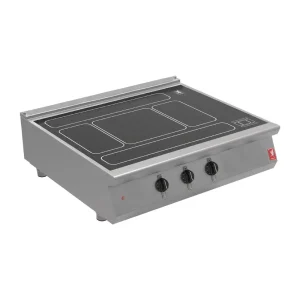
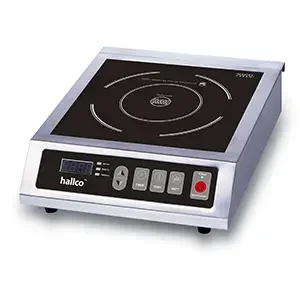
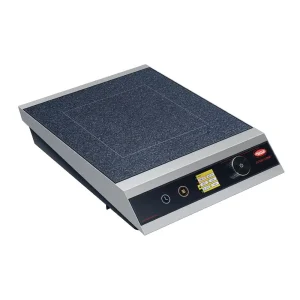
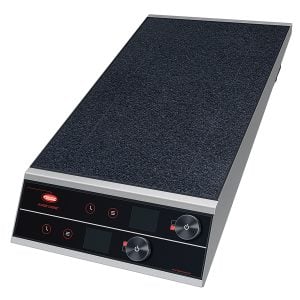
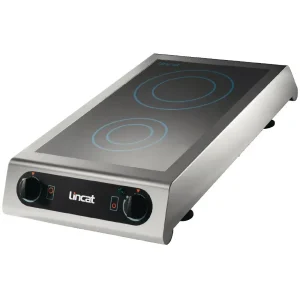
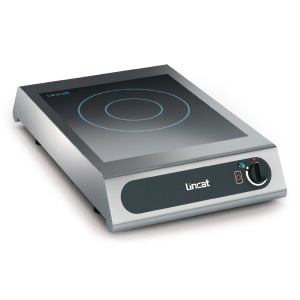
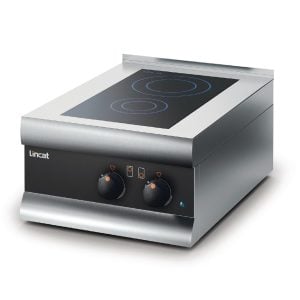
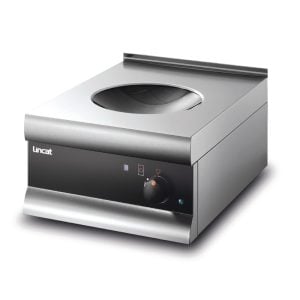
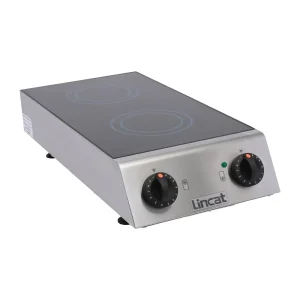
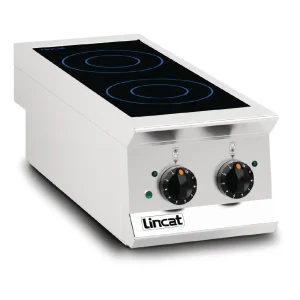
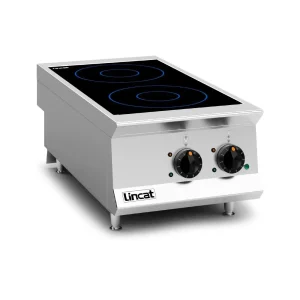
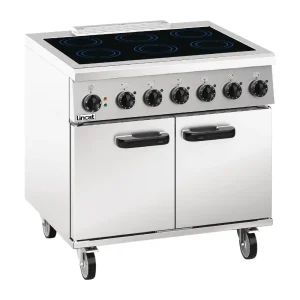
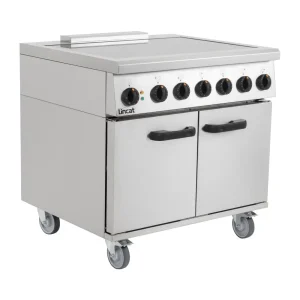
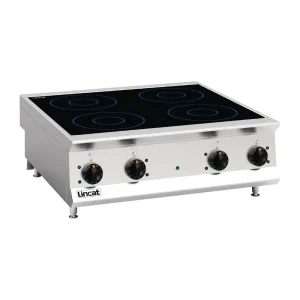
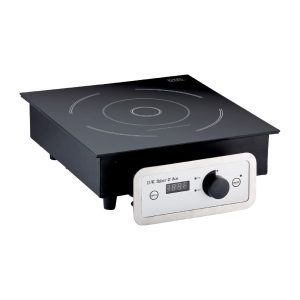
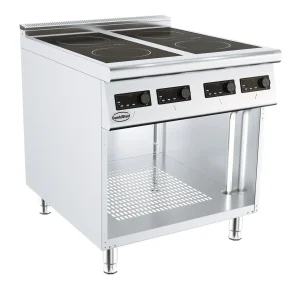
An induction hob uses electromagnetic energy to heat pans directly rather than heating a plate or flame, giving near-instant response and a cool-to-touch surface, popular in modern pub, café and hotel kitchens wanting faster cooking with lower ambient kitchen heat and reduced fire risk. It’s often the choice for newer kitchen fit-outs prioritising energy efficiency and staff safety.
Commercial induction hobs are usually single or double-zone countertop units rated 3-5kW per zone, running on a 13A single-phase supply for smaller units or three-phase for multi-zone free-standing ranges. Look for a temperature range up to around 240°C, a flat ceramic-glass cooking surface, 304 stainless steel surrounds, and note that induction requires ferrous (magnetic) cookware to work — existing aluminium or copper pans may not be compatible without replacement.
Why choose induction over gas or electric for a kitchen refit?
Induction heats and cools faster than gas or standard electric, keeps the surrounding kitchen cooler, and reduces open-flame fire risk, though it requires induction-compatible pans and reliable electrical capacity.
Does induction cooking need special pans?
Yes — induction only works with ferrous (magnetic) cookware such as cast iron or certain stainless steel pans, so kitchens switching from gas may need to replace some or all of their pan stock.
Stocked brands span Blue Seal, Buffalo, Falcon and Lincat, suiting modern pub, cafe and hotel kitchen refits.
If you have any questions about our products, then please get in touch.