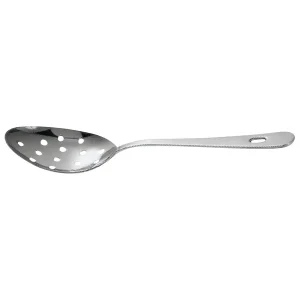
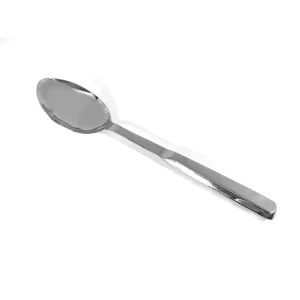
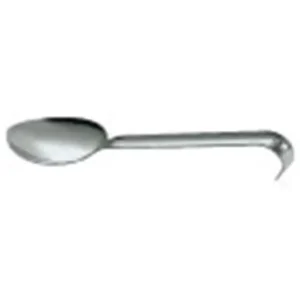
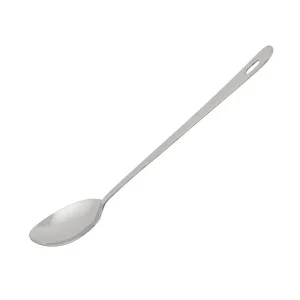
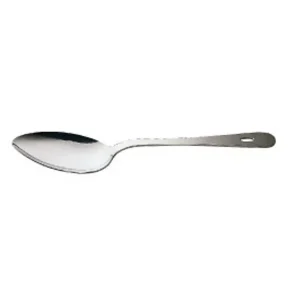
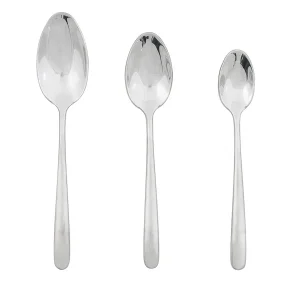
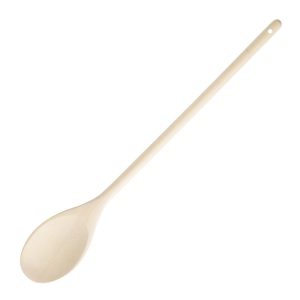
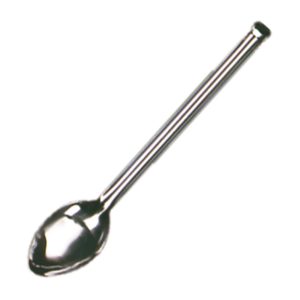
Kitchen spoons cover solid serving and cooking spoons used for stirring, mixing and plating across pub, cafe, hotel and care home kitchens. Stainless steel spoons are the commercial standard for heat resistance and full dishwasher safety, while nylon or silicone-headed spoons (heat-resistant to around 200-220°C) protect non-stick cookware from scratching. The main buying consideration is head material against your cookware and how much direct hob-side heat the spoon will face.
Kitchen spoons are chosen by head material and handle length. Stainless steel solid and serving spoons are the commercial standard for stirring stockpots and heavy-duty mixing, taking direct hob heat without deforming. Nylon or silicone-headed spoons, heat-resistant to around 200-220°C, protect non-stick and coated cookware from scratching, so many kitchens run both. Handle length matters for reach and safety: longer 35-40cm-plus spoons keep hands clear of heat and reach the base of deep stockpots, while 25-30cm spoons suit everyday pan work. Slotted heads drain liquid when lifting solids, and one-piece designs wash down most hygienically. The main consideration is matching head material to your cookware and how much hob-side heat the spoon will face. Used across pub, café, hotel, restaurant and care-home kitchens.
Should I use a metal or nylon spoon with non-stick pans?
Nylon or silicone spoons are safer for non-stick pans since metal spoons can scratch the coating over time, though stainless steel remains the better choice for stockpots and heavy-duty stirring.
What length spoon is best for large stockpots?
Longer spoons, often 35-40cm-plus, keep hands further from heat and reach the base of deep stockpots, while shorter spoons around 25-30cm suit everyday pan work.
If you have any questions about our products, then please get in touch.