
Why this rolling pin earns its place
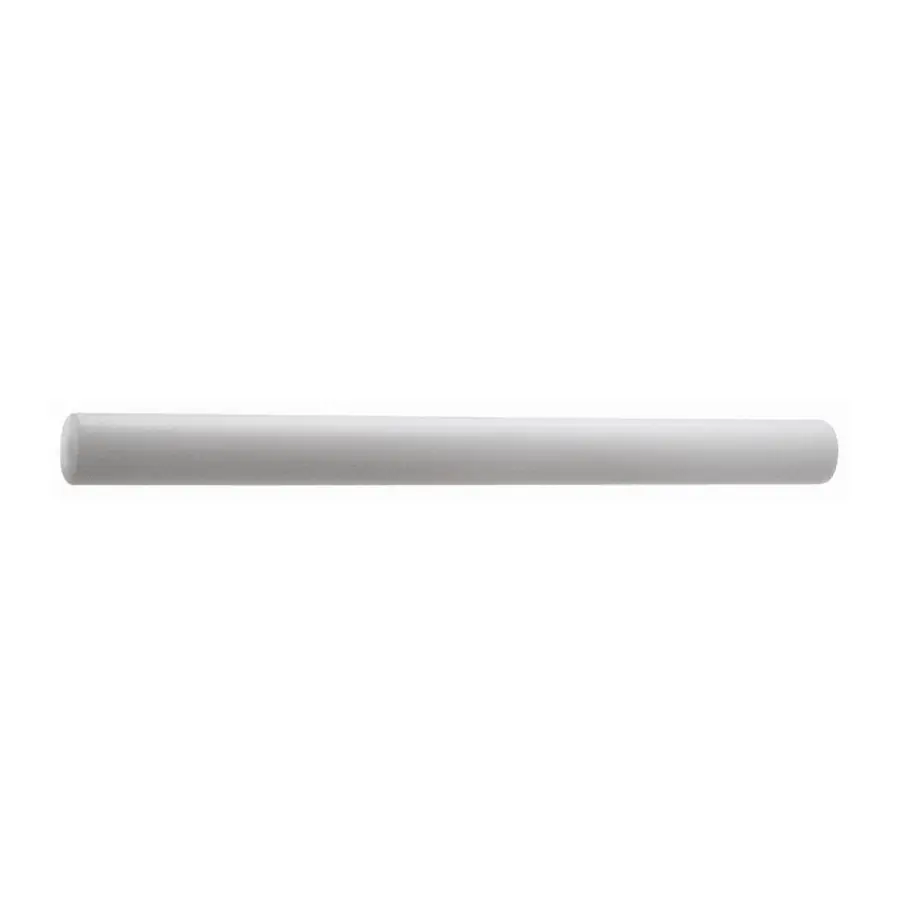
Thirty-six centimetres is the length most kitchens end up reaching for. It spans a decent sheet of pastry in two or three passes without becoming unwieldy on a small round, so one pin covers the day — lining a dish in the morning, cutting biscuits at ten, capping a batch of pies before service. The 4.5 cm barrel takes a fair bite on each pass; roll from the centre out, quarter-turn the dough, and go again, and the sheet comes out even rather than wedged thicker at one end. Even sheets are not a presentation point, they are a timing point: uneven pastry browns at different rates and part of the tray is always wrong.
Polyethylene earns its place through the wash. It is non-porous, so water, fat and flour stay on the surface instead of soaking in, and the pin comes clean with hot water and a scrub without holding onto the last dough. There is no seasoning or oiling to keep up with, and nothing to swell, crack or lift a grain the way timber does once it has been washed enough times. Keep it clear of hot surfaces, dry it properly, and give it a shelf or a hook where it will not roll off onto a tiled floor.


