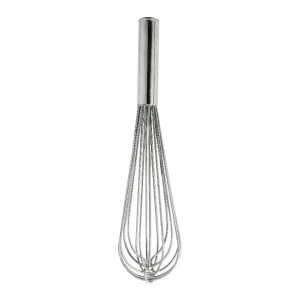
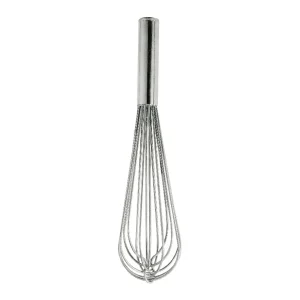
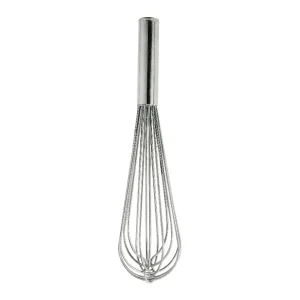
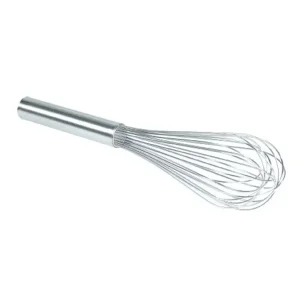
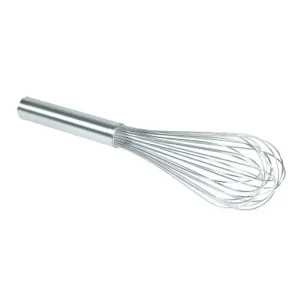
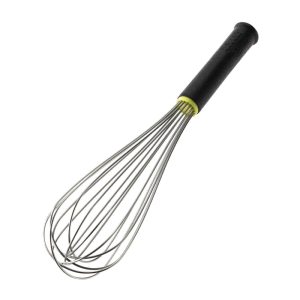
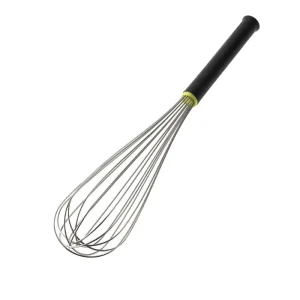
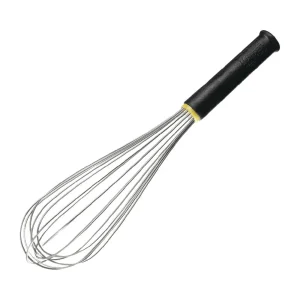
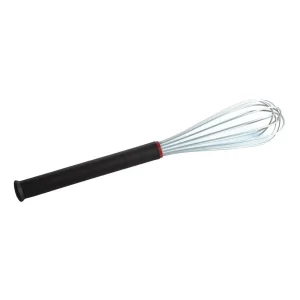
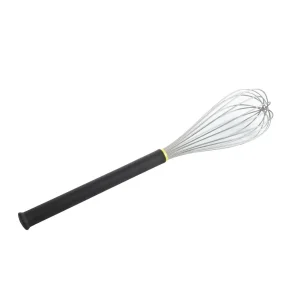
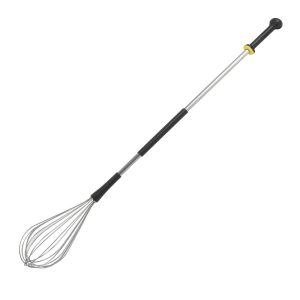
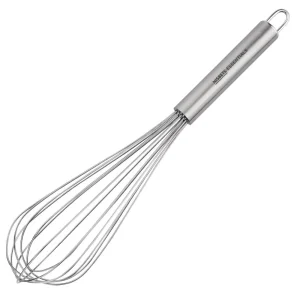
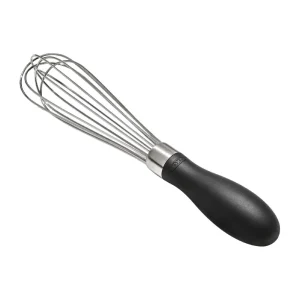
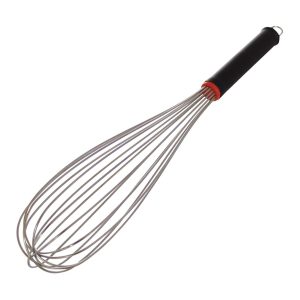
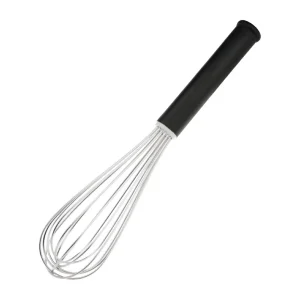
Whisks are wire-loop tools used to beat, aerate and blend sauces, eggs, batters and cream, a staple in bakery, sauce and prep sections across cafes, pubs, hotels and care home kitchens. Stainless steel wire whisks are standard for durability and dishwasher safety, while silicone-coated whisks (heat-resistant to around 220°C) protect non-stick pans when whisking sauces directly in the pan. The main buying consideration is wire count and stiffness: balloon whisks with more, finer wires aerate egg whites and cream better, while fewer, stiffer wires suit heavier sauces and batters.
Whisks are chosen by shape, wire count and stiffness against the task. Balloon whisks have a rounded head and more, finer wires to trap air fast, making them the standard for whipping egg whites, cream and light batters, while narrow French whisks and fewer, stiffer wires give more control in sauces, roux and thicker batters. Flat coil whisks reach into the corners of a pan for gravy and sauce work. Stainless steel wire is the commercial standard for durability and dishwasher safety, while silicone-coated whisks (heat-resistant to around 220°C) protect non-stick pans when whisking sauces directly over heat. A sealed, one-piece handle-to-wire join avoids food and water traps. The main buying consideration is wire count and stiffness against the mix. Used across bakery, sauce and prep sections in cafés, pubs, hotels and restaurants.
What type of whisk is best for whipping egg whites or cream?
A balloon whisk, with its rounded shape and higher wire count, traps more air and is the standard choice for whipping egg whites, cream and light batters.
Can I use a metal whisk in a non-stick saucepan?
A silicone-coated whisk is safer for non-stick pans since standard wire whisks can scratch the coating, so many kitchens keep a silicone whisk specifically for sauce work done directly in non-stick cookware.
If you have any questions about our products, then please get in touch.