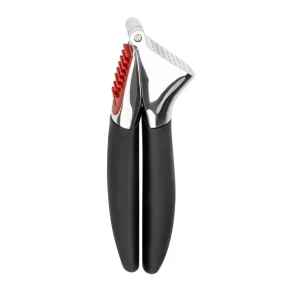
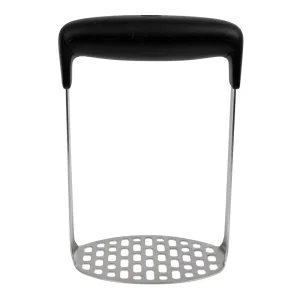
Potato mashers and ricers are used to break down cooked potato and root veg into mash or smooth puree, common in pub kitchens, care homes and hotels serving mash as a regular side. Stainless steel construction is standard for dishwasher safety and durability under repeated heavy use, with ricers producing a smoother, lump-free finish than a traditional masher head. The main buying consideration is texture output: a masher gives a rustic mash, while a ricer produces a fine, smooth result closer to piped or fine-dining presentation.
Potato mashers and ricers are chosen by the mash texture you need. A traditional masher — with a perforated plate or wavy grid head — gives a quick, rustic mash, while a ricer forces cooked potato through fine holes for a smooth, lump-free finish closer to piped or fine-dining presentation. Stainless steel is the commercial standard for dishwasher safety and durability under repeated heavy use, and a reinforced head and handle stand up to batch mashing in stockpots. For very high volumes, a ricer or a mixer attachment gives more consistent results than hand-mashing. The main buying consideration is texture output against your menu — rustic masher versus smooth ricer. Used across pub kitchens, care homes, hotels and restaurants serving mash and purées.
A ricer forces potato through small holes for a fine, lump-free result, while a traditional masher gives a quicker but slightly coarser, more rustic texture.
Can a potato masher handle large batch quantities?
Heavy-duty stainless steel mashers with reinforced heads are built for batch mashing in stockpots, but very large volumes are often better handled with a ricer or a dedicated mixer attachment for consistency.
If you have any questions about our products, then please get in touch.