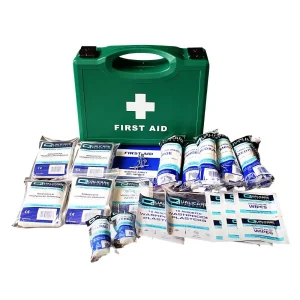
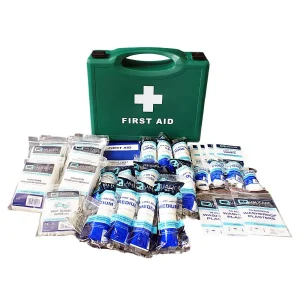
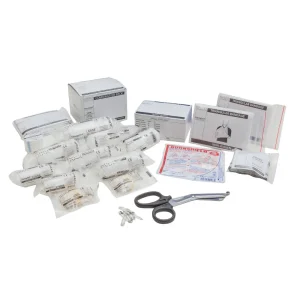
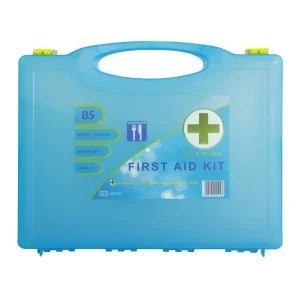
A first aid kit for commercial kitchens is a wall-mounted or portable case stocked with dressings, plasters, eyewash and burns treatment sized for the number of staff on site, as required under UK workplace health and safety regulations. Pubs, cafés, hotel kitchens, takeaways and care home catering teams all need one within easy reach of hobs, fryers and prep areas. The key buying consideration is kit size against headcount, plus whether burns gel and eyewash pods are included for hot-surface environments.
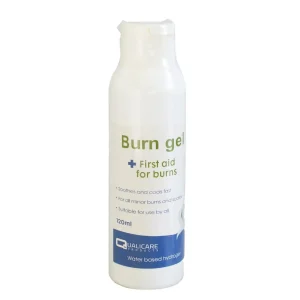
First aid provision for catering is specified against the current BS 8599-1 workplace standard and staff headcount, with small, medium and large kits scaled to the number of people on site. Catering-specific kits add a burns module — hydrogel dressings and burn gel sachets — plus blue detectable plasters, which are visible in food and metal-detectable if one is lost during prep. Eyewash stations with sterile saline pods handle splashes from cleaning chemicals. Kits come wall-mounted in a durable case or as a grab-bag for mobile and outside catering. Contents carry expiry dates, so a restock check belongs in routine kitchen management. Used across restaurants, takeaways, pubs, hotels, schools and care home kitchens.
What size first aid kit do I need for a commercial kitchen?
HSE guidance suggests a small kit (10-person) for low-risk sites under 25 staff and a large kit (20-50 person) for busier kitchens; catering environments with fryers and hobs are generally treated as higher-risk, so many operators step up a size.
Do I need a specific burns kit near fryers and ovens?
Yes — a dedicated burns module with hydrogel dressings and burns spray should sit within a few steps of any fryer, griddle or oven, separate from the general first aid box, since scalds and burns are the most common catering injury.
How often should kit contents be checked?
Check and restock monthly as a minimum, and after any use, since dressings and eyewash pods have expiry dates and go out of date faster in warm kitchen environments.
If you have any questions about our products, then please get in touch.