



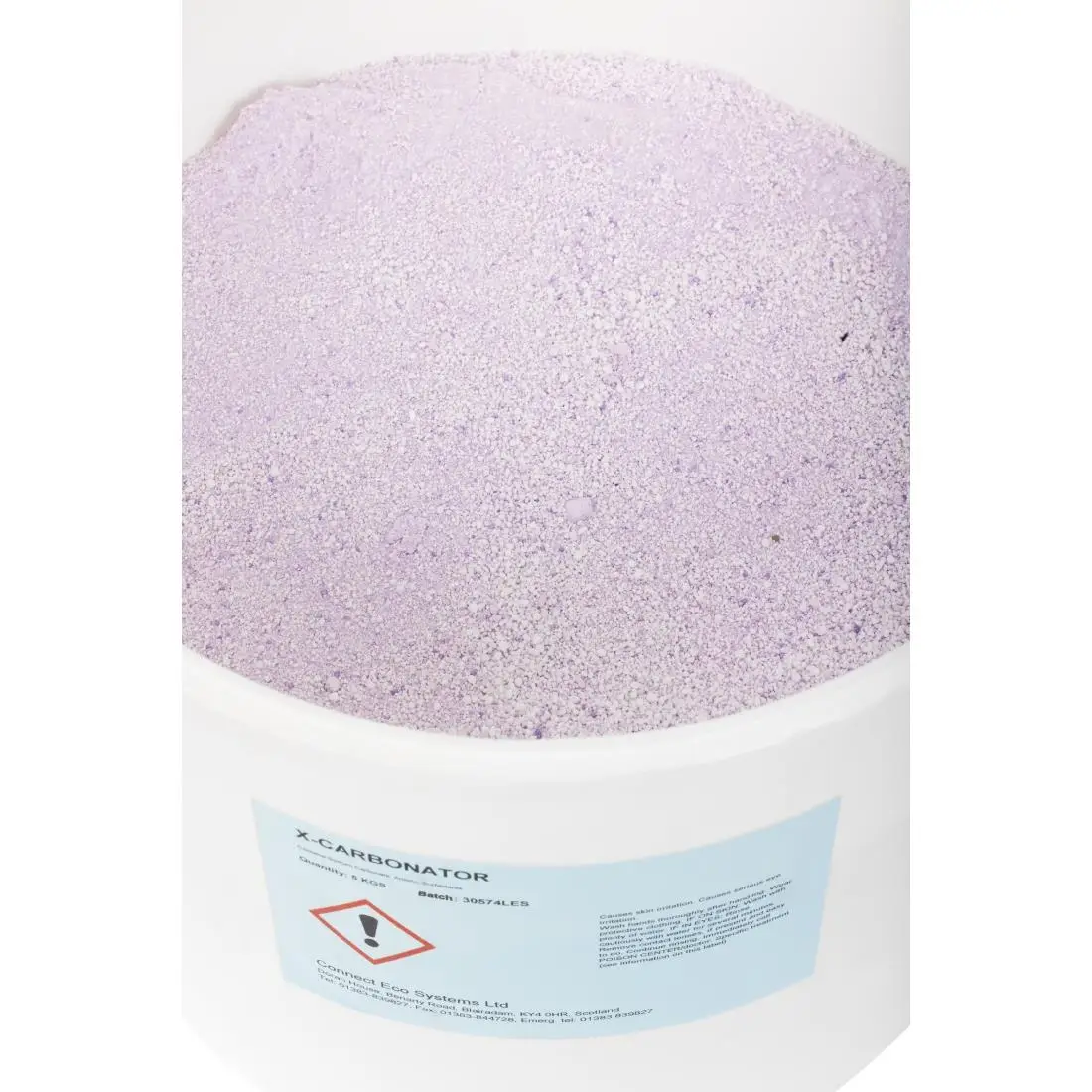


Why this one earns its place
Xcarbonator Decarboniser Powder is designed for use in an Xcarbonator decarbonising unit, tackling the stubborn, baked-on grease and grime that builds up on pots, pans, utensils and extraction filters over heavy use. Being non-caustic, it does the same soaking job as a traditional caustic decarboniser tank without the risk of damaging the equipment being cleaned.
One 5kg bag makes up to 100 litres of solution at a 5% dilution rate, so a single bag covers a substantial soak tank volume before it needs replacing. At that dilution the solution is built to be both cost-effective and long-lasting in the tank, rather than needing constant topping up.
The formula is powerful enough to remove tough grease, grime and baked-on debris from heavily soiled catering equipment, while the non-caustic chemistry protects the pots, pans and filters going through it from the corrosion damage a caustic alternative can cause over repeated soaks. As with any decarbonising powder, it’s classed as an irritant, so gloves and eye protection are recommended when handling and mixing it.
Supplied as a 5kg bag of powder.
What each use really costs
Worked out from today’s price and the pack as sold.
Stated figures and current price only — not an invented saving.
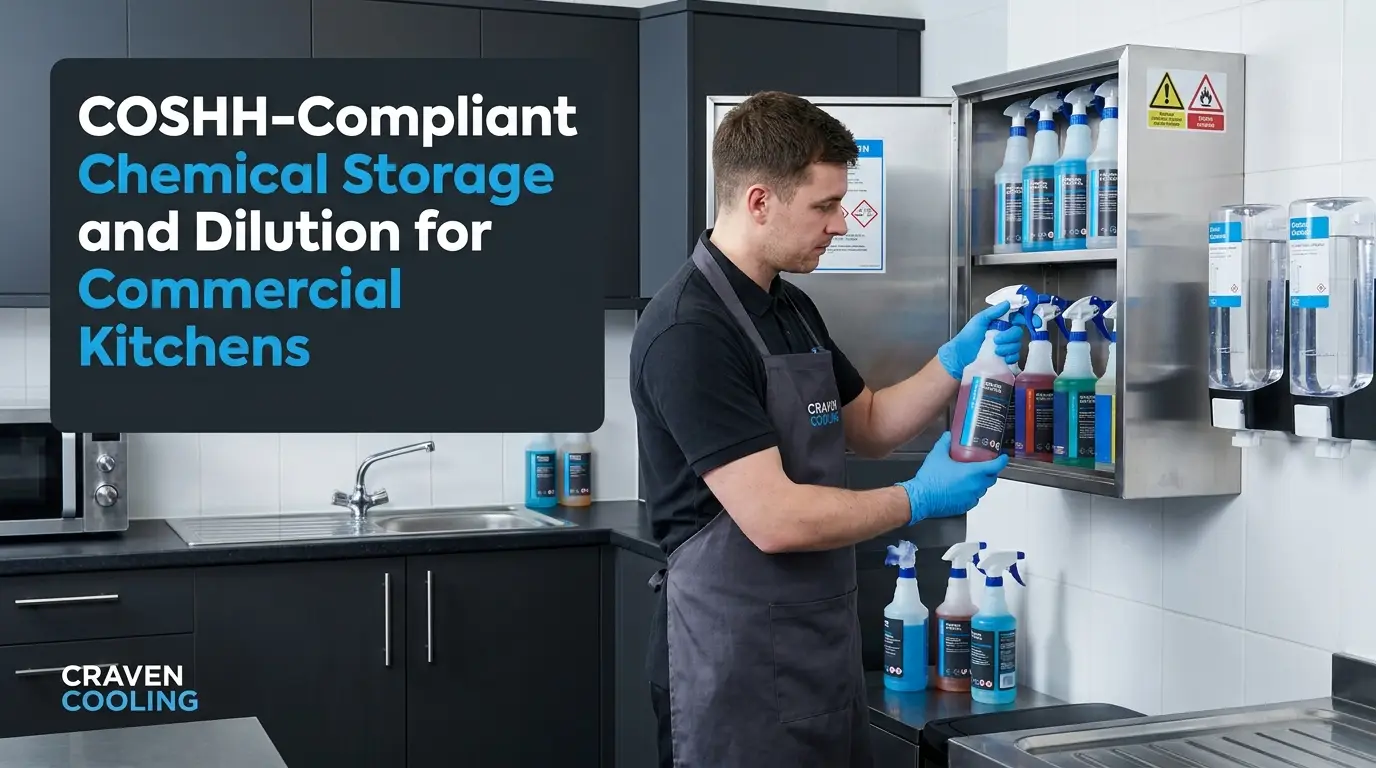
COSHH: six habits of safe chemical use
Control of Substances Hazardous to Health — the routine every commercial kitchen and cleaning cupboard is expected to run.


SDS
Read the label and the manufacturer’s safety data sheet — the pictograms tell you what you are holding.

Who could be harmed, and how badly? Judge likelihood against severity before anyone opens the cap.

Eliminate or substitute first, engineer and organise next — PPE is the last line, never the first.

Keep the controls working: check ventilation, dosing equipment and storage stay as they should be.


Everyone who uses it knows the hazards, the correct dilution and the PPE — before the first shift, not after.

Products and processes change. Reassess when they do, and keep the record that proves it.
Guidance summary only — the product label, the current safety data sheet and your own COSHH assessment remain the authority.
 STAY LEGAL
 YOUR SCHEDULE
 FOOD SAFETY


