
Why this one earns its place
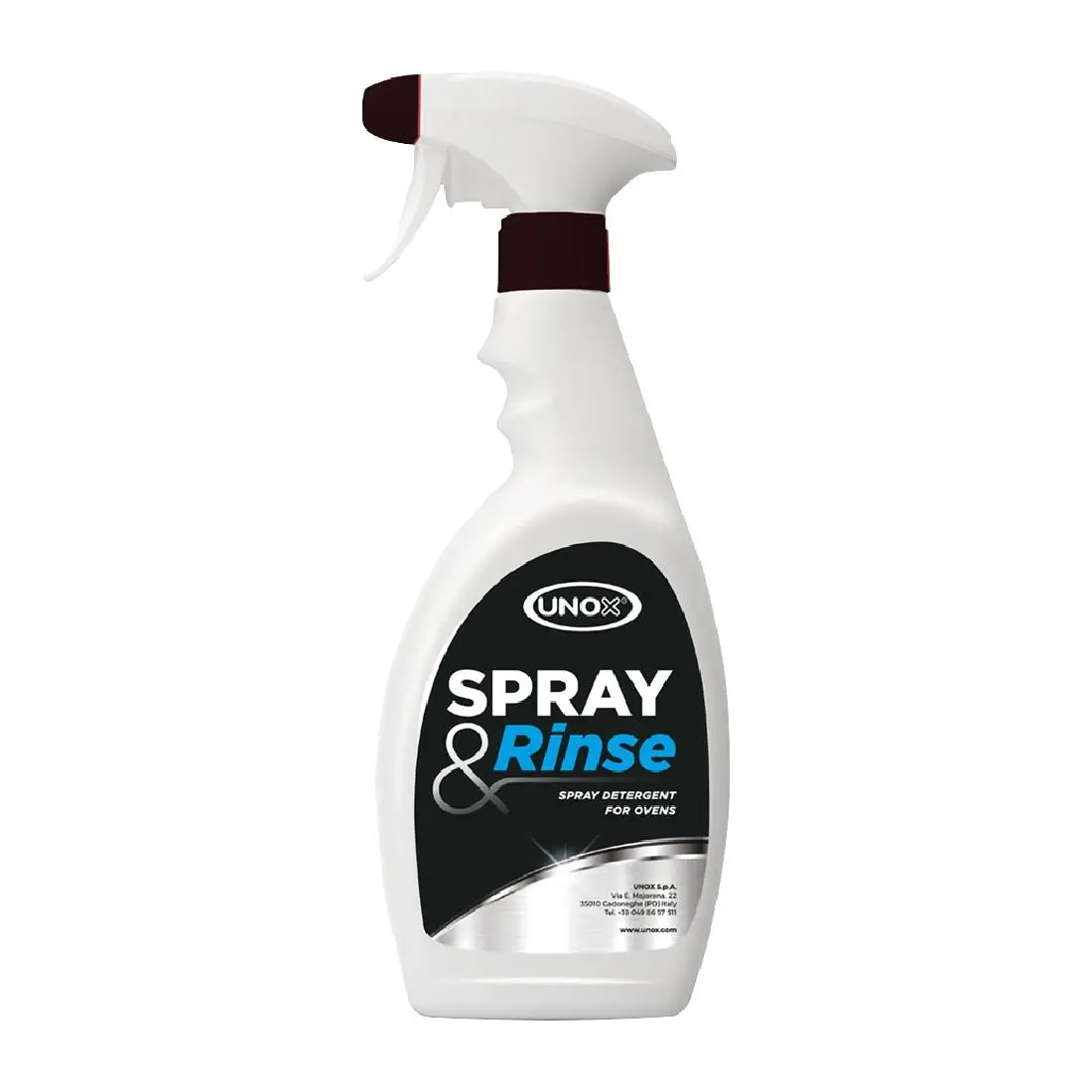
UNOX Spray&Rinse is the cleaner UNOX itself specifies for ovens that don’t have a built-in automatic washing system, which means it’s doing the job a wash cycle would otherwise do — by hand, at the end of service. The formula is built to break down burnt-on food and baked-in oil quickly, so the racks, door glass and cavity come up clean without a lengthy soak or heavy scrubbing.What sets it apart from a generic kitchen degreaser is the spray mechanism itself.
Rather than sloshing liquid from a jug or decanting into a trigger bottle, Spray&Rinse comes ready to dispense accurately, so product lands where it’s needed — across the cavity walls, around door seals, over racking — instead of pooling at the base or running down the front of the unit. That control matters in a live kitchen, where over-application means more rinsing and more time before the oven’s back in service.It’s supplied as 750ml bottles in a case of twelve, a practical volume for a busy site running the oven daily, or for a multi-site operator stocking several ovens from one central order.
Because the formula is classed as an irritant, it should be handled with the gloves and basic COSHH precautions any kitchen chemical store already has in place — nothing unusual, just standard good practice.If the oven does have an integrated automatic wash system, this isn’t the product to reach for — UNOX’s own Det&Rinse ECO detergent (FX026) is built for that job instead. Spray&Rinse is specifically the manual back-up: the bottle that handles the cleaning a wash cycle can’t reach, or the oven that never had one to begin with.
What each use really costs
Worked out from today’s price and the pack as sold.
Stated figures and current price only — not an invented saving.
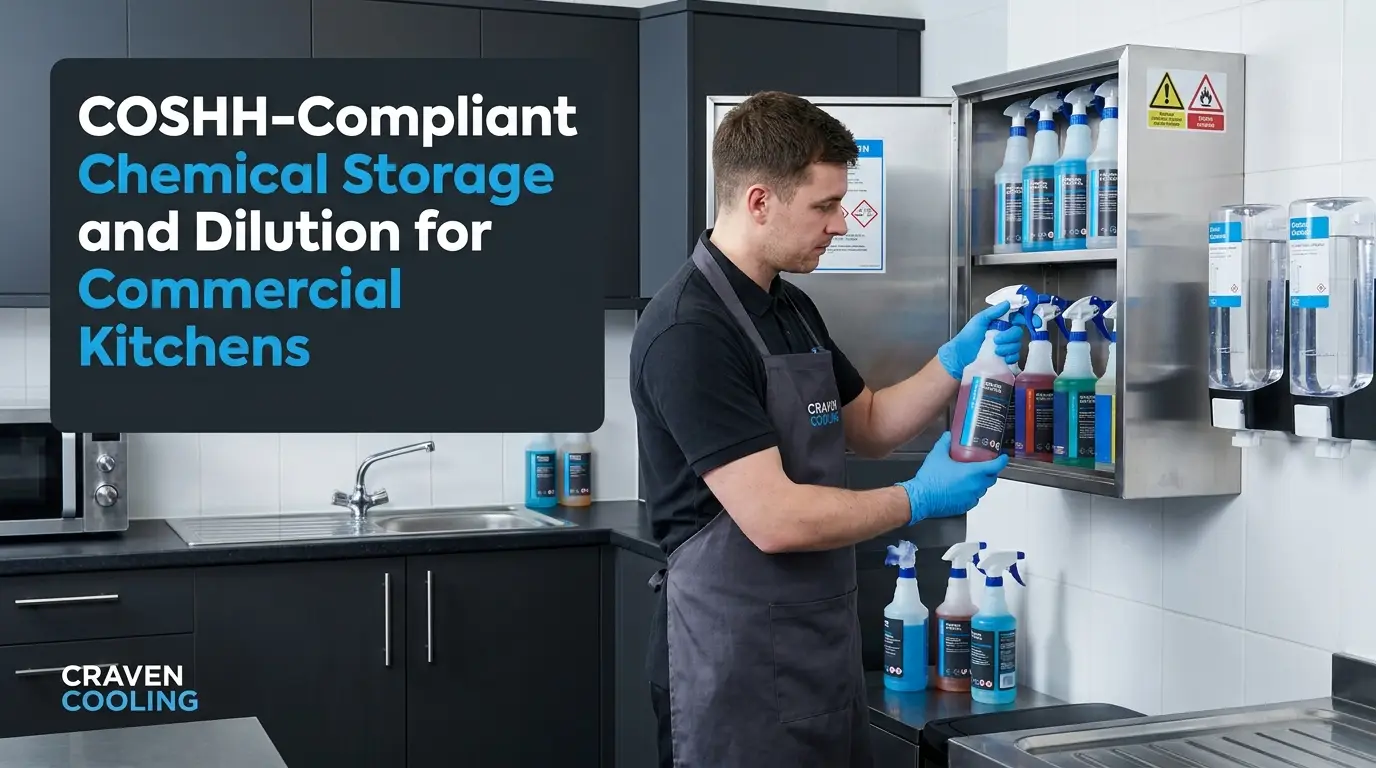
COSHH: six habits of safe chemical use
Control of Substances Hazardous to Health — the routine every commercial kitchen and cleaning cupboard is expected to run.


SDS
Read the label and the manufacturer’s safety data sheet — the pictograms tell you what you are holding.

Who could be harmed, and how badly? Judge likelihood against severity before anyone opens the cap.

Eliminate or substitute first, engineer and organise next — PPE is the last line, never the first.

Keep the controls working: check ventilation, dosing equipment and storage stay as they should be.


Everyone who uses it knows the hazards, the correct dilution and the PPE — before the first shift, not after.

Products and processes change. Reassess when they do, and keep the record that proves it.
Guidance summary only — the product label, the current safety data sheet and your own COSHH assessment remain the authority.
 STAY LEGAL
 YOUR SCHEDULE
 FOOD SAFETY