
Why this degreaser earns its place
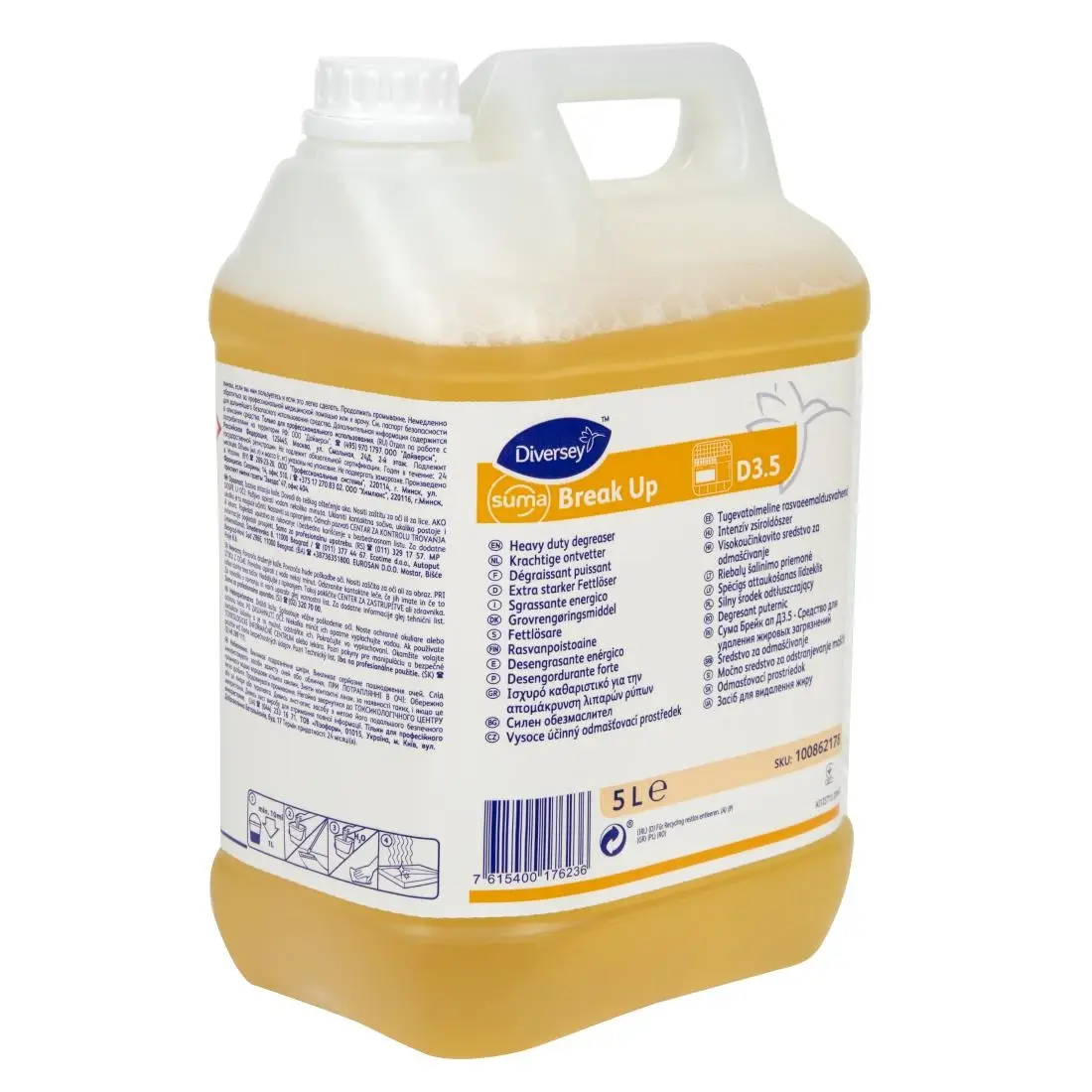
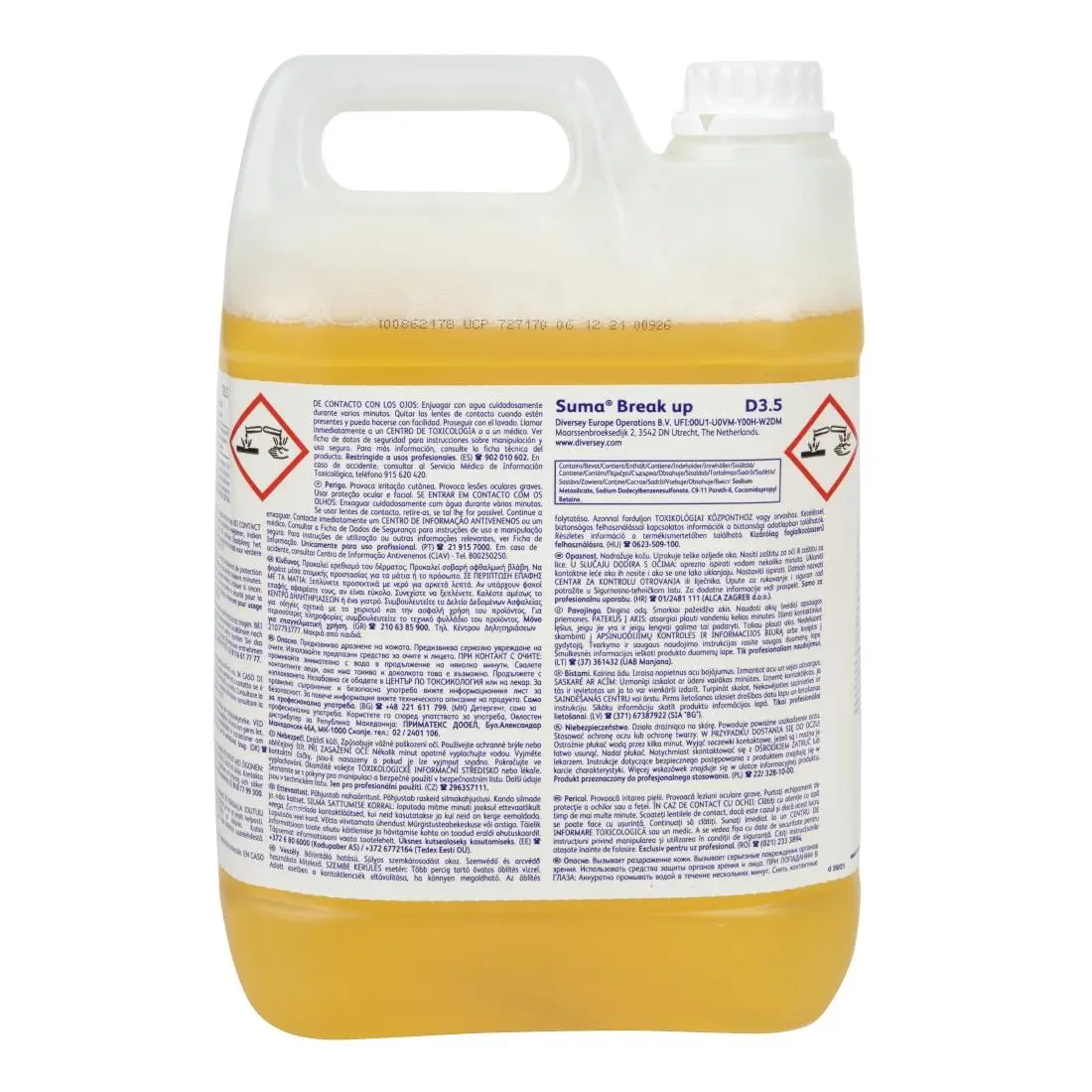
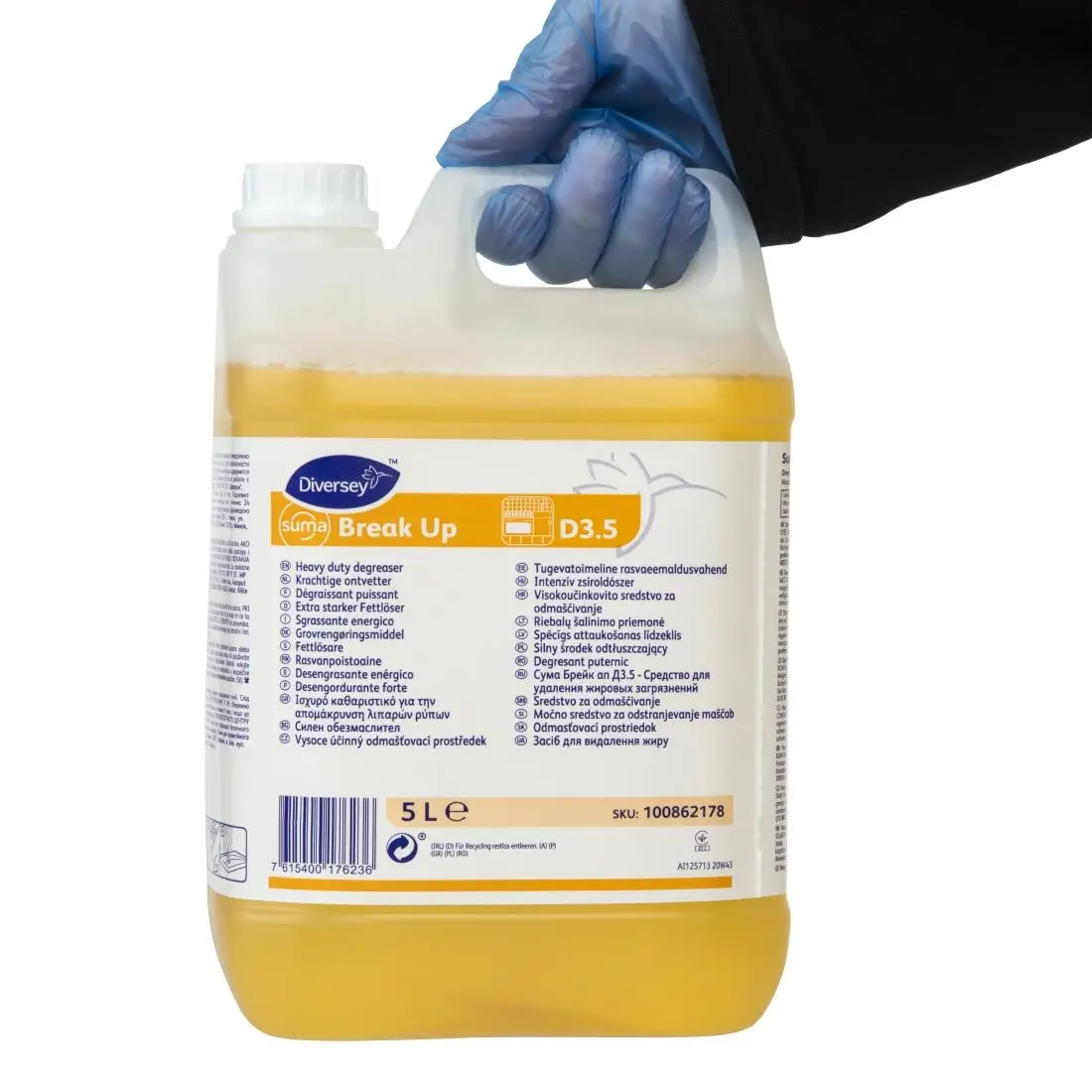
Break Up D3.5 is built for kitchens where grease has had time to set — on cookers, filters, extraction runs, floors and prep surfaces that see heavy daily soiling. It's supplied as a concentrate rather than ready-mixed, so cleaning teams control the strength rather than paying to ship mostly water.
The formula is engineered to dissolve grease and grime and hold it in solution rather than letting it settle back onto the surface as it's wiped, which matters on the walls, drains and equipment where regreasing is the usual complaint with weaker cleaners. It's rated safe for use on aluminium, so it can go straight onto pans and appliance panels as well as tiled or stainless surfaces, and dilutes from 1:33 for the worst build-up down to 1:100 for lighter, routine cleaning.
It's classified as an irritant, so it should be handled and diluted per the safety data sheet, but the finished, diluted solution is food-safe and cleared for professional kitchen use. Sold as a 2-pack of 5-litre containers, each one makes roughly 500 filled bottles or 100 buckets of ready-to-use solution — a concentrate this strong is built to outlast a shelf of pre-mixed spray.
COSHH: six habits of safe chemical use
Control of Substances Hazardous to Health — the routine every commercial kitchen and cleaning cupboard is expected to run.


SDS
Read the label and the manufacturer’s safety data sheet — the pictograms tell you what you are holding.

Who could be harmed, and how badly? Judge likelihood against severity before anyone opens the cap.

Eliminate or substitute first, engineer and organise next — PPE is the last line, never the first.

Keep the controls working: check ventilation, dosing equipment and storage stay as they should be.


Everyone who uses it knows the hazards, the correct dilution and the PPE — before the first shift, not after.

Products and processes change. Reassess when they do, and keep the record that proves it.