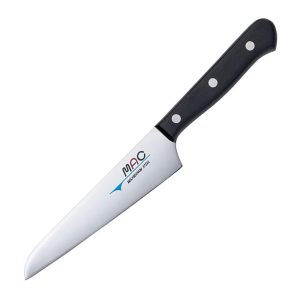
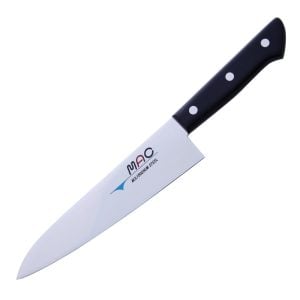
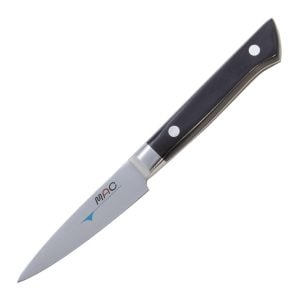
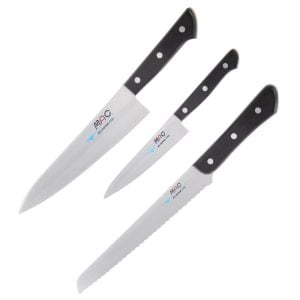
Kitchen knives are the core cutting tools of any professional kitchen, covering everything from chef’s knives to specialist bread, filleting and paring blades, used daily in pubs, cafes, hotel kitchens and care home catering. The right knife for a job depends on blade steel, blade length (typically 10cm for paring up to 25cm-plus for chef and carving knives), and edge retention, since a poorly matched knife slows prep and increases injury risk. Buyers should also weigh handle material (polypropylene, POM or wood) for grip and dishwasher safety, and whether a knife needs to be part of a colour-coded HACCP set to prevent cross-contamination between raw meat, fish, veg and allergen prep.
Kitchen knives are specified by blade length, steel and edge against the task. Lengths run from about 7-10cm for paring up to 25-30cm for carving, with a 20cm chef’s knife the standard all-rounder. High-carbon stainless steel balances edge retention with corrosion resistance, and polypropylene or POM handles are dishwasher-safe and hold up better than wood in continuous use. Colour-coded HACCP sets — red for raw meat, blue for fish, green for salad and so on — separate blades by prep type to prevent cross-contamination, and matching knife-and-board sets are sold on the same basis. Daily honing with a steel plus a full re-edge every one to four weeks keeps blades safe and efficient. Used across pubs, cafés, hotels, restaurants and care home catering.
What’s the best all-round knife for a commercial kitchen?
An 20cm high-carbon or stainless steel chef’s knife is the standard all-rounder for chopping, slicing and dicing, and is usually the first blade any commercial kitchen invests in.
Why are chopping knives colour-coded in UK kitchens?
Colour-coded handles (typically red for raw meat, blue for raw fish, yellow for cooked meat, green for salad/fruit, brown for veg, white for bakery/dairy) are a HACCP-driven system to prevent cross-contamination, and many suppliers sell matching knife and board sets on this basis.
How often should commercial kitchen knives be sharpened?
Busy sections typically hone blades daily with a sharpening steel and get a full re-edge every one to four weeks depending on use, with knife sharpeners and steels sold specifically to fit into that routine.
Should I buy a knife set or individual knives?
A knife set is usually more cost-effective for a new kitchen fit-out or care home catering setup, while individual knives let established kitchens replace or upgrade specific blades like a bread or filleting knife as needed.
If you have any questions about our products, then please get in touch.