



Why this test strip earns its place
Dishwasher temperature test strips are one of the simplest ways to prove a machine is actually doing its job hygienically, rather than assuming it because the cycle finished.
Looped around the dishwasher rack, the strip runs through the wash with the crockery, and its blue bar turns orange the moment the water reaches 82°C — the temperature commercial dishwashers need to hit to sanitise properly, not just clean.That colour change is the whole point: it's a visible, unambiguous pass/fail check that any member of staff can read at a glance, without needing a thermometer or any technical knowledge of the machine's cycle.
Each strip includes a date and signature section, so a completed check becomes a dated, signed record rather than just a glance and a shrug — exactly the kind of evidence an EHO inspection asks for when checking due diligence around dishwasher hygiene.Readings are marked in both Fahrenheit and Celsius, so the strip works whichever scale a kitchen's records are kept in, and it's non-adhesive, simply looping round the rack rather than needing to be stuck to crockery or racking. Supplied in a pack of 25, it's enough for regular scheduled checks over several weeks without needing to reorder constantly.For any kitchen that needs to show — not just claim — that its dishwasher reaches a hygienic temperature, this is a low-cost, low-effort way to build that evidence into the daily routine.
COSHH: six habits of safe chemical use
Control of Substances Hazardous to Health — the routine every commercial kitchen and cleaning cupboard is expected to run.


SDS
Read the label and the manufacturer’s safety data sheet — the pictograms tell you what you are holding.

Who could be harmed, and how badly? Judge likelihood against severity before anyone opens the cap.
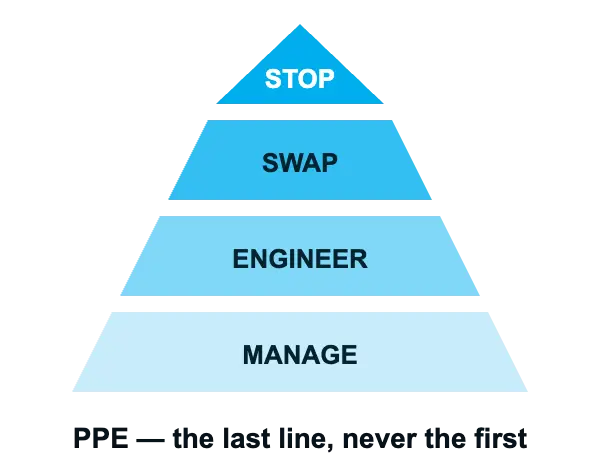
Eliminate or substitute first, engineer and organise next — PPE is the last line, never the first.

Keep the controls working: check ventilation, dosing equipment and storage stay as they should be.


Everyone who uses it knows the hazards, the correct dilution and the PPE — before the first shift, not after.

Products and processes change. Reassess when they do, and keep the record that proves it.