Why this detergent earns its place
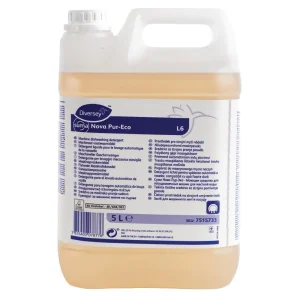
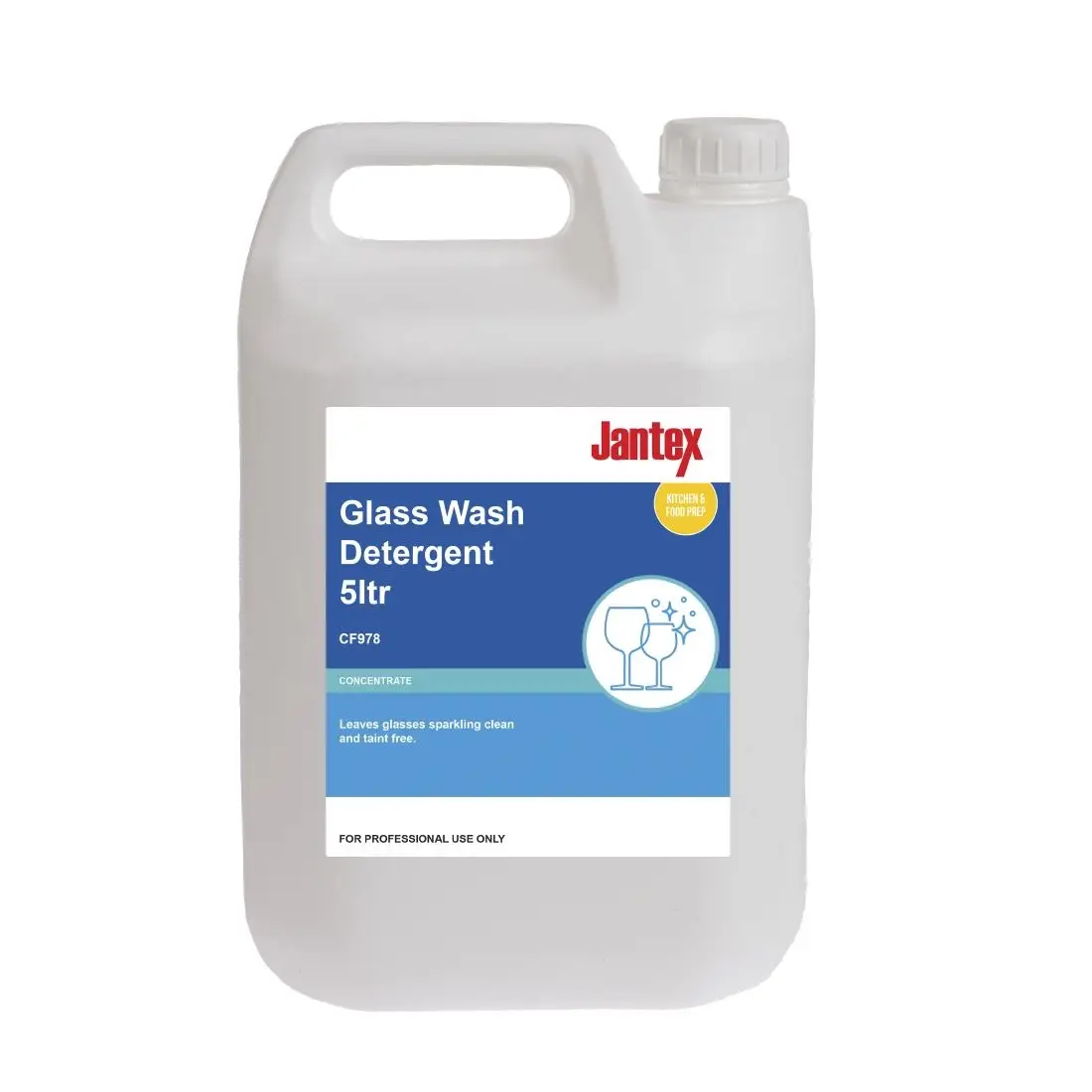
A dedicated detergent for glasswashers, built around the particular problem glassware presents — not just cleaning it, but avoiding the cloudy blooming effect that hard water and weaker detergents leave behind on glass surfaces.
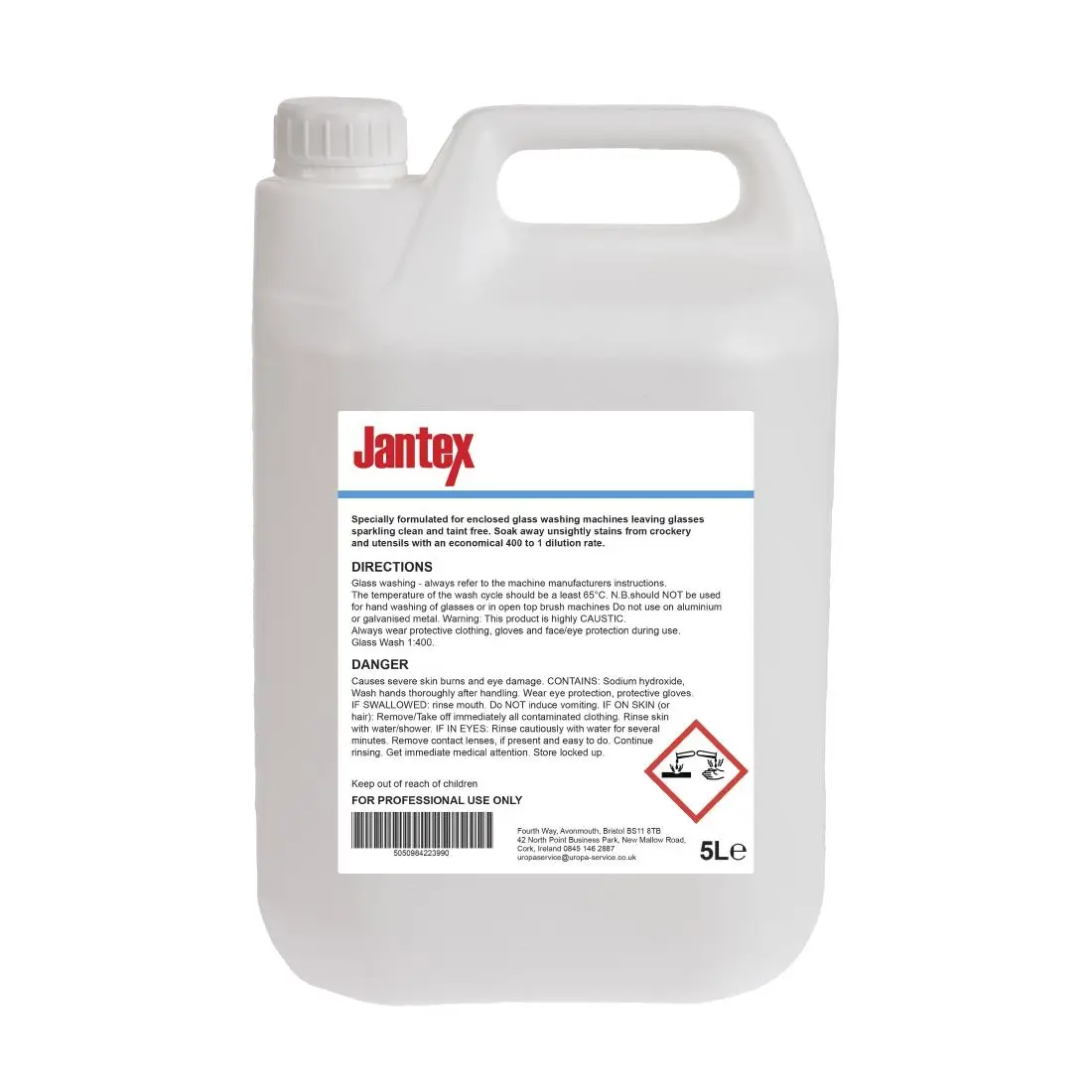
It's compatible with all makes and models of glasswasher, so there's no compatibility check needed before switching to it, and it performs in both hard and soft water areas without needing a different dilution for each. Diluted at 1:400 for glass wash, it delivers smear-free results across the board.
It's classified as corrosive in concentrate form, so dilute and handle per the safety data sheet, and it's rated for professional use only. Being supplied concentrated keeps the cost-per-use down against pre-mixed alternatives, and the bottle is being transitioned to 30% recycled post-consumer plastic.
COSHH: six habits of safe chemical use
Control of Substances Hazardous to Health — the routine every commercial kitchen and cleaning cupboard is expected to run.


SDS
Read the label and the manufacturer’s safety data sheet — the pictograms tell you what you are holding.

Who could be harmed, and how badly? Judge likelihood against severity before anyone opens the cap.

Eliminate or substitute first, engineer and organise next — PPE is the last line, never the first.

Keep the controls working: check ventilation, dosing equipment and storage stay as they should be.


Everyone who uses it knows the hazards, the correct dilution and the PPE — before the first shift, not after.

Products and processes change. Reassess when they do, and keep the record that proves it.