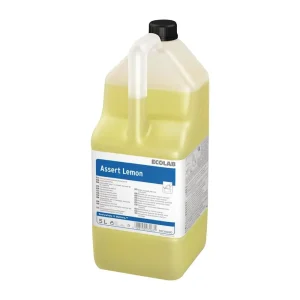
Why this washing up liquid earns its place
Suma Star D1 is Diversey's concentrated washing-up liquid for kitchens where the pot-wash sink never really stops. A small amount goes into a full sink of hot water and gets straight to work on grease, stubborn stains and food that has dried on overnight, breaking it down rather than just pushing it around the pan.
It's built for manual dishwashing rather than machines, so it's the one to keep by the sink for pots, pans, trays and anything too big or too delicate for the warewasher.Because it's concentrated, one 20-litre drum lasts considerably longer than a diluted equivalent, and a smaller dose per sink-fill means less liquid used overall and less packaging working its way through the kitchen. That matters in a busy back-of-house where bins fill up fast and storage space for cleaning stock is tight.
The finish is the other half of the job: rinse off and crockery, pans and utensils come up sparkling rather than filmy, which matters when front-of-house glassware or plated cutlery is involved.The 20-litre drum measures 422 x 290 x 235mm and weighs 20kg full, so it needs a stable spot at floor level near the pot-wash rather than a shelf — factor that into where the sink station is set up. It's classed as an irritant, so standard handling applies: keep it away from bare skin and eyes, and store it with other kitchen chemicals rather than loose on a worktop. For kitchens getting through washing-up liquid by the litre every week, buying concentrate in a 20-litre drum rather than smaller ready-to-use bottles is the more sensible way to keep stock topped up without constant reordering.
COSHH: six habits of safe chemical use
Control of Substances Hazardous to Health — the routine every commercial kitchen and cleaning cupboard is expected to run.


SDS
Read the label and the manufacturer’s safety data sheet — the pictograms tell you what you are holding.

Who could be harmed, and how badly? Judge likelihood against severity before anyone opens the cap.

Eliminate or substitute first, engineer and organise next — PPE is the last line, never the first.

Keep the controls working: check ventilation, dosing equipment and storage stay as they should be.


Everyone who uses it knows the hazards, the correct dilution and the PPE — before the first shift, not after.

Products and processes change. Reassess when they do, and keep the record that proves it.