Why this chopping board earns its place
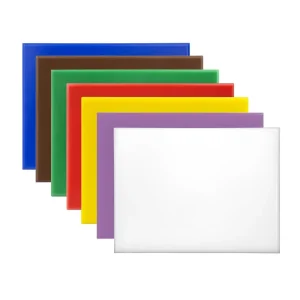
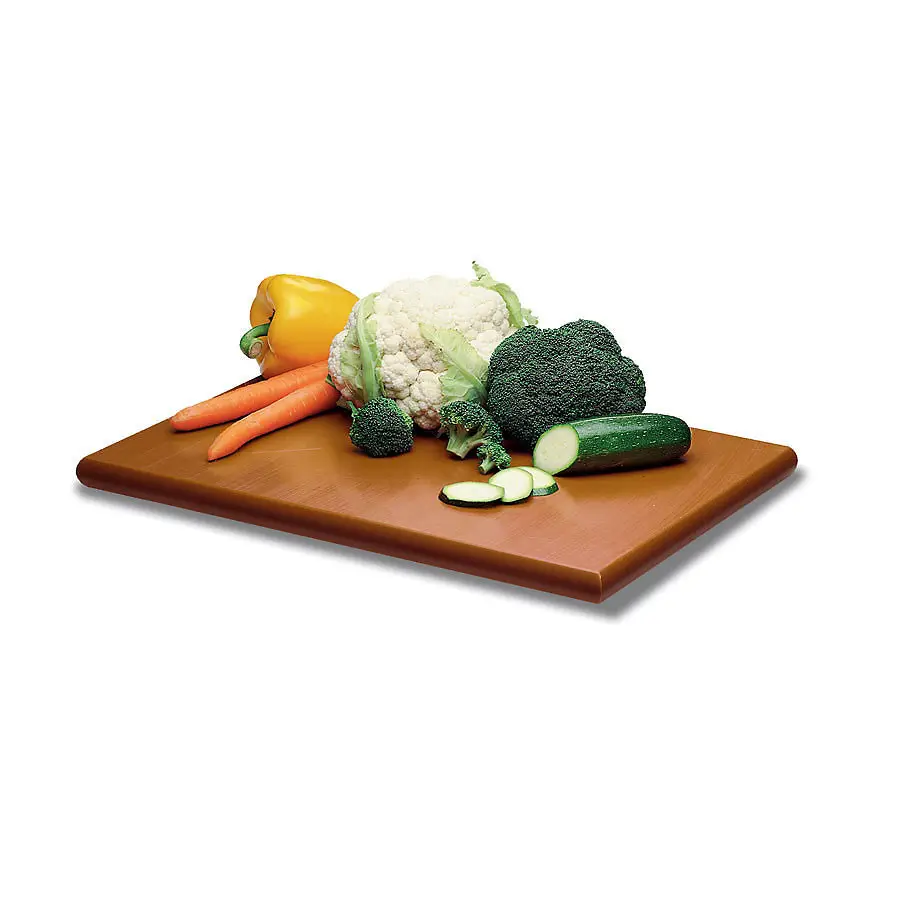
Brown is the vegetable board, and it exists because of soil. Root veg arrives carrying field dirt, and that dirt carries the same organisms the rest of the colour scheme is built to keep apart, which is why unwashed veg gets a surface of its own even though most of it is heading for a pot. Keeping it brown keeps the soil off the green board doing ready-to-eat salad and away from anything already cooked.
Veg prep is the bulkiest cutting in the kitchen and 610 × 440 mm is sized for it. Peeled potatoes, carrots and onions build up fast, and an area this size lets cut product bank on one side while the next few come through, rather than the board being cleared every thirty seconds. The 25 mm slab takes the punishment that goes with the job: swede, celeriac and squash need real downward force, and a thin board flexes and slides under that in a way this one does not.
Polyethylene rinses, which is the whole requirement here. Soil and starch come off a non-porous face under running water without a scrubbing session, and onion and garlic do not get into the surface and follow the board around the way they do with timber. Expect marks from carrot, beetroot and turmeric over time, but that is stain rather than damage. What matters is the depth of scoring: once soil can sit down in the cuts and survive a wash, the board has stopped doing the one job it is on the bench to do.