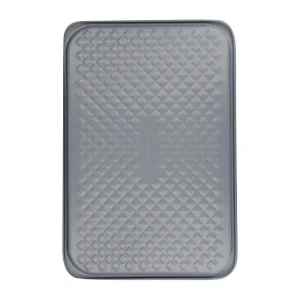
Baking and roasting trays are the workhorse flat and shallow-sided pans used across commercial kitchens for everything from bread and biscuits to roast meat and vegetables, found in pubs, hotels, cafes and busy catering kitchens alike. The main buying consideration is choosing gauge and material: aluminised steel handles daily heavy use and high temperatures well, while non-stick coatings ease food release and cleaning but may wear with constant high-heat cycling. Standard sizes usually follow either GN 1/1/2/3 footprints or classic bakery dimensions like 60x40cm and 45x30cm, so checking oven rack size first prevents ordering a tray that won’t slide in.
Baking and roasting trays are specified by footprint, side depth, gauge and material. Two footprint families dominate commercial ovens: 600×400mm Euronorm bakery trays and Gastronorm sizes such as GN 1/1 (530×325mm) and GN 2/3, so measure your oven’s rack spacing before ordering. Side depth follows the job — shallow flat sheets (around 10–20mm) suit biscuits, flatbreads and even browning, while deeper roasting trays (40mm and up) contain fat and juices for meat and vegetables. Material and gauge decide durability: heavy-gauge aluminised steel takes daily high-heat use and resists warping, while non-stick coatings ease release and cleaning but wear faster under constant high-heat cycling. Most commercial trays are rated for standard oven use to around 230°C — check the coating or gauge rating at the top end. Used across pubs, hotels, cafés and busy catering kitchens.
Most commercial combi and deck ovens are built around 60x40cm (Euronorm) or GN 1/1 tray footprints, so measuring your oven’s rack space is the fastest way to confirm fit before ordering.
Do I need deep or shallow sides for roasting?
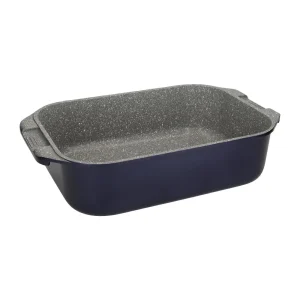
Deeper-sided trays contain fat and juices better for meat and vegetable roasting, while shallow trays suit biscuits, flatbreads and anything that needs even heat exposure without trapped moisture.
How do I stop trays warping under daily use?
Choosing a heavier gauge aluminised steel tray rather than a thin, lightweight one significantly reduces warping risk under repeated high-heat commercial cycling.
If you have any questions about our products, then please get in touch.