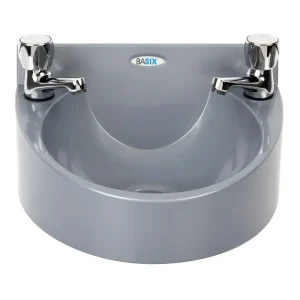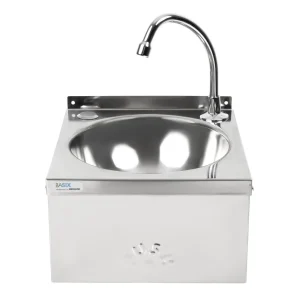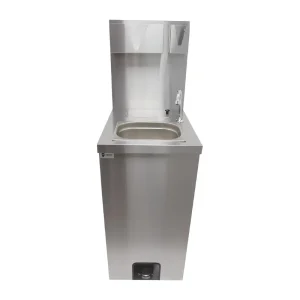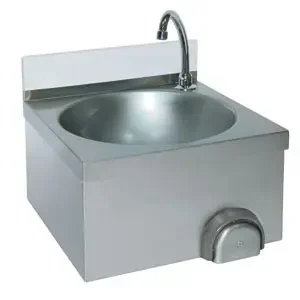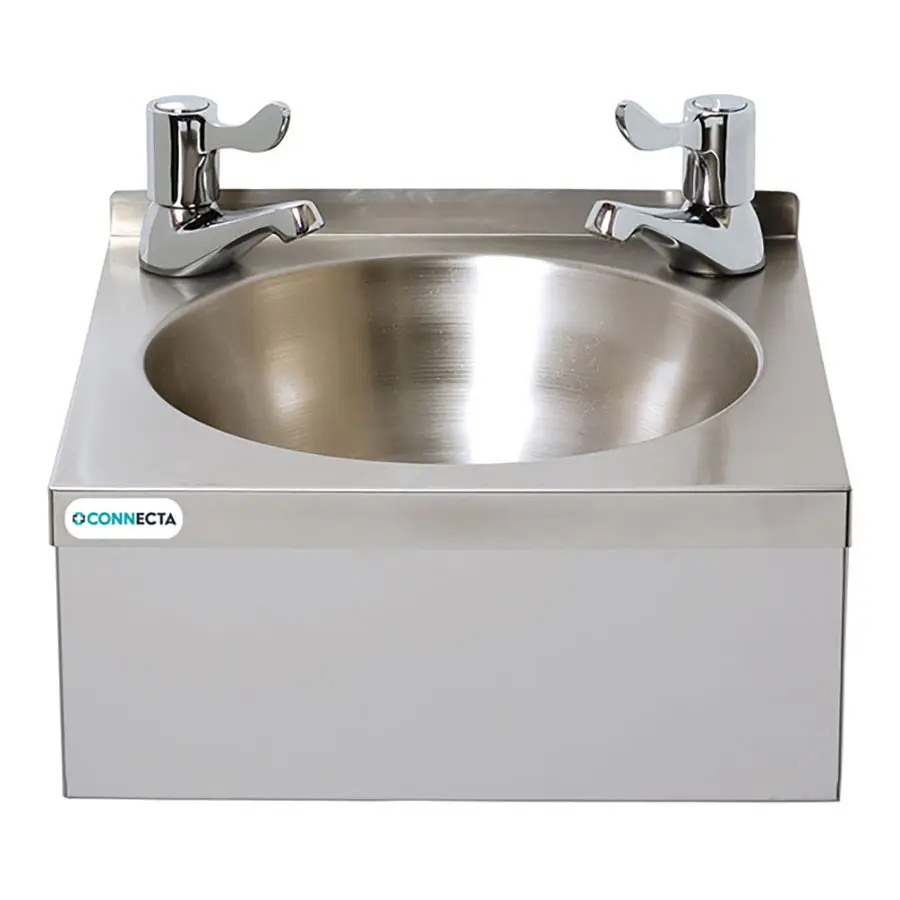
Why this wash hand station earns its place
A food business needs a basin that is for hands and nothing else — not the prep sink, not the wash-up sink, not the one the mop bucket gets filled at. It is the first thing an inspector looks for and the first thing that gets improvised when the kitchen was never laid out with one. At 270 × 140 mm this is a small fixture, which is the point: it goes in the places that actually need a basin and have no room for a full sink, like the end of a prep bench, the way into a kitchen, a cellar, or a back door where deliveries come in.
The lever taps are the specification that matters here. A lever can be closed with a wrist, a forearm or an elbow, so the clean hand never has to grip the same handle the dirty hand opened — which is the flaw in a standard crosshead tap and the reason levers became the default in food areas. It is a small mechanical detail that decides whether hand washing actually breaks the chain or just moves contamination around the room.
Stainless steel carries the rest of it. It does not craze, stain or absorb, it takes the same cleaner as everything else in the kitchen, and it survives being caught by a trolley in a tight corridor — which a ceramic basin in the same spot will not. Site it where staff pass rather than in a corner, keep soap and a hand-drying method beside it, and it does its job without further thought.