

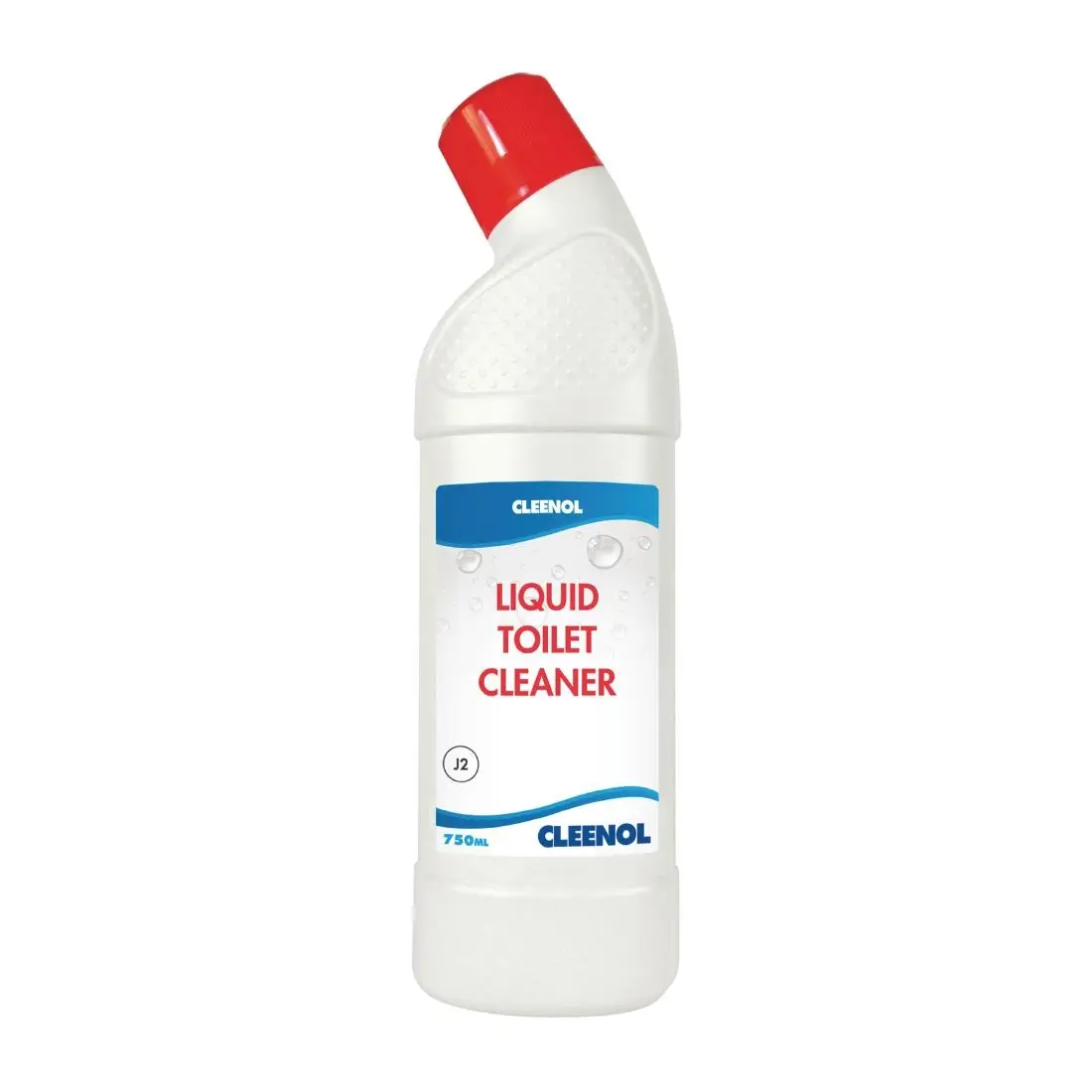
Why this toilet cleaner earns its place
This toilet cleaner is formulated specifically to deal with scale build-up, the main problem in medium and hard water areas where limescale dulls porcelain and clogs the visible surfaces of a bowl over time. Citric acid does the descaling work, breaking down the mineral build-up rather than just masking it with fragrance.
It's a thick formulation, which matters for a toilet cleaner more than most — thickness means it clings to the bowl and under the rim rather than running straight down and into the water, giving the citric acid time to actually work on the scale before it's flushed away.
It's safe to use on both porcelain and stainless steel, covering the two main surfaces found in a commercial washroom — cubicles and bowls as well as any stainless fittings nearby — without needing a second product for each. It leaves a fresh pine fragrance behind, so washrooms smell clean as well as look it.
COSHH: six habits of safe chemical use
Control of Substances Hazardous to Health — the routine every commercial kitchen and cleaning cupboard is expected to run.


SDS
Read the label and the manufacturer’s safety data sheet — the pictograms tell you what you are holding.

Who could be harmed, and how badly? Judge likelihood against severity before anyone opens the cap.

Eliminate or substitute first, engineer and organise next — PPE is the last line, never the first.

Keep the controls working: check ventilation, dosing equipment and storage stay as they should be.


Everyone who uses it knows the hazards, the correct dilution and the PPE — before the first shift, not after.

Products and processes change. Reassess when they do, and keep the record that proves it.


