Why this chemical earns its place
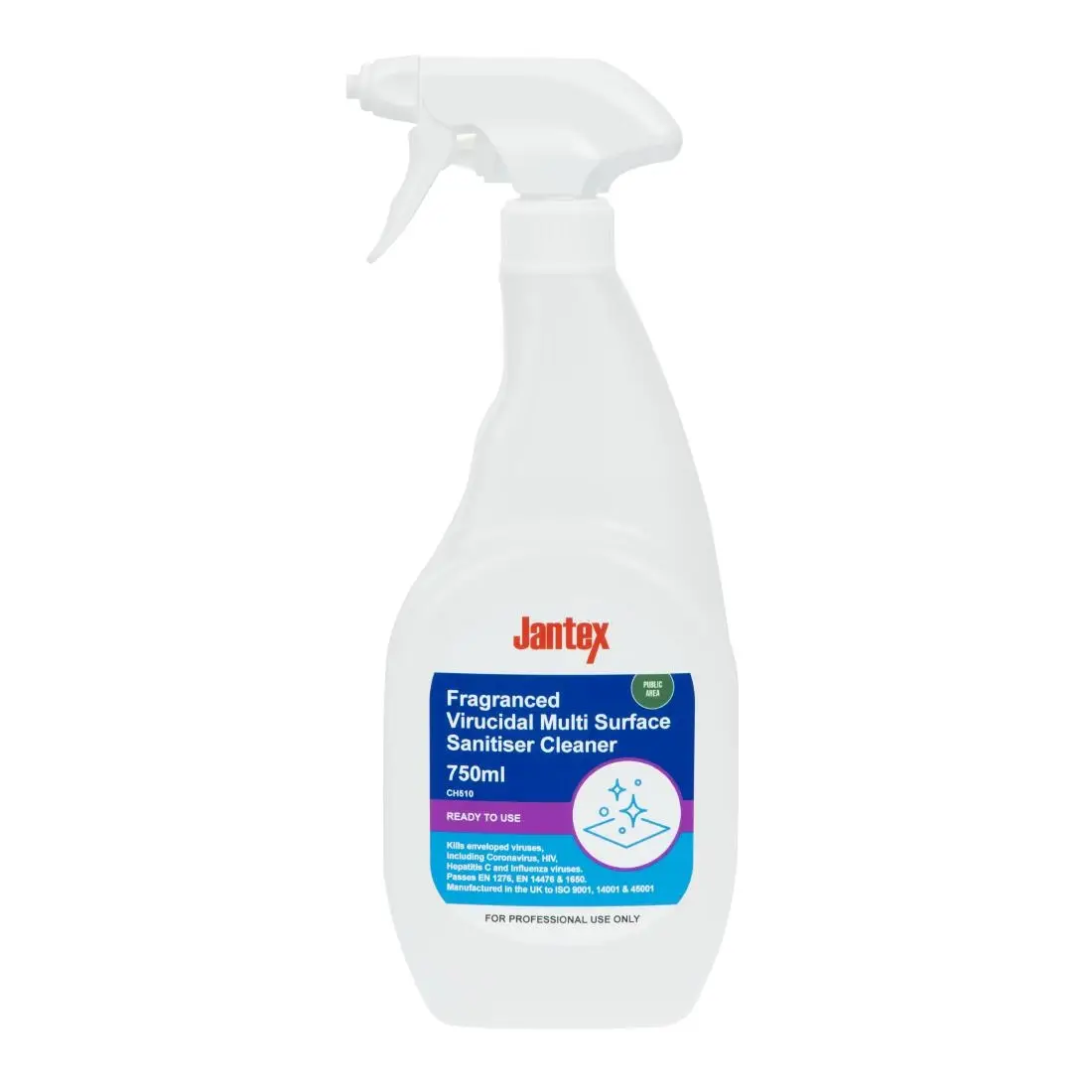
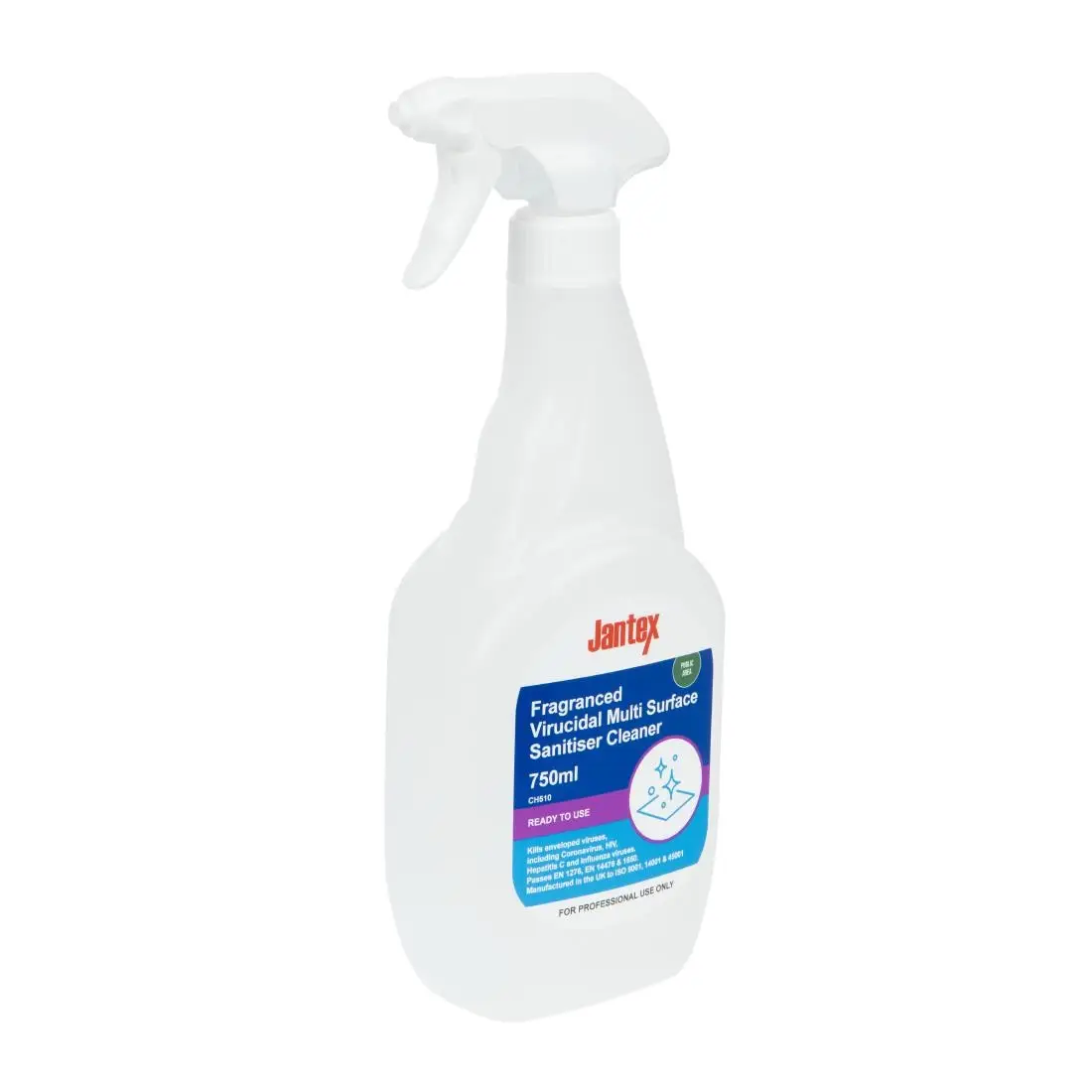
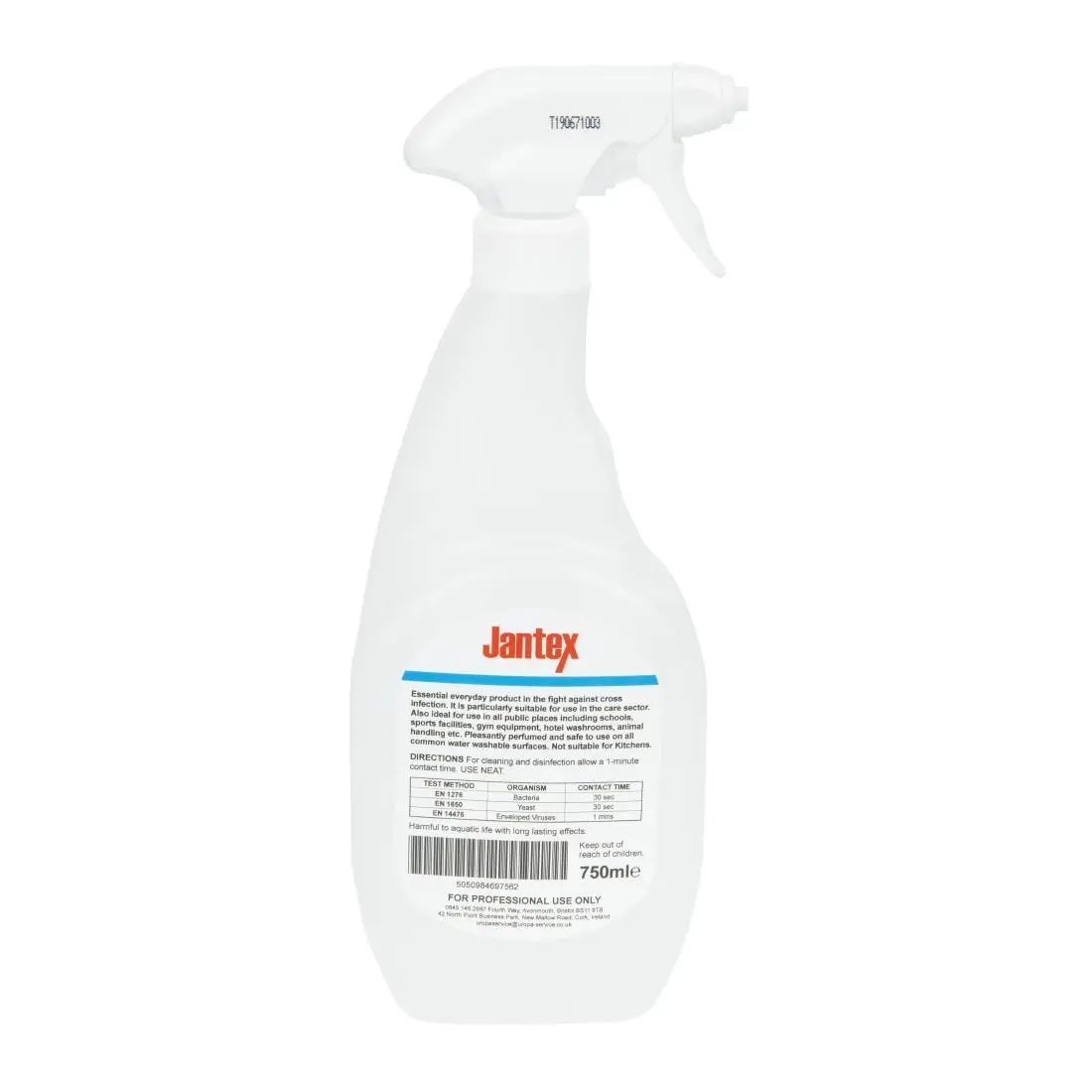
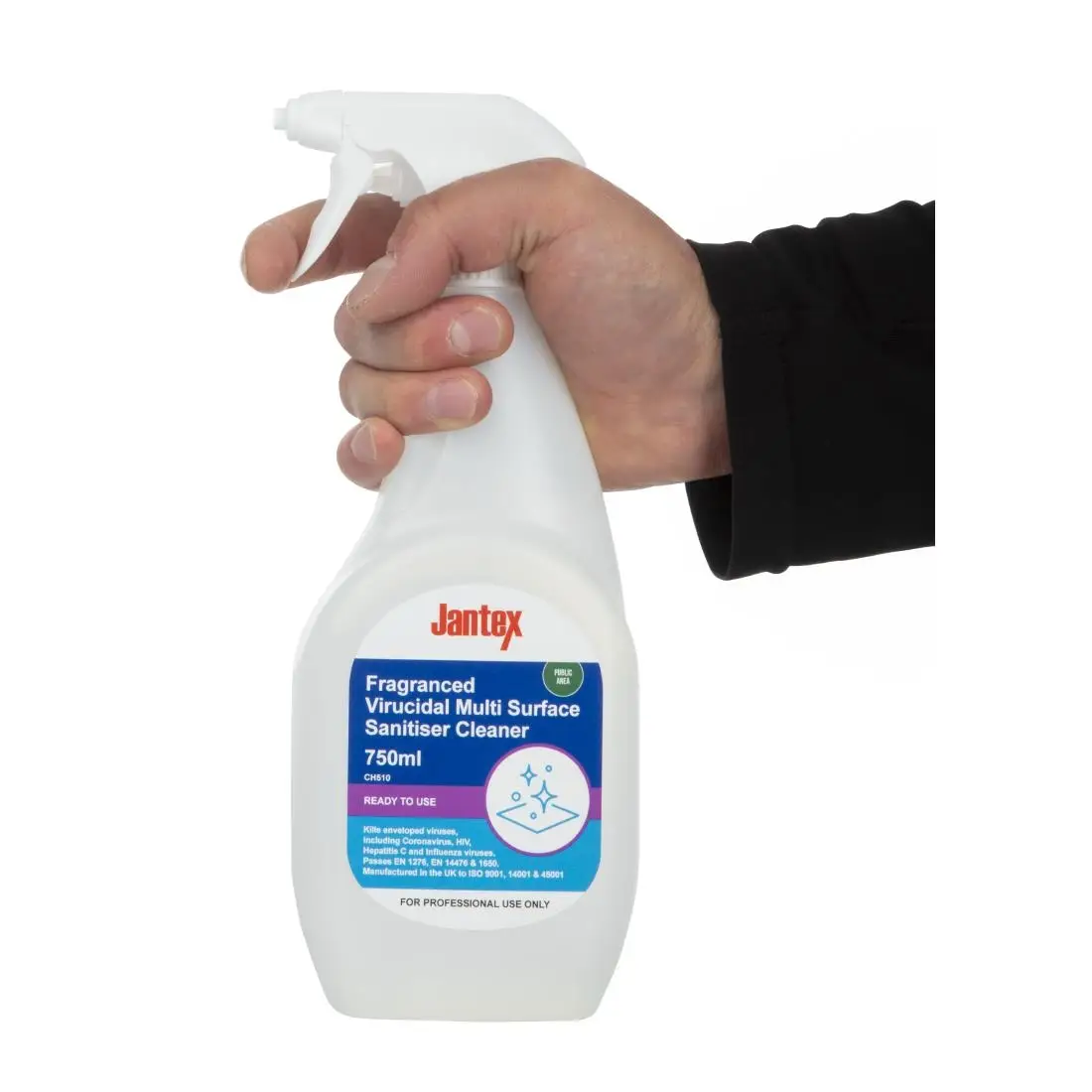
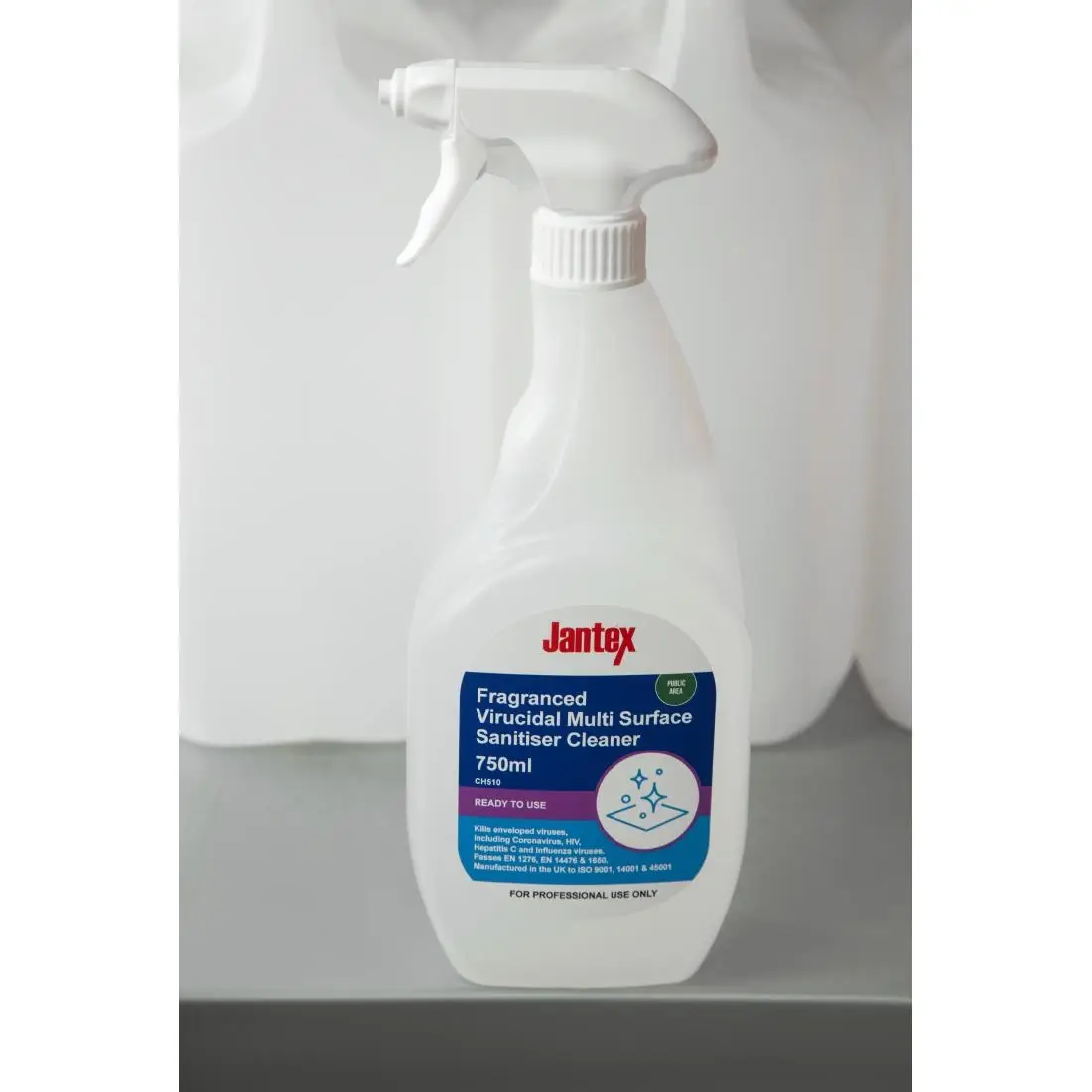
This sanitiser targets frequently touched points — door handles, tables, banisters and similar surfaces — across offices, schools, leisure centres and hospitality settings where a pleasant fragrance is welcome rather than a problem.
It kills enveloped viruses including coronavirus, HIV, hepatitis C and influenza, along with common bacteria and yeast such as MRSA, salmonella typhimurium, listeria monocytogenes, E.coli and candida. It's tested to EN1276, EN14476 and EN1650, and it's ready to use straight from the trigger spray with no dilution step to slow staff down.
The formula is bleach-free, non-hazardous and non-toxic on all water-washable surfaces, and it's manufactured in the UK to ISO 9001, 14001 and 45001. Because it's perfumed, it isn't intended for catering environments — the unfragranced Jantex sanitiser (CH512) covers that use instead.
COSHH: six habits of safe chemical use
Control of Substances Hazardous to Health — the routine every commercial kitchen and cleaning cupboard is expected to run.


SDS
Read the label and the manufacturer’s safety data sheet — the pictograms tell you what you are holding.

Who could be harmed, and how badly? Judge likelihood against severity before anyone opens the cap.

Eliminate or substitute first, engineer and organise next — PPE is the last line, never the first.

Keep the controls working: check ventilation, dosing equipment and storage stay as they should be.


Everyone who uses it knows the hazards, the correct dilution and the PPE — before the first shift, not after.

Products and processes change. Reassess when they do, and keep the record that proves it.