


Why this refill bottle earns its place
This is a standalone 750ml spray bottle rather than a filled product — the kind of bottle cleaning teams reach for when they need to decant a concentrate, carry it around site, and keep it clearly identified by colour. The red head marks it out for use within a colour-coded cleaning system, helping prevent equipment used in one area being carried into another.
The nozzle is adjustable, so the same bottle can switch between a fine mist and a heavier stream depending on the job, and the body is translucent, so it's easy to check how much solution is left without unscrewing the cap. Millilitre markings run up the side for measuring out an accurate dilution rather than guessing, and the trigger mechanism is built to give a consistent dose spray after spray.
It's a sturdy plastic bottle, not certified food-safe, so it suits general cleaning tasks — janitorial rounds, washrooms, front-of-house surfaces — rather than direct food-contact use. It arrives empty and unlabelled, ready to be filled and marked up to suit whatever's going in it.
COSHH: six habits of safe chemical use
Control of Substances Hazardous to Health — the routine every commercial kitchen and cleaning cupboard is expected to run.


SDS
Read the label and the manufacturer’s safety data sheet — the pictograms tell you what you are holding.

Who could be harmed, and how badly? Judge likelihood against severity before anyone opens the cap.
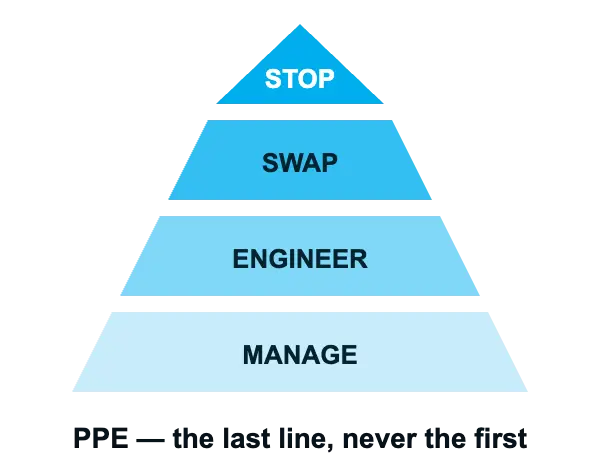
Eliminate or substitute first, engineer and organise next — PPE is the last line, never the first.

Keep the controls working: check ventilation, dosing equipment and storage stay as they should be.


Everyone who uses it knows the hazards, the correct dilution and the PPE — before the first shift, not after.

Products and processes change. Reassess when they do, and keep the record that proves it.