

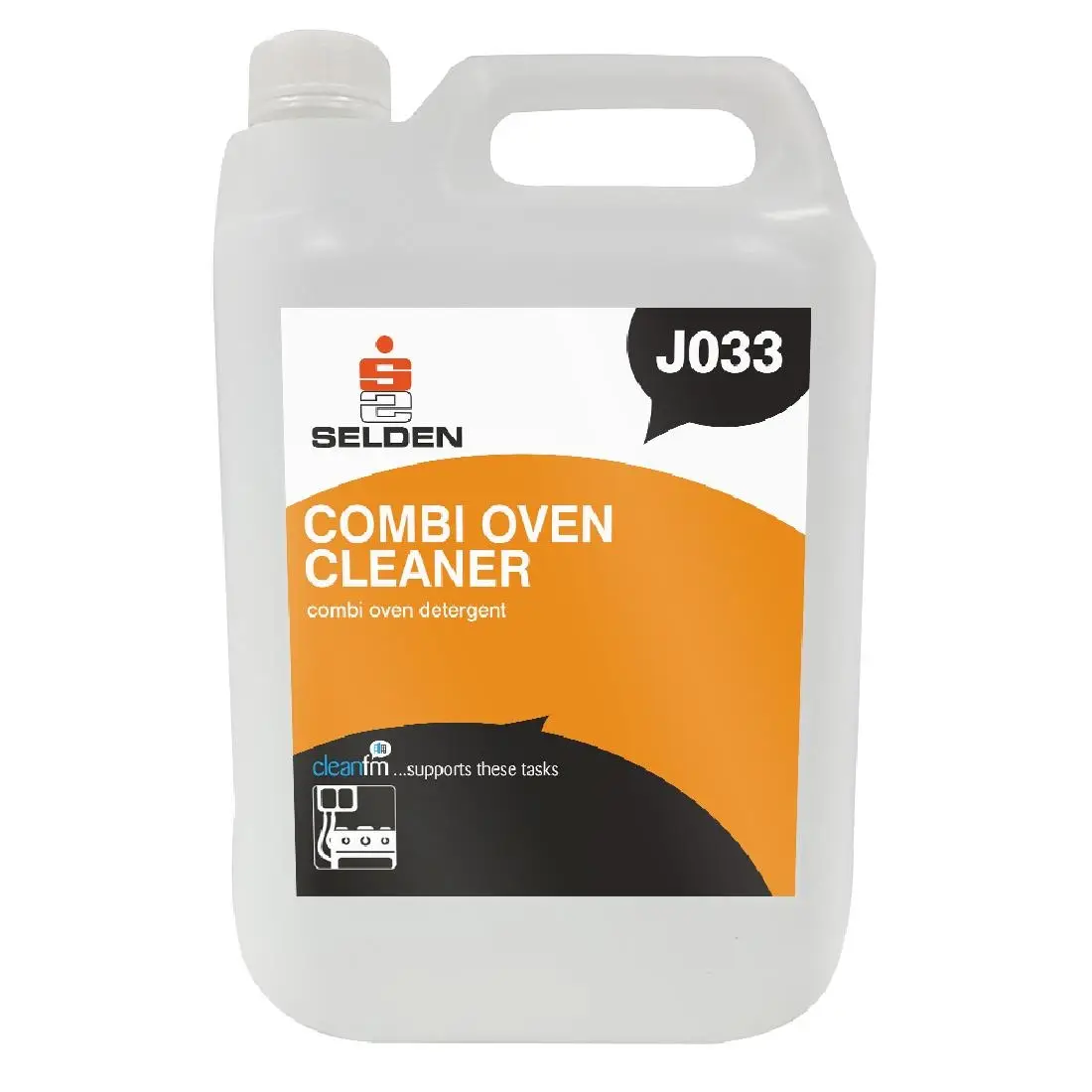
Why this oven cleaner earns its place
This is a super concentrated detergent purpose-built for combination ovens and grills, formulated to remove heavy burnt-on grease and baked-on food from every surface inside the cabinet. It is non-tainting and deep penetrating, so it gets into stubborn, cooked-on residue rather than just sitting on the surface, and it is fast acting and free rinsing with a low-foam profile that suits automatic oven cleaning cycles.
It is recommended for use on Buffalo Combi Ovens, and it must be used only through an integral dosing system fitted to the oven, dosed in line with the machine manufacturer's instructions. Typical concentration runs at 0.5% to 2.0%, adjusted via the oven's control panel depending on how heavily soiled the cabinet is – this is not a product for manual application. For a genuinely streak-free finish, pair it with Selden Combi Oven Rinse-Aid (DP011), which is designed to work alongside it.
One point worth noting: avoid contact with aluminium, so check your oven's internal materials before dosing. This is a professional-use product supplied as two 5-litre containers (10 litres total), and because it carries flammable, corrosive and irritant hazard classifications, it ships under Hazardous Goods delivery rules, meaning it is non-returnable once despatched.
COSHH: six habits of safe chemical use
Control of Substances Hazardous to Health — the routine every commercial kitchen and cleaning cupboard is expected to run.


SDS
Read the label and the manufacturer’s safety data sheet — the pictograms tell you what you are holding.

Who could be harmed, and how badly? Judge likelihood against severity before anyone opens the cap.
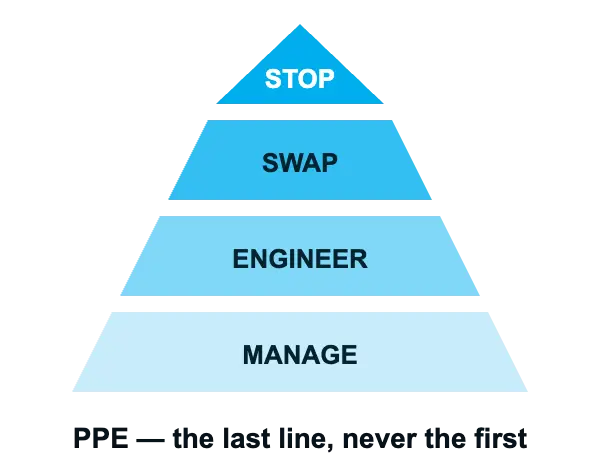
Eliminate or substitute first, engineer and organise next — PPE is the last line, never the first.

Keep the controls working: check ventilation, dosing equipment and storage stay as they should be.


Everyone who uses it knows the hazards, the correct dilution and the PPE — before the first shift, not after.

Products and processes change. Reassess when they do, and keep the record that proves it.