

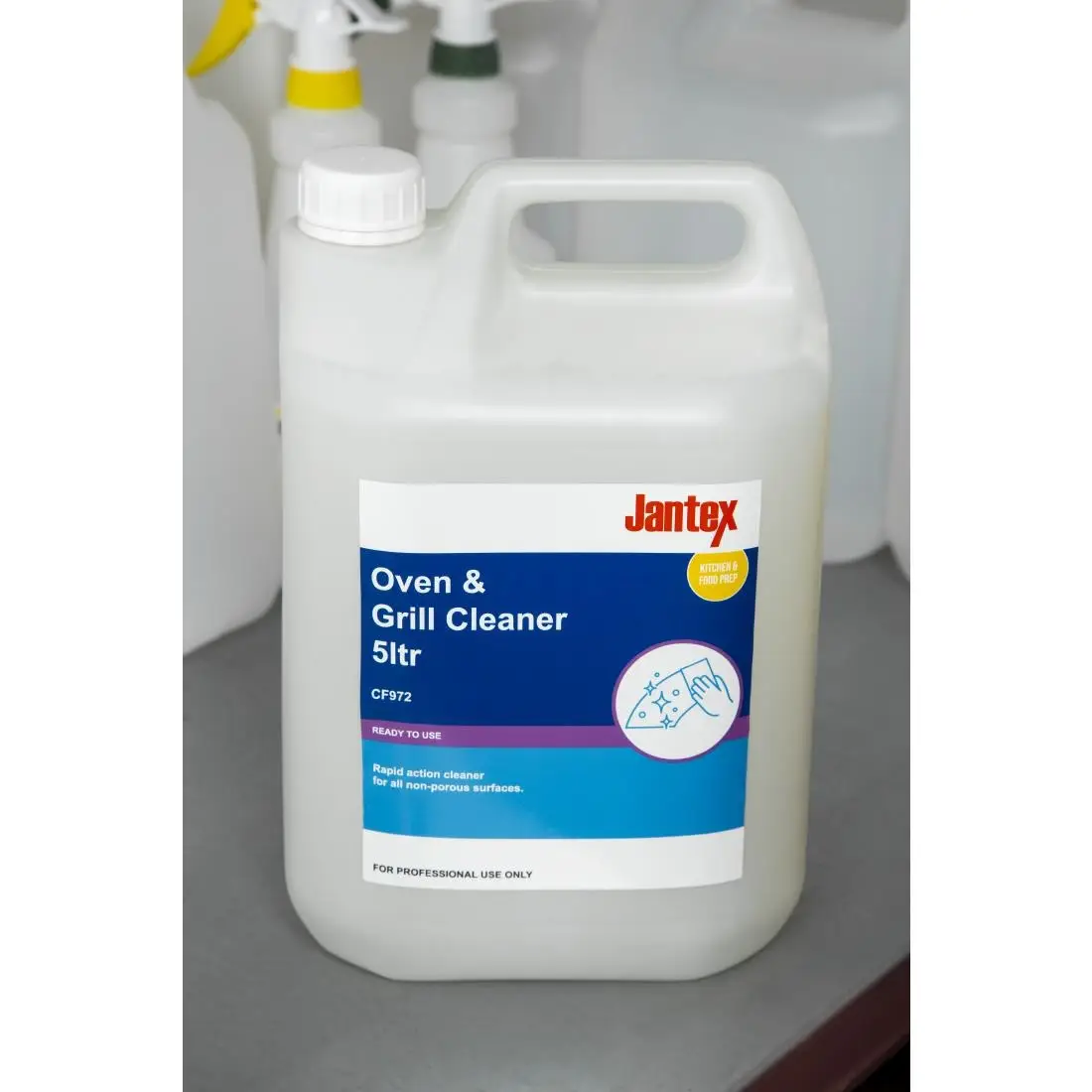
Why this oven cleaner earns its place
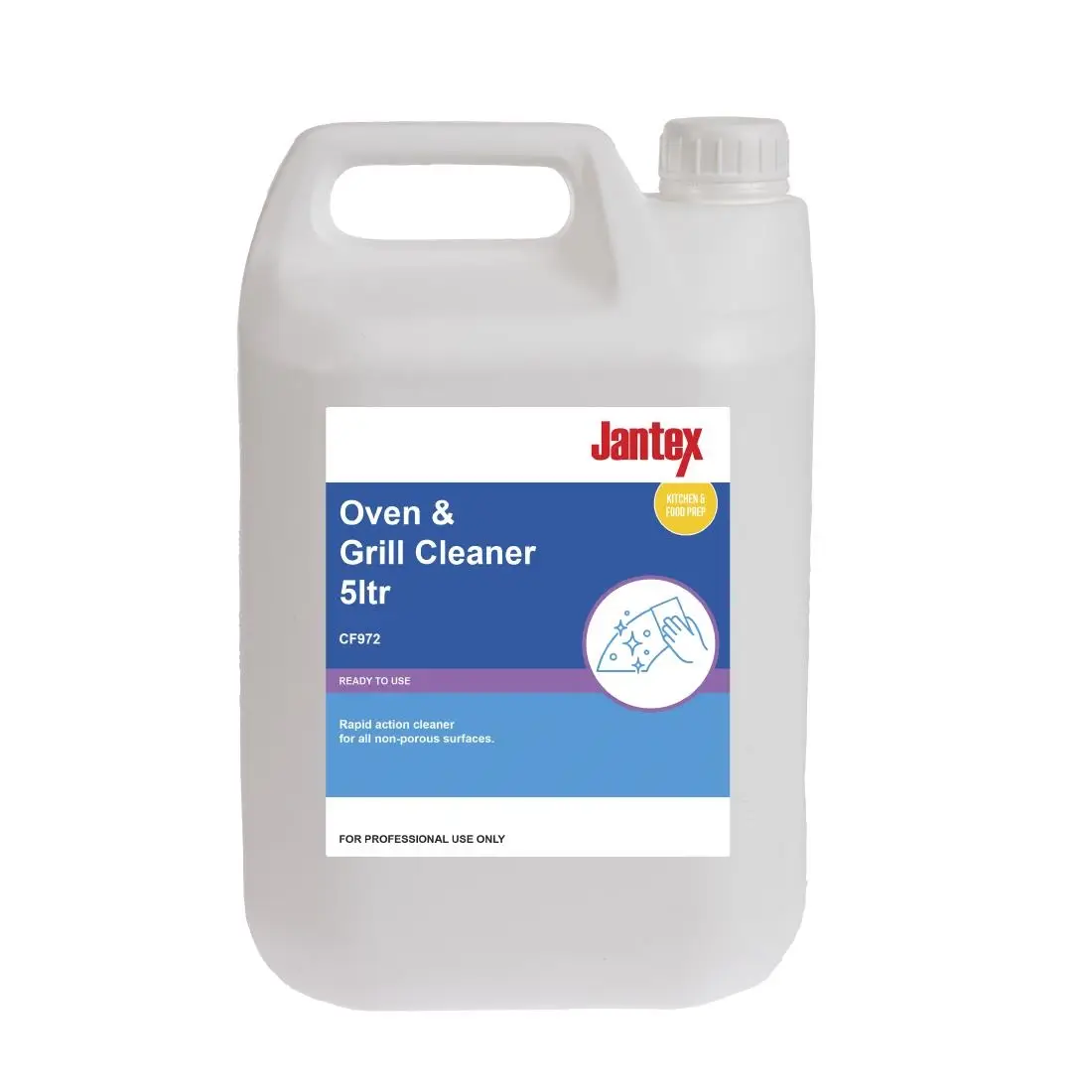
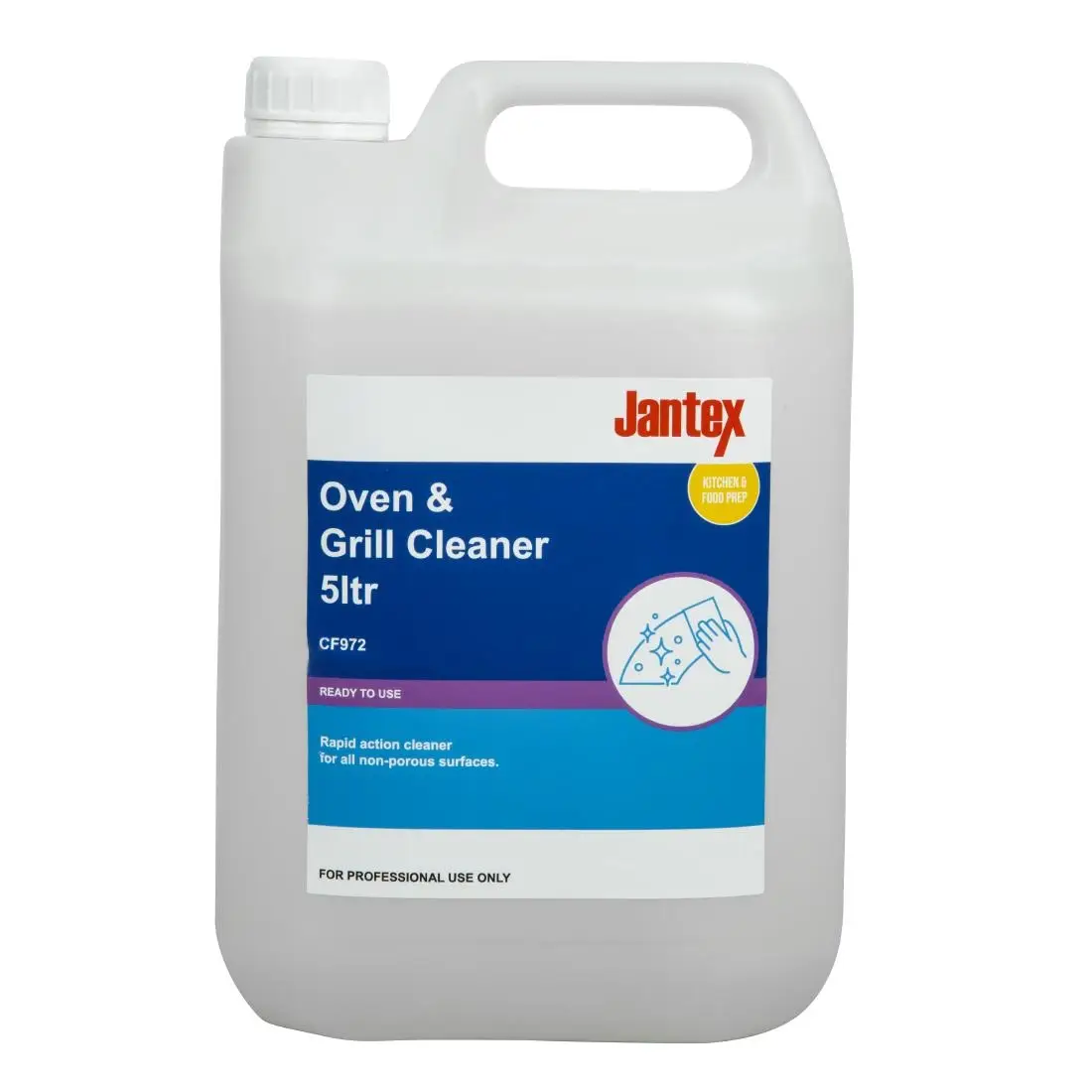
Built for the toughest build-up in the kitchen — the grease and burnt-on grime that collects inside and outside ovens and grills after repeated use. It's supplied ready-to-use, so there's no dilution to get wrong before tackling a job.
The formula is thickened so it clings to the surface rather than running straight off vertical panels or overhead grill surfaces, giving it time to work into baked-on residue instead of sliding away. It's non-fuming, which matters when you're cleaning inside an enclosed oven cavity or a tight service area, and it's specially formulated to be safe on aluminium as well as other oven surfaces.
It's unperfumed and food-safe, suited to professional commercial kitchens, though it's for professional use only and carries a corrosive classification, so handle it per the safety data sheet. A 5-litre container delivers around 5,000 applications, and the bottle is being transitioned to 30% recycled post-consumer plastic.
COSHH: six habits of safe chemical use
Control of Substances Hazardous to Health — the routine every commercial kitchen and cleaning cupboard is expected to run.


SDS
Read the label and the manufacturer’s safety data sheet — the pictograms tell you what you are holding.

Who could be harmed, and how badly? Judge likelihood against severity before anyone opens the cap.

Eliminate or substitute first, engineer and organise next — PPE is the last line, never the first.

Keep the controls working: check ventilation, dosing equipment and storage stay as they should be.


Everyone who uses it knows the hazards, the correct dilution and the PPE — before the first shift, not after.

Products and processes change. Reassess when they do, and keep the record that proves it.