Why this descaler earns its place
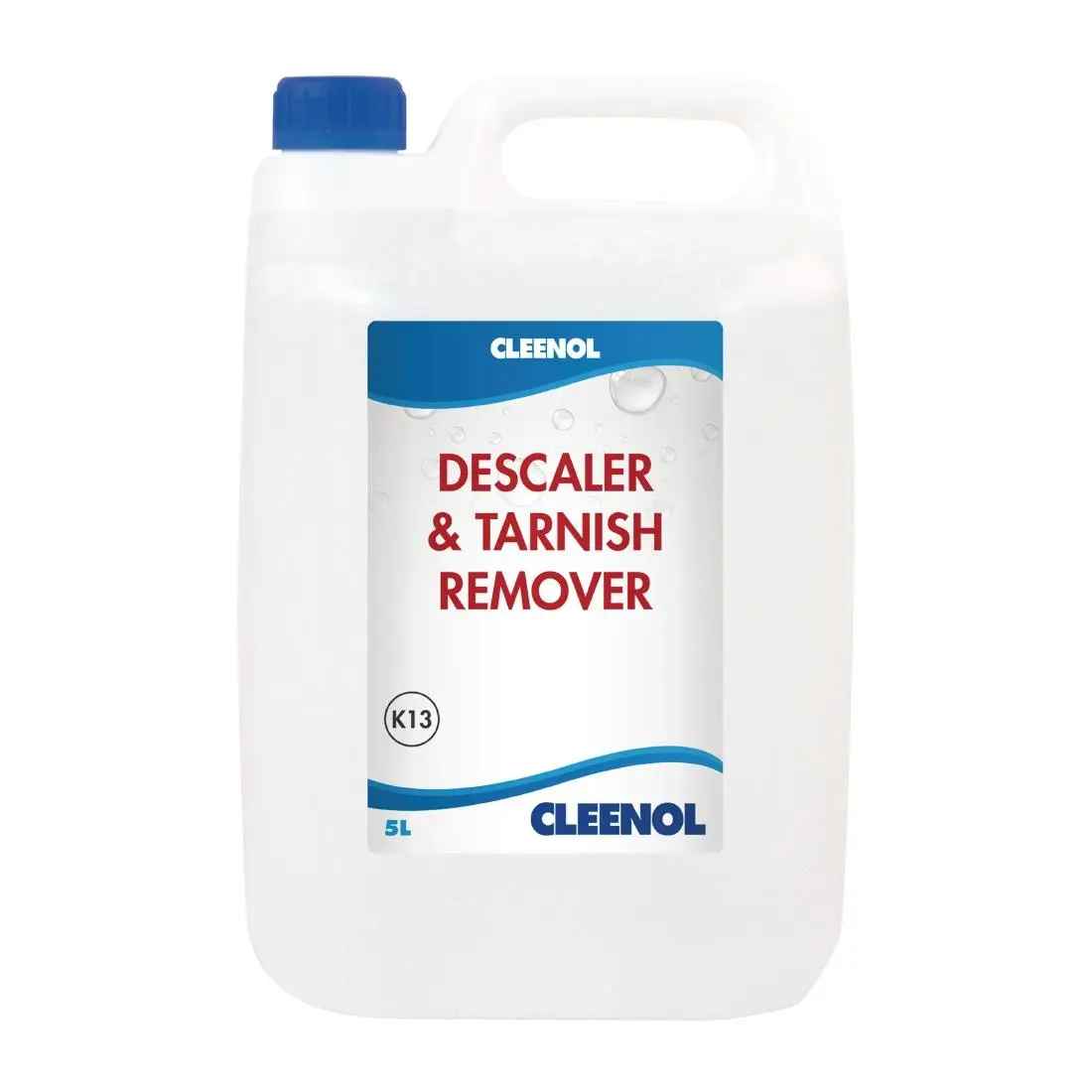
Cleenol's Descaler and Tarnish Remover is built to get through both jobs its name promises: rapid penetration and removal of built-up scale deposits, and effective stripping of tarnish from metal surfaces.
It works on ferrous metals to shift rust as well as scale, and it brightens aluminium and chrome rather than leaving them dulled after cleaning — useful where equipment needs to look presentable as well as function properly.The phosphoric acid base is what gives it the strength for genuinely stubborn deposits, and it's positioned for extensive use across catering and food industry settings for general-purpose cleaning and maintenance rather than a single narrow task. A specific and useful application is descaling bain maries and dishwashers, where hard water scale builds up steadily and starts affecting performance and appearance if it isn't dealt with.Supplied as two 5-litre bottles, this pack suits kitchens and catering operations with a genuine descaling workload — equipment running in hard water areas, or sites doing scheduled maintenance across several pieces of kit rather than a single occasional job.
Because it's phosphoric acid-based, it's classified as corrosive, so it needs the standard handling that comes with any acid-based descaler: gloves, ventilation, and care around eyes and skin, plus keeping it away from surfaces or metals it isn't rated for. Kept and used properly, it's a genuinely capable maintenance descaler rather than a light everyday spray.
COSHH: six habits of safe chemical use
Control of Substances Hazardous to Health — the routine every commercial kitchen and cleaning cupboard is expected to run.


SDS
Read the label and the manufacturer’s safety data sheet — the pictograms tell you what you are holding.

Who could be harmed, and how badly? Judge likelihood against severity before anyone opens the cap.

Eliminate or substitute first, engineer and organise next — PPE is the last line, never the first.

Keep the controls working: check ventilation, dosing equipment and storage stay as they should be.


Everyone who uses it knows the hazards, the correct dilution and the PPE — before the first shift, not after.

Products and processes change. Reassess when they do, and keep the record that proves it.