

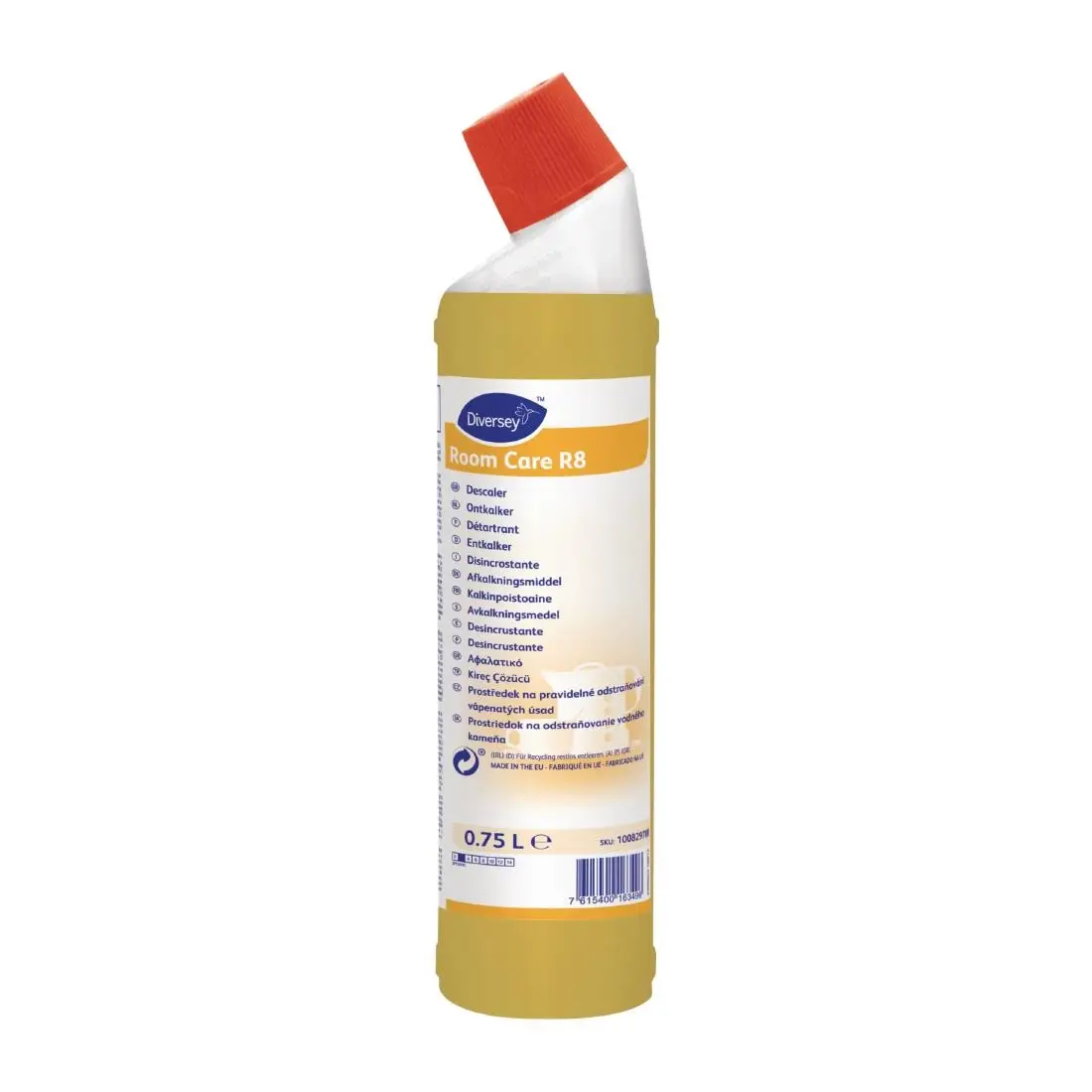

Why this descaler earns its place
This descaler is built specifically around the accommodation side of hospitality — guestroom kettles that build up limescale between guests, plus the showerheads and tap bases in en-suite bathrooms that suffer the same problem. It's aimed at housekeeping teams working through rooms on a changeover schedule.
The citric acid-based formula is ready to use straight from the bottle, with no dilution step to slow a room turnaround down, and it's specifically effective at removing limescale deposits from kettles — protecting the appliance and stopping scale from tainting the taste of the water guests boil for tea and coffee. The same formula can also be used neat directly on showerheads and tap bases, clearing tougher limescale build-up in the bathroom in the same pass.
It carries a corrosive hazard classification and comes in Diversey's colour-coded bottle and liquid, making it easy for housekeeping staff to identify at a glance and reducing the chance of the wrong chemical being grabbed mid-round. A safety data sheet is available for reference.
COSHH: six habits of safe chemical use
Control of Substances Hazardous to Health — the routine every commercial kitchen and cleaning cupboard is expected to run.


SDS
Read the label and the manufacturer’s safety data sheet — the pictograms tell you what you are holding.

Who could be harmed, and how badly? Judge likelihood against severity before anyone opens the cap.

Eliminate or substitute first, engineer and organise next — PPE is the last line, never the first.

Keep the controls working: check ventilation, dosing equipment and storage stay as they should be.


Everyone who uses it knows the hazards, the correct dilution and the PPE — before the first shift, not after.

Products and processes change. Reassess when they do, and keep the record that proves it.


