

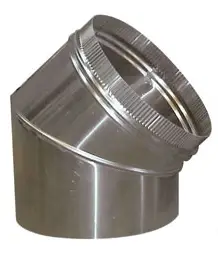
CombiSteel 45° Elbow Round Ø400mm 7220.0065

£155.76

+vat

Brand:

SKU: 7220.0065

Product summary

Size W/D/H (mm) x x

Product description

A 45-degree elbow for 400 mm ducting gives your extraction run a gentle slope — ideal when you need to climb toward the exit without sharp corners that kill airflow.

Downloads

SPECIFICATION 5 facts · tap for all Gross / net weight1 kgBrandCombiSteelGTIN / EAN6017433831815TypeDuctingDiameter400 mm

Identity3

Brand CombiSteelcatalogue
GTIN / EAN 6017433831815catalogue
Type Ductingcatalogue

Size & weight2

Diameter 400 mmcatalogue
Gross / net weight 1 kgsite
THE WORKING VIEW

Why this ducting earns its place

Extraction systems work best when air flows smoothly upward and outward. Sharp corners create turbulence and pressure loss, so a 45-degree elbow is your answer when the route demands a gentler turn. For 400 mm ducting, this angle is the middle ground: less aggressive than a 90-degree corner, but still practical enough to navigate real kitchen constraints.

At 1 kg, the elbow adds almost no weight to your ducting run. Push-fit connections mean you slip the 400 mm ducts onto both ends and seal with foil tape — quick, no tools, no leaks. The 45-degree angle is engineered for smooth airflow, so you're not fighting resistance and pressure drop the way you would with a hard corner.

Building an extraction route is a balancing act. The cooking zone sits lowest, and the system has to climb steadily toward the exit (roof, wall, or external hood). A 45-degree elbow lets you change direction without creating low spots where condensation can collect or kinks that choke airflow. It's a standard choice in commercial kitchens where every bit of extraction efficiency matters.
BEFORE YOU BUY

Questions, answered straight

Neither is universally "better" — it depends on your space and airflow needs. A 45-degree turn has lower pressure loss and is gentler on airflow, but a 90-degree corner works in tighter spaces. Choose based on what your kitchen layout requires.

A smooth 45-degree bend creates only modest pressure loss. The bigger impact on extraction speed is how well you seal the joints and whether the whole run slopes upward toward the exit — a sealed 45-degree elbow outperforms a loose 90-degree one.

This elbow is specifically 400 mm. You can mix diameters by using a reducer (either built into an elbow or separate), but sticking to 400 mm through the section keeps it simple and maintains pressure.

Generally, aim for the ducting to climb continuously toward the exit — even a modest upward slope helps condensation run back toward the cooking zone rather than pooling. A 45-degree elbow used strategically achieves this without excessive ductwork.

Listen for air hissing from the seams during operation, or watch for grease vapours appearing where they shouldn't. A properly sealed joint is silent and invisible. Use foil tape generously — it's cheap and the difference between a solid system and one that leaks.

Absolutely — it's common to mix them. You might use a 45-degree elbow to climb toward a wall, then a 90-degree to turn and exit, all within the same run. Just make sure every joint is sealed.
See it in our Swansea showroom

Compare kit side by side and discuss delivery with the Craven team.

CombiSteel 45° Elbow Round Ø400mm 7220.0065 Product Data

Brand CombiSteel
Diameter 400 mm
Weight 1 kg
If you have any questions about the CombiSteel 45° Elbow Round Ø400mm 7220.0065 then please get in touch.

You may also be interested in...