Why this lime squeezer earns its place
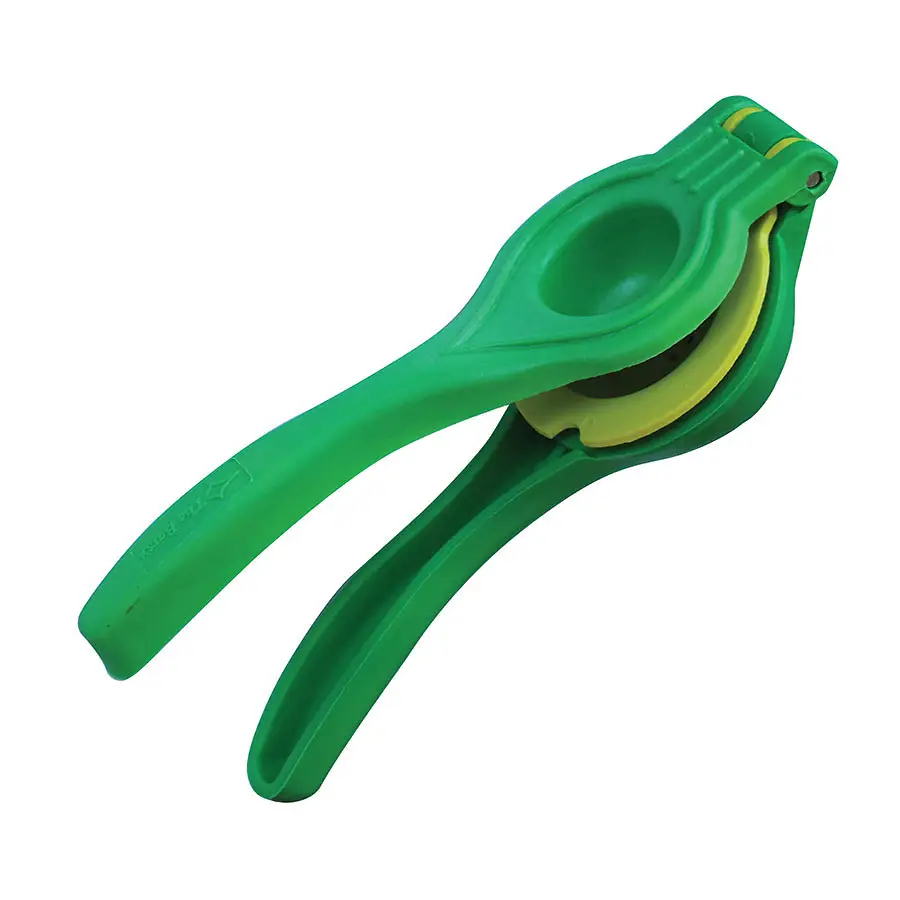
A press squeezer works the fruit the opposite way round to a reamer: the cut half goes face down, the handles close, the skin inverts and the juice is driven out through the bowl while pith and pips stay behind. That means no straining afterwards, and it means the last of the juice actually comes out rather than being left in a half that gets thrown away. Doing forty limes for a service, that difference is minutes off the prep and a noticeably fuller jug at the end of it. The 25 cm length is leverage — long handles are what let someone finish a fruit in one squeeze instead of hanging their weight on a short pair.
Green is the colour a kitchen running the standard code uses for fruit and salad, so a green handle on the rail tells a chef across the bench which press has been on citrus and not on something else. Polycarbonate is a sensible body material for the job: citrus acid dulls and pits some metals over time and gets into any soft plastic as smell and stain, and polycarbonate does neither. The aluminium ratchet is the part under load every time the handles close, and the hinge is where a cheap squeezer gives up first. Rinse it out as soon as the pressing is done — pulp and sugar that dry into the bowl and around the pivot are far harder work than pulp caught wet.