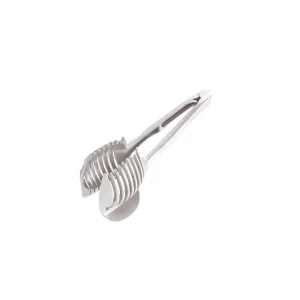
Why this tomato earns its place
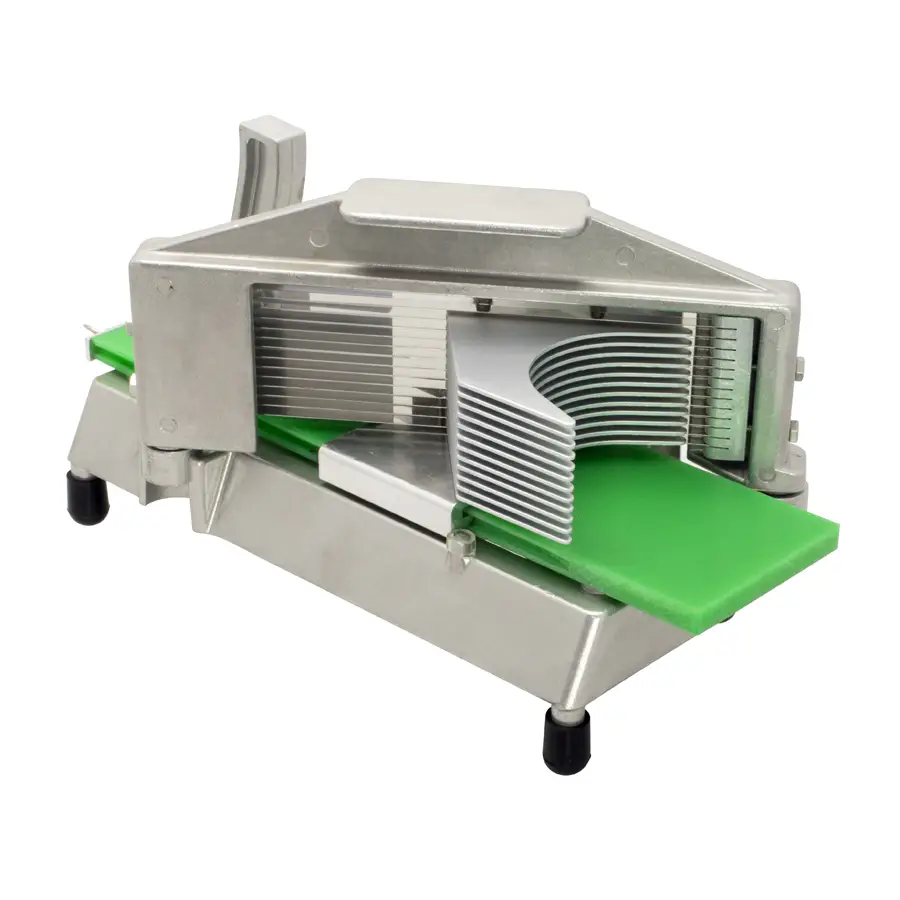
Sliced tomato is where a sandwich or burger line quietly loses money and consistency at the same time. Cut by hand, thickness follows whoever is holding the knife and how deep into the shift they are: the first tomato of the day is neat, the fiftieth is not, and the covers you get out of a case stop being predictable. This slicer removes the judgement from it. The tomato goes through a bank of blades set at a fixed depth in a single push, so every slice comes out at 6 mm and every tomato of the same size yields the same count.
That fixed cut is what makes the job countable. If a burger takes two slices and a sandwich takes three, a case of tomatoes turns into a known number of covers rather than an estimate, and the difference shows up in both the food cost and what lands on the plate — even slices sit flat in a bun and stack in a sandwich instead of sliding out of it. The speed is the other half: one stroke against a board, a knife and a wiped-down surface between batches. It is also the safer way to do a repetitive cut, because the hands work behind the blades rather than in front of an edge with a wet, rolling ingredient underneath.
The build is stainless steel and aluminium in a silver finish, which is the combination this kind of bench tool is made from — hard edges where the cutting happens, and light enough to lift down, use and put away rather than surrender bench space to permanently. The one habit worth enforcing is cleaning it out as soon as the batch is done. Pulp and seed dry hard between close-set blades, and a slicer that has been left until the end of the shift takes far longer to bring back than one rinsed through while it is still wet.