Why this knive earns its place
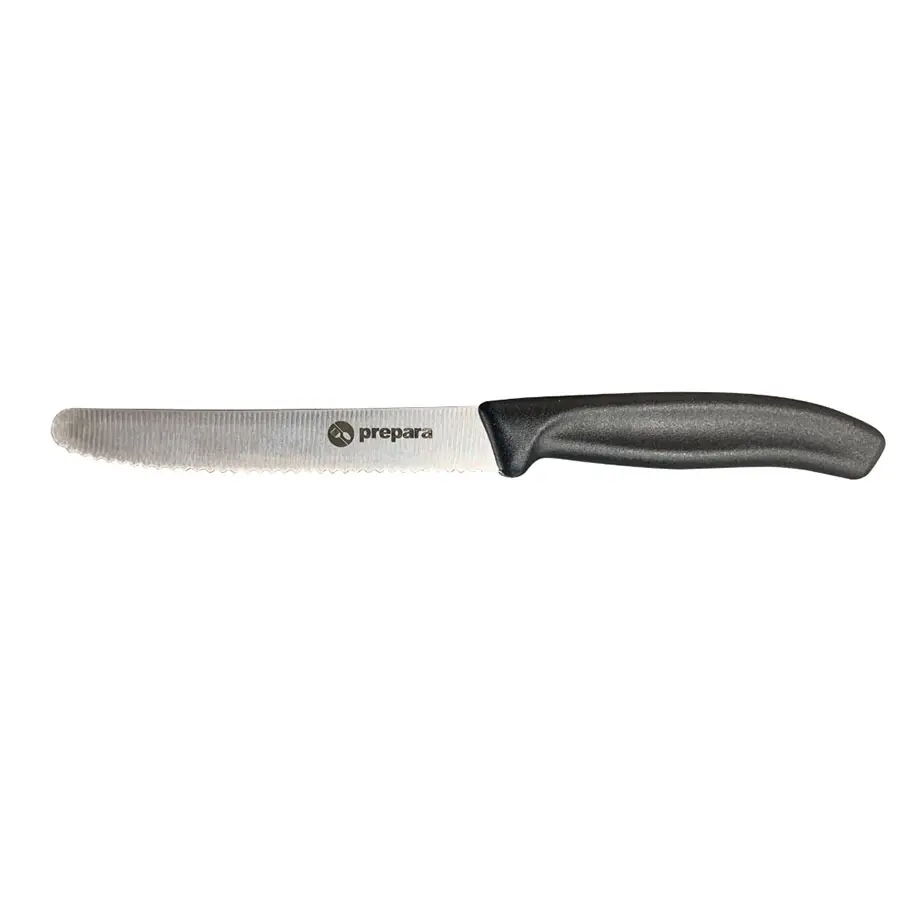
A tomato defeats a general knife because its outside is tougher than its inside. A plain edge that has lost even a little of its bite skates across the skin, and pressing harder to get through it crushes the flesh and pushes the seeds and juice out before the cut is finished. A serrated edge solves that by biting on contact — the teeth catch the skin and start cutting under the weight of the blade alone, so slices come off whole and hold their shape on a plate. Citrus behaves the same way: pith and peel are tough, the segments are not, and teeth cut wedges and slices for a garnish tray or a bar caddy without collapsing them.
At 11cm the blade is long enough to pass through a large tomato in a single draw rather than sawing at it, and short enough to work fast on a small board or in the hand at a garnish station. That is the other reason serration suits this job: a salad or garnish station uses the same knife constantly and rarely gets it sharpened, and a toothed edge keeps working long after a plain one has stopped, because the teeth carry the cutting. It will not come back on a steel the way a plain edge does, which is the trade. Stainless steel is what makes it viable in the first place — tomato and citrus acid sit on a blade all day and stainless washes off clean without staining or pitting. Black is outside the HACCP colour codes of red, blue, yellow, green, brown and white, so it reads as a general knife rather than one tied to a station, worth assigning deliberately if it is going near ready-to-eat salad.