Why this ruby sharpener earns its place
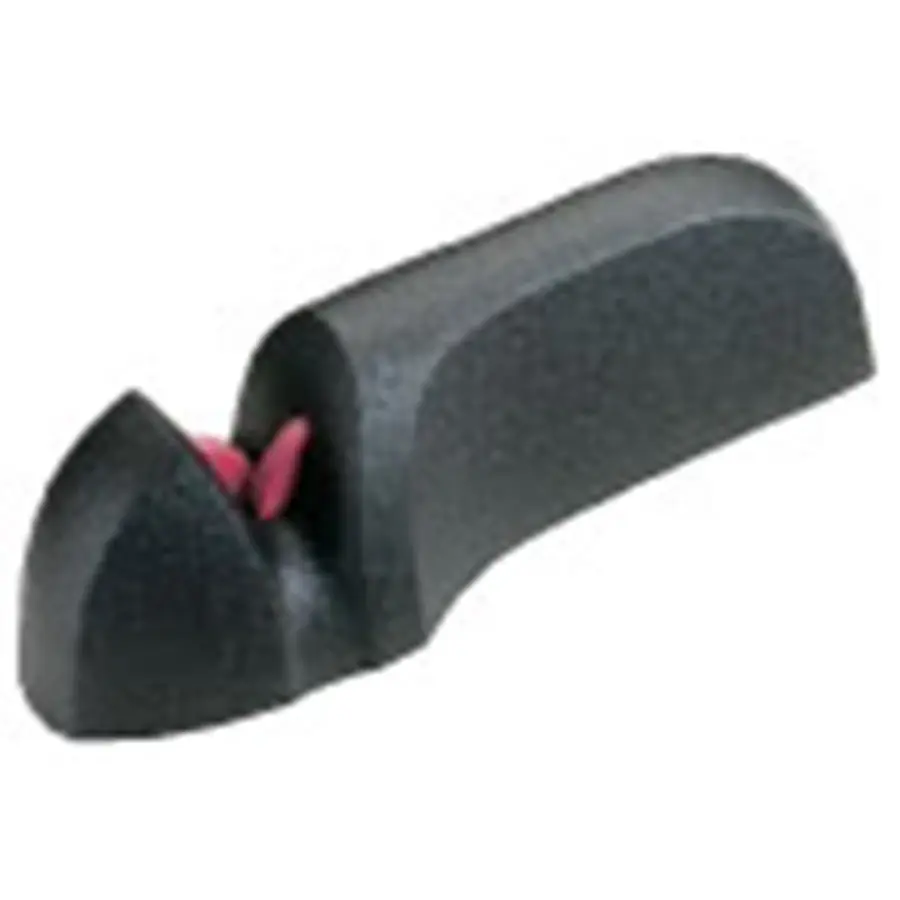
The argument for a bench sharpener over a hand-held steel is that it removes the skill from the job. A steel only works if the person holding it can keep a consistent angle, which is why the same knives come back sharp from one chef and ruined from another. Here the geometry is fixed in the housing: the blade is drawn through, the angle is whatever the sharpener says it is, and every knife on the section gets treated the same way whoever picks it up. Right- and left-handed application matters for the same reason — a shared bench tool that only suits one hand ends up used badly by half the team.
The rubber non-slip base is what makes it a one-handed job. The unit stays put on a wet worktop while the other hand controls the knife, which is the difference between a controlled draw and chasing the sharpener across the bench with a blade in your grip. It takes straight and serrated blades alike, which is worth knowing because serrated knives are normally the ones nobody maintains — they get used blunt until someone throws them out. The sturdy plastic housing keeps it light enough to move between sections, and because it is dishwasher safe it goes through the wash with everything else rather than getting a wipe and being put back in a drawer.