
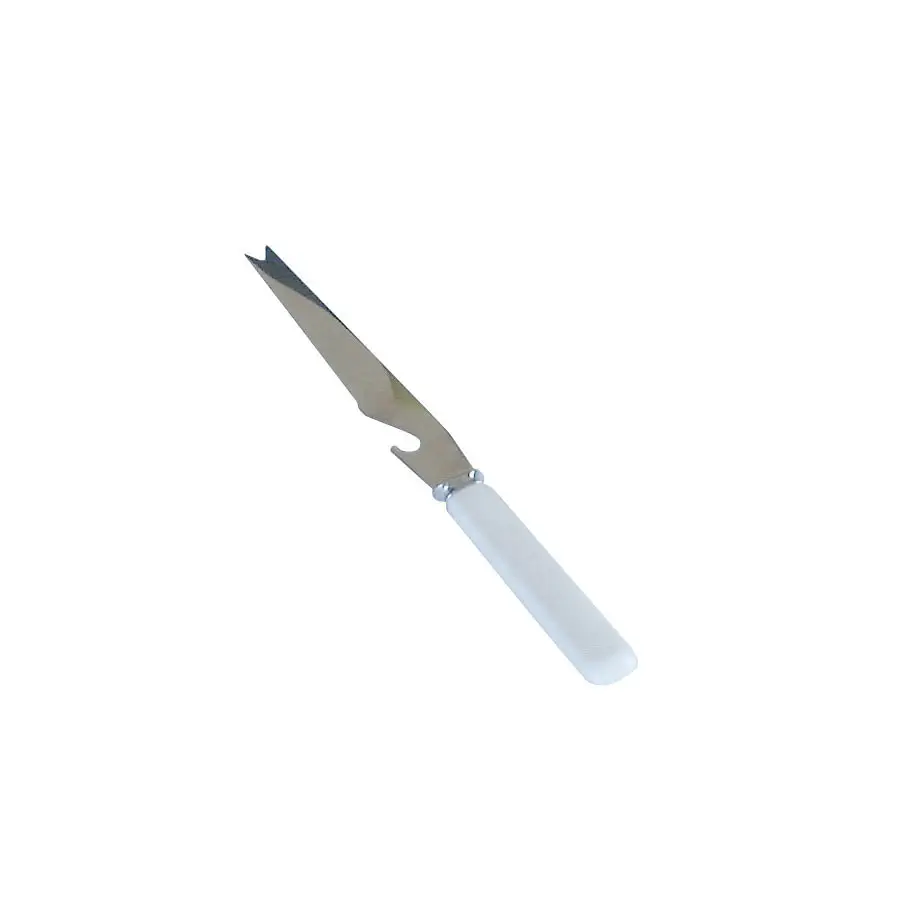
Why this buffet / bar knive earns its place
12 cm is the working length for cuts made on your feet rather than at a board. Lemons and limes into wheels and wedges, strawberries topped, rolls split, butter portioned, film cut off a buffet tray — a blade this size is controlled with the fingertips and the tip never swings out far enough to be a problem at a crowded bar or a packed pass. It is also long enough to go through a lime in one clean pass, which a paring knife will not do without sawing, and sawing is what turns a wedge into something that looks handled.
The white handle is a hygiene decision, not a styling one. White shows grease, juice and dirt immediately, so a handle that has been picked up with unwashed hands or carried from one job to another is visible rather than hidden — which is exactly why pale and colour-coded handles became standard on stations customers can see into. The stainless blade suits the work: citrus acid on a blade all day will stain and pit some steels, and stainless takes it without discolouring. Wash and dry it by hand rather than leaving it in a sink or standing on a metal rack, keep it out of a drawer of loose kit where the edge gets knocked, and put it back on a steel regularly. A small knife kept sharp cuts fruit cleanly; the same knife left blunt crushes it, and that shows on the plate.


