Why this knive earns its place
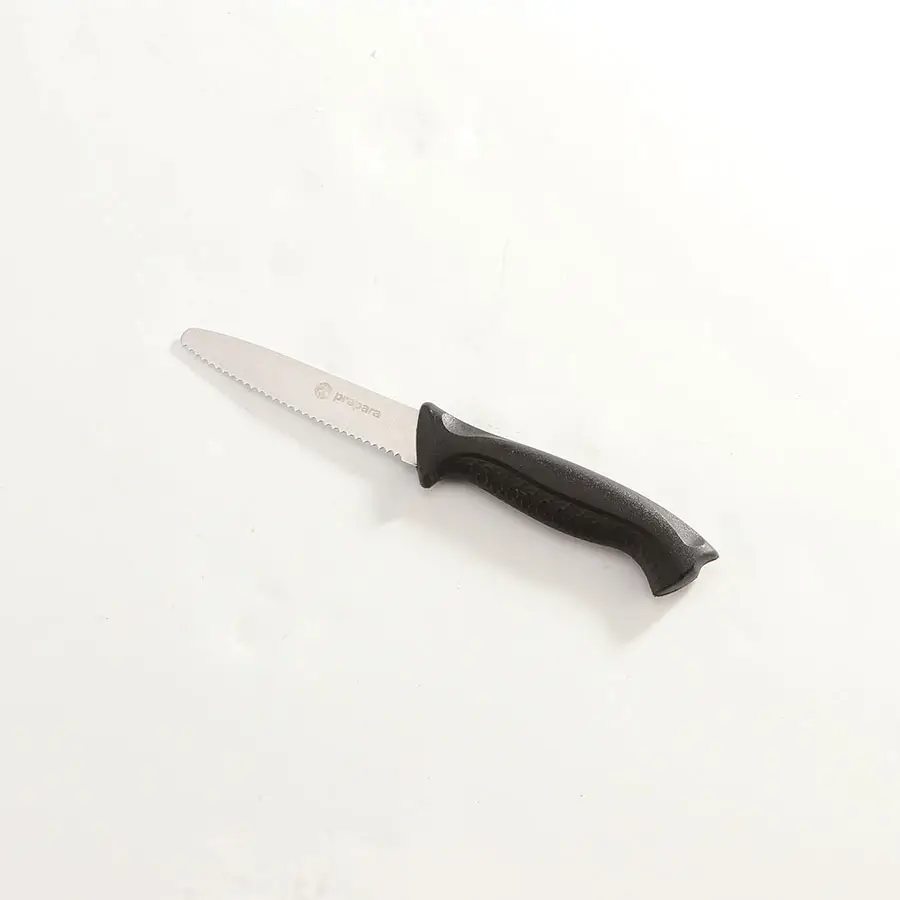
Serration earns its place wherever the outside of something is tougher than the inside. A plain edge meeting a tomato skin, a pepper, a lemon or a crusty roll either slides across it or has to be pushed hard enough that the flesh underneath collapses before the skin gives. Teeth catch instead of sliding, so the blade starts its cut on contact and the weight of the knife does the rest. At 4in the blade is short enough to work in the hand or on a small board — topping and tailing, slicing garnish, splitting rolls, cutting fruit for a counter — and short enough that it does not need a full board station to be useful.
The rounded tip is what makes it a knife you can leave in more places. Without a point it cannot puncture, so it goes out on a table, sits in a service drawer, gets handed across a pass, or lives on a bench that is not always attended, with the risk of a stab injury taken off the table entirely. The trade is that piercing and coring belong to another blade — this one is for drawing cuts. Stainless steel suits the work, since fruit and tomato acid attack a blade all day and stainless washes off without staining. Black falls outside the HACCP colour codes, so it reads as general-purpose rather than tied to a station, and a serrated edge holds its bite far longer than a plain one because the teeth keep cutting after the flats have dulled — worth knowing, because it also means it will not come back on a steel and needs proper attention when it does finally go.