
Why this chopping board earns its place
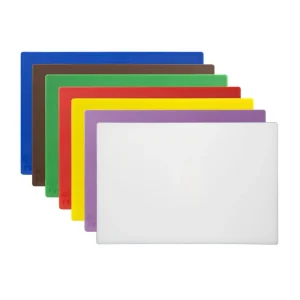
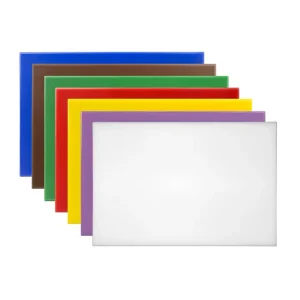
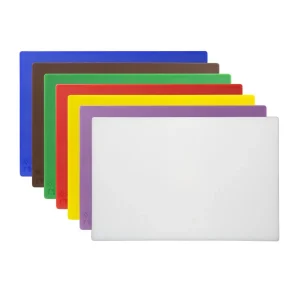
This is a full-size bench board in green, the colour a UK kitchen conventionally gives to salad and fruit. That is the whole point of a coded board: the commis reaching for it at the prep bench does not have to check what it was last used for, because the colour tells them. Prepara make the case plainly — a board like this is there to keep cross-contamination out of the kitchen, and it only does that job if every station has the right colour to hand and nobody borrows across.
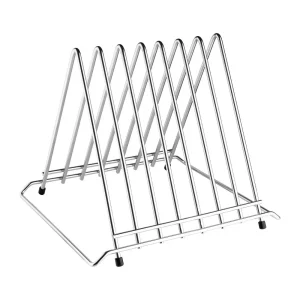
At 455 × 305 mm it takes a full head of lettuce or a tray of fruit without the trimmings ending up on the bench, and it still fits a standard prep table and a board rack. The 12 mm thickness is the part that shows up in use: thin enough to lift one-handed into the wash-up but heavy enough to stay put under a knife rather than skating with each stroke. High density polyethylene also treats an edge kindly. It gives under the blade and closes behind it, which is why a plastic board holds a knife's edge far longer than glass, stone or a hard composite.
The surface is antibacterial high density polyethylene, and it wants the same routine as any board on the line: scrubbed down after each use, run through the machine or the sink at the end of service, and stood on edge to dry rather than stacked wet. Boards earn their replacement date. Once the cut marks are deep enough to hold soil after washing, or the board has cupped enough to rock on the bench, it comes off the rota — that is a wear item, not a fault.