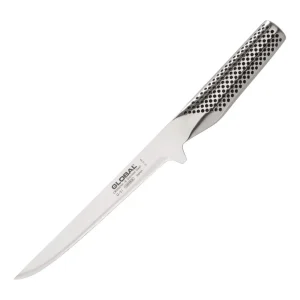
Boning and filleting knives are precision blades used to separate meat from bone or remove fish skin and pin bones cleanly, essential kit for butchers, gastropubs, restaurants and hotel prep sections. The main buying consideration is blade flexibility and steel grade: a semi-flexible or flexible high-carbon stainless blade (typically 13-20cm) suits fish and poultry, while a stiffer blade suits red meat boning. Ergonomic, non-slip handles and full-tang construction matter for safety during repetitive prep work. Durable, NSF-approved handles are the norm in this category, suited to busy hotel and catering prep lines.
Boning and filleting knives are chosen by blade flexibility, length and steel grade against the protein. A flexible or semi-flexible blade follows the contours of fish and poultry and hugs the bone closely, while a stiffer, narrower boning blade gives control on red-meat seam work. Blade lengths typically run 13-20cm — shorter for boning, longer filleting blades to follow a fish spine in one stroke. High-carbon stainless steel (such as X50CrMoV15) holds a keen edge through heavy daily use while resisting rust from constant raw-protein contact. Full-tang construction and a non-slip, NSF-approved handle matter for safety and hygiene during repetitive prep, and most are hand-wash only to protect the edge. The main buying consideration is flexibility and length against the meat or fish being worked. Used across butchery counters, gastropubs, hotels and commercial prep sections.