Why this sanitiser earns its place
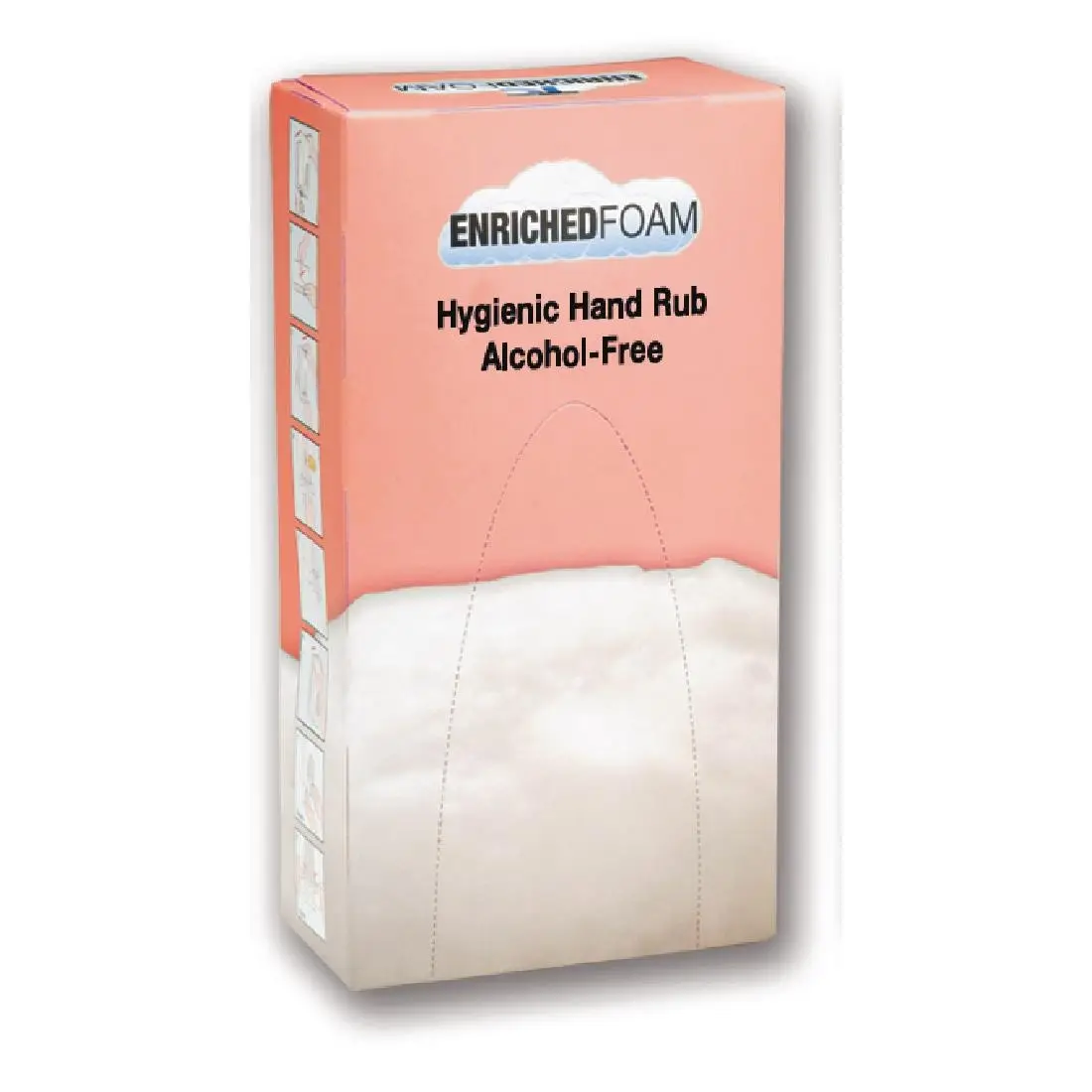
This alcohol-free hand rub is built for sites where alcohol-based formulations aren't permitted, using an organic antimicrobial agent that works against both bacteria and viruses on hands rather than bacteria alone, which matters where norovirus or similar outbreaks are a live concern in a food or care setting rather than an occasional risk to plan around once a year.
It produces a thick foaming lather for full hand coverage, working into fingertips and between fingers rather than just the palms, and it's unperfumed, so it suits food handling and processing environments where scent matters and a perfumed gel could risk tainting anything handled straight afterwards.
The sealed, disposable pouch design stops leaking or clogging in the dispenser and keeps the contents free from contamination before use, unlike an open refill bottle sitting exposed in a cistern cupboard – each 800ml pouch delivers around 2,000 doses, a solid cost-per-use for a manual system running through a full shift pattern.
COSHH: six habits of safe chemical use
Control of Substances Hazardous to Health — the routine every commercial kitchen and cleaning cupboard is expected to run.


SDS
Read the label and the manufacturer’s safety data sheet — the pictograms tell you what you are holding.

Who could be harmed, and how badly? Judge likelihood against severity before anyone opens the cap.

Eliminate or substitute first, engineer and organise next — PPE is the last line, never the first.

Keep the controls working: check ventilation, dosing equipment and storage stay as they should be.


Everyone who uses it knows the hazards, the correct dilution and the PPE — before the first shift, not after.

Products and processes change. Reassess when they do, and keep the record that proves it.