
Why this detergent earns its place
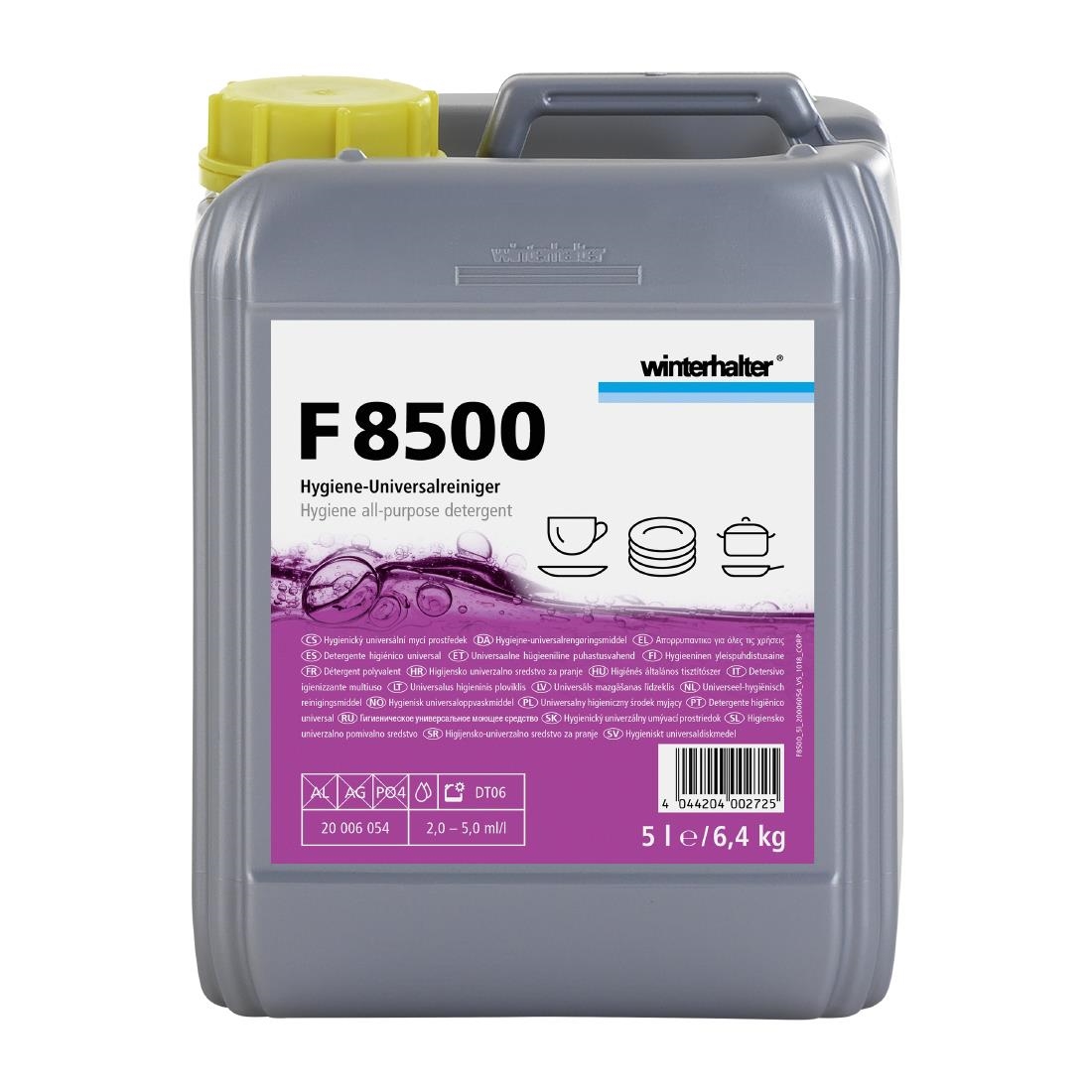
F8500 is Winterhalter's highly alkaline, active-chlorine all-purpose detergent, built for kitchens dealing with the full range of everyday dish soiling in one product rather than switching between specialist formulas. It covers glass, plastic, porcelain, stainless steel, cutlery and utensils, and it's engineered to remove dried-on coffee and tea stains, general discolouration and food remnants without needing a pre-soak.
Its strength is in the harder chemistry jobs: good protein removal and bleaching action alongside solid starch and grease solubility, which is exactly what's needed for stubborn plate soiling that a milder neutral detergent won't shift on the first pass. The formula is phosphate-free and highly concentrated, so cleaning performance comes from chemistry rather than dosage volume.
It isn't a fit for every material, though: Winterhalter is explicit that F8500 isn't suitable for silver, aluminium (including anodised aluminium) or other metal alloys, so it needs to stay on general crockery and cutlery lines rather than being used as a blanket wash across mixed equipment. As with the rest of the range, Winterhalter recommends it as part of their matched warewasher, chemistry and water treatment system for the results it's built to deliver.
COSHH: six habits of safe chemical use
Control of Substances Hazardous to Health — the routine every commercial kitchen and cleaning cupboard is expected to run.


SDS
Read the label and the manufacturer’s safety data sheet — the pictograms tell you what you are holding.

Who could be harmed, and how badly? Judge likelihood against severity before anyone opens the cap.
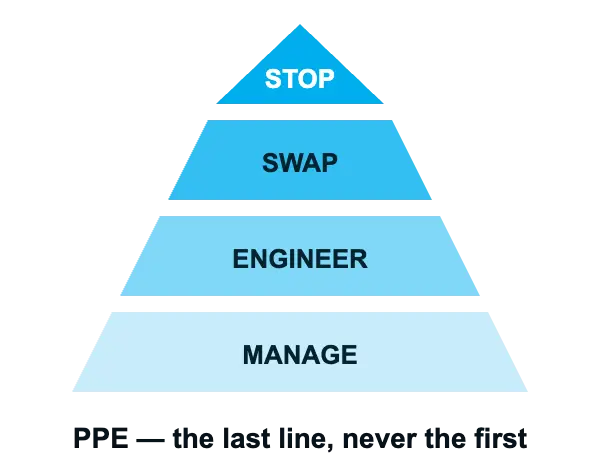
Eliminate or substitute first, engineer and organise next — PPE is the last line, never the first.

Keep the controls working: check ventilation, dosing equipment and storage stay as they should be.


Everyone who uses it knows the hazards, the correct dilution and the PPE — before the first shift, not after.

Products and processes change. Reassess when they do, and keep the record that proves it.