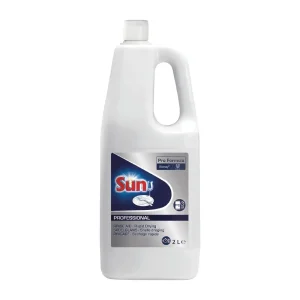
Why this rinse aid earns its place
A dedicated rinse aid for cabinet glasswashers, Bactosol is formulated to break the surface tension of the final rinse so water sheets off glassware rather than beading and drying into spots. The low-foam formula is built specifically for glass washing machines rather than general dishwashing, and it's designed to work across the full range of water conditions a site is likely to see.
Dosing is fine – just 0.3 to 0.5ml per litre of water – and it's built for auto-dispensing equipment, so once it's set up correctly on the machine it doesn't need topping up or adjusting shift to shift. It's non-tainting and food-safe, and critically for a bar or pub, it has no effect on beer head retention, so glasses come out clean without ruining the pour.
The special blend of rinsing agents is designed to speed up drying, cutting the amount of manual towel-drying staff need to do at the end of a wash cycle, and leaving glassware genuinely sparkling rather than merely clean. As a concentrate it also delivers a strong cost-per-use, and the smaller volume of concentrate versus a ready-to-use rinse aid means less packaging to store and dispose of.
COSHH: six habits of safe chemical use
Control of Substances Hazardous to Health — the routine every commercial kitchen and cleaning cupboard is expected to run.


SDS
Read the label and the manufacturer’s safety data sheet — the pictograms tell you what you are holding.

Who could be harmed, and how badly? Judge likelihood against severity before anyone opens the cap.

Eliminate or substitute first, engineer and organise next — PPE is the last line, never the first.

Keep the controls working: check ventilation, dosing equipment and storage stay as they should be.


Everyone who uses it knows the hazards, the correct dilution and the PPE — before the first shift, not after.

Products and processes change. Reassess when they do, and keep the record that proves it.