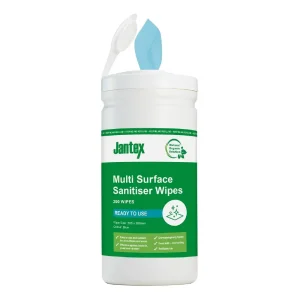


Why this washroom cleaner earns its place
This is the refillable side of PVA Hygiene's bathroom cleaner system — a 750ml trigger spray bottle that's pre-labelled for the job rather than a generic spray bottle pressed into service. It's designed to be filled with water and one of the PVA Hygiene bathroom cleaner soluble sachets (matched to code HZ302), which dissolves inside to make up a fresh dose of solution.
That means the bottle itself doesn't come filled with chemical — it's the dosing and delivery half of the system, built so the same measured dilution gets made up every time rather than staff guessing quantities.The trigger mechanism is built for consistency: a quality spray head delivers a steady, even dose with each pull, and an adjustable nozzle lets staff choose a finer mist or a heavier spray depending on the surface being tackled. The bottle itself is translucent, so it's obvious at a glance how much solution is left before it needs refilling — useful on a cleaning trolley where nobody wants to find out mid-task that the bottle's empty.Colour-coded labelling ties this bottle specifically to the bathroom cleaner sachets, so it's immediately identifiable next to other PVA Hygiene bottles in the same colour-coded system, cutting the risk of the wrong chemical ending up in the wrong bottle.
Clear instructions are printed on for staff filling it. Because it's designed to be refilled and reused rather than thrown away after one use, it also cuts down on the single-use plastic that comes with buying pre-filled spray bottles over and over.
COSHH: six habits of safe chemical use
Control of Substances Hazardous to Health — the routine every commercial kitchen and cleaning cupboard is expected to run.


SDS
Read the label and the manufacturer’s safety data sheet — the pictograms tell you what you are holding.
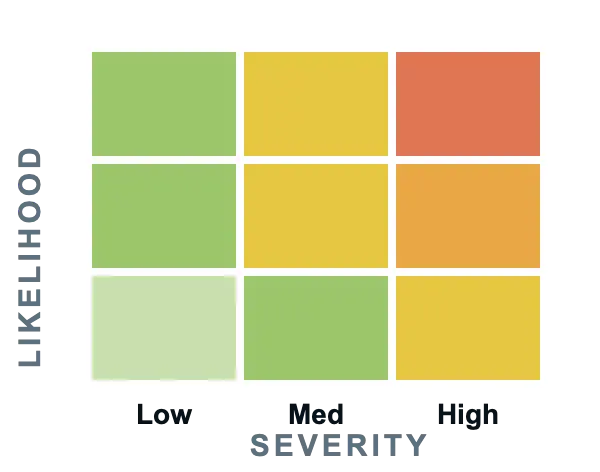
Who could be harmed, and how badly? Judge likelihood against severity before anyone opens the cap.
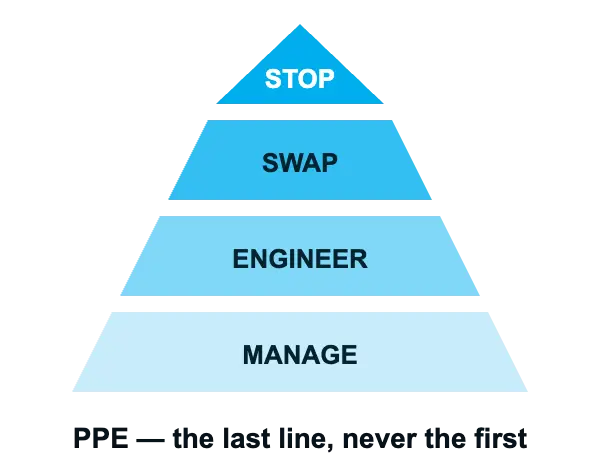
Eliminate or substitute first, engineer and organise next — PPE is the last line, never the first.
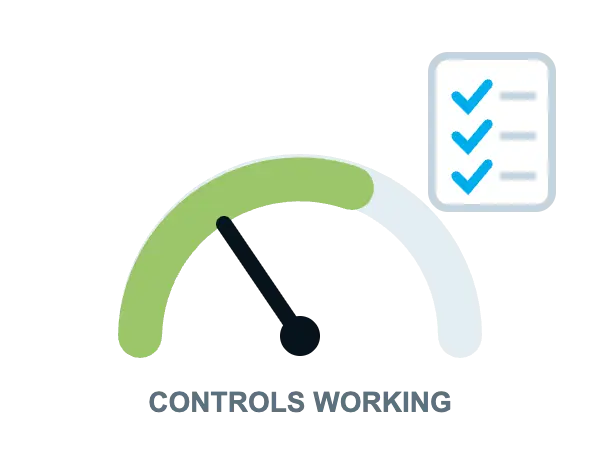
Keep the controls working: check ventilation, dosing equipment and storage stay as they should be.


Everyone who uses it knows the hazards, the correct dilution and the PPE — before the first shift, not after.

Products and processes change. Reassess when they do, and keep the record that proves it.