Why this bleach earns its place
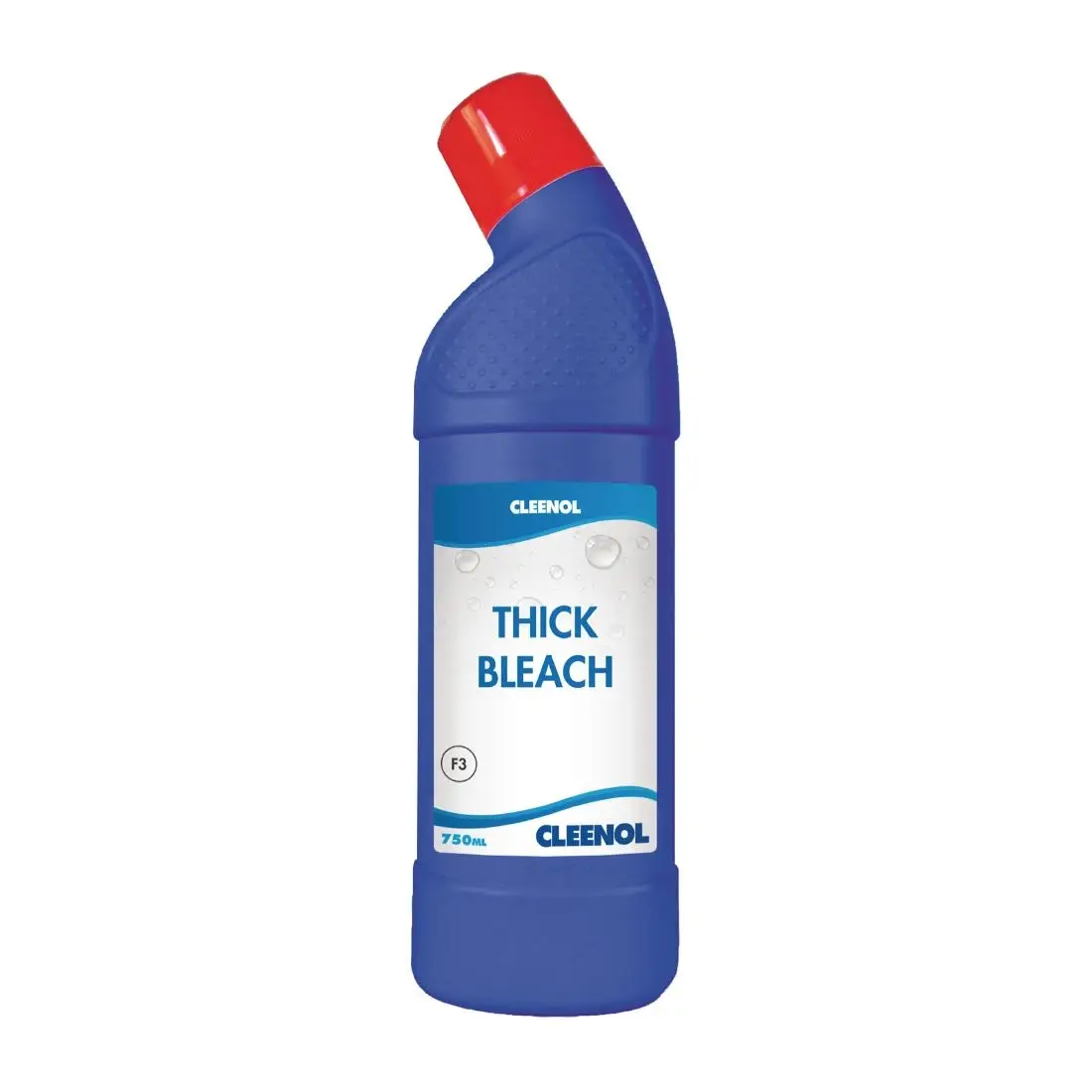
This is Cleenol's thick bleach, formulated with added viscosity so it clings to the surface it's applied to rather than running straight off — the same principle as a foaming oven cleaner, applied to bleach. That thickness means longer contact time on the surface being cleaned, which is what actually does the disinfecting and stain-lifting work rather than just a quick splash.
It's a 5% active formula, putting it at genuine strength rather than a diluted, ready-to-use bleach — this is a proper high-active product for surfaces that need it. It carries a corrosive hazard classification in line with that strength, so standard bleach handling precautions apply: ventilation, gloves, no mixing with other chemicals.
The bottle itself is designed with a handy directional nozzle specifically for under-rim application, the classic hard-to-reach spot in a toilet bowl where residue and staining collect and ordinary pouring doesn't reach effectively.
COSHH: six habits of safe chemical use
Control of Substances Hazardous to Health — the routine every commercial kitchen and cleaning cupboard is expected to run.


SDS
Read the label and the manufacturer’s safety data sheet — the pictograms tell you what you are holding.

Who could be harmed, and how badly? Judge likelihood against severity before anyone opens the cap.

Eliminate or substitute first, engineer and organise next — PPE is the last line, never the first.

Keep the controls working: check ventilation, dosing equipment and storage stay as they should be.


Everyone who uses it knows the hazards, the correct dilution and the PPE — before the first shift, not after.

Products and processes change. Reassess when they do, and keep the record that proves it.