Why this sanitiser earns its place
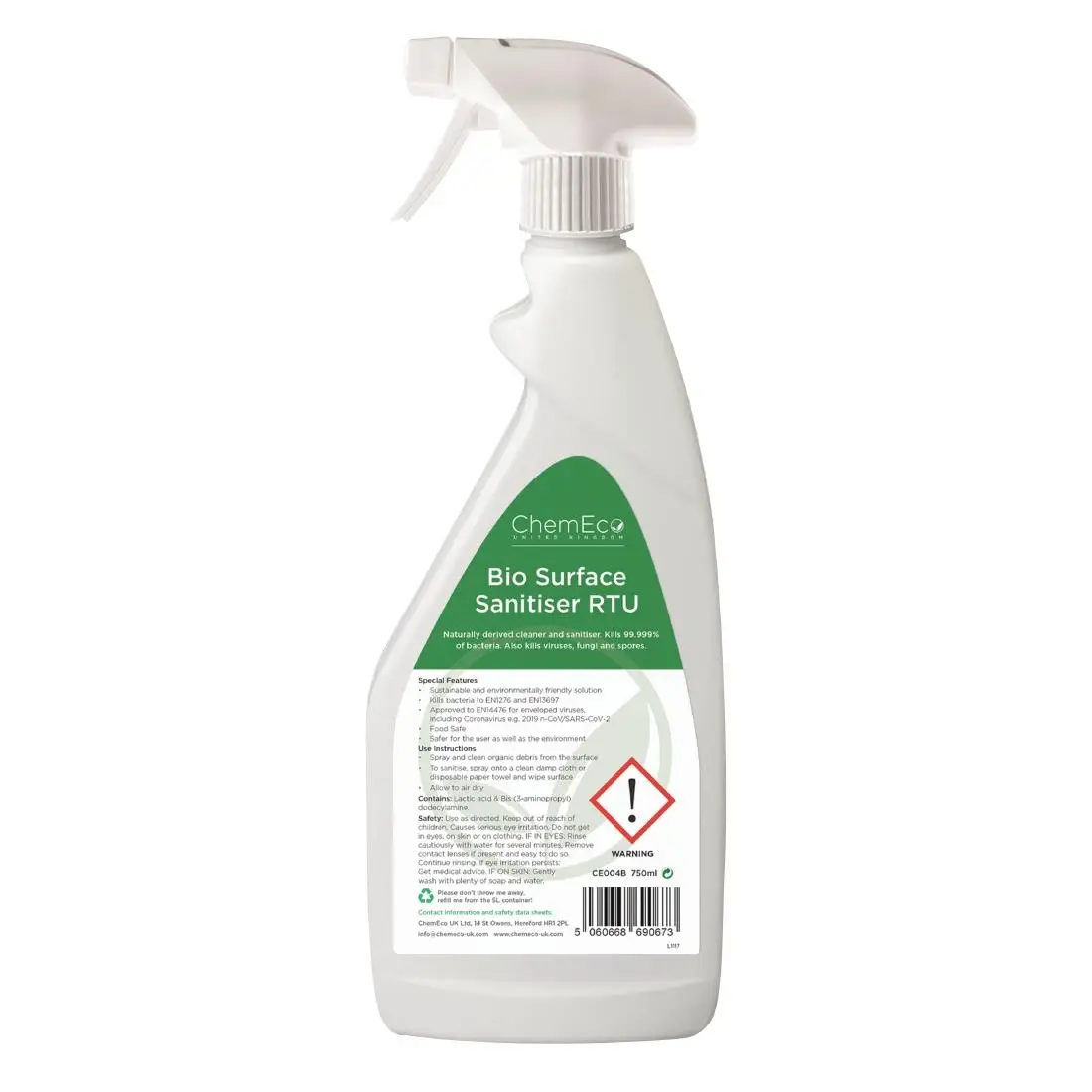
This sanitiser is built around a naturally derived, mild surfactant and fermentation extract rather than the quats, alcohols or chlorine-based actives found in most commercial sanitisers, aimed at sites wanting effective disinfection without the chemical baggage.
It disinfects, descales, deodorises and deep-cleans in one product, leaving surfaces sparkling and odour-free with a fast 60-second contact time — quick enough to fit into a rolling clean-down rather than holding up service. It's accredited to EN13623, EN1276, EN13697 and EN1650, and additionally approved to EN14476, giving it recognised virucidal credentials alongside its general bactericidal performance.
Being 100% naturally derived and VOC-free, it's safe around asthma sufferers and children, and it contains no quaternary ammonium compounds, alcohols, aldehydes, hypochlorite or other chlorine compounds — a genuinely different formulation route from most sanitiser ranges. It's odour and colour-free, food safe, made in the UK, and packaged in 100% recycled plastic, and it's fully biodegradable to international standards.
COSHH: six habits of safe chemical use
Control of Substances Hazardous to Health — the routine every commercial kitchen and cleaning cupboard is expected to run.


SDS
Read the label and the manufacturer’s safety data sheet — the pictograms tell you what you are holding.

Who could be harmed, and how badly? Judge likelihood against severity before anyone opens the cap.

Eliminate or substitute first, engineer and organise next — PPE is the last line, never the first.

Keep the controls working: check ventilation, dosing equipment and storage stay as they should be.


Everyone who uses it knows the hazards, the correct dilution and the PPE — before the first shift, not after.

Products and processes change. Reassess when they do, and keep the record that proves it.