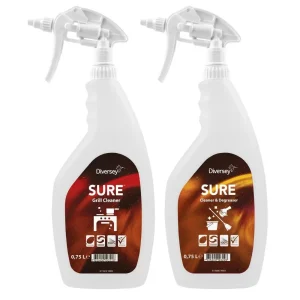


Why this degreaser earns its place
Kitchen degreasing at scale usually means stocking and dosing from bulk liquid concentrate, which is exactly what PVA Hygiene's water-soluble sachets are designed to replace.
Each sachet contains an unperfumed blend of carbonates, biodegradable chelates and surfactants, built specifically to remove greasy, food-based soiling from hard kitchen surfaces and equipment.It's intended for use in buckets or machines rather than trigger sprays, making it suited to larger-scale degreasing jobs — floors, prep surfaces, equipment exteriors — where a bucket-and-cloth or machine-dosed approach is the practical way to work.
It's safe for use on food contact surfaces as well as general hard surfaces, so it doesn't need to be swapped out depending on what's being cleaned.As with the rest of the PVA range, the sachet and its packaging are 100% biodegradable, and the format itself removes the need for disposable plastic degreaser bottles altogether while needing far less storage space than the equivalent liquid stock.Supplied as 60 sachets — one per application — it's used with PVA's reusable colour-coded bottle system (FE767, sold separately), and carries corrosive and irritant hazard labels as standard for a concentrated degreasing formula.
COSHH: six habits of safe chemical use
Control of Substances Hazardous to Health — the routine every commercial kitchen and cleaning cupboard is expected to run.


SDS
Read the label and the manufacturer’s safety data sheet — the pictograms tell you what you are holding.
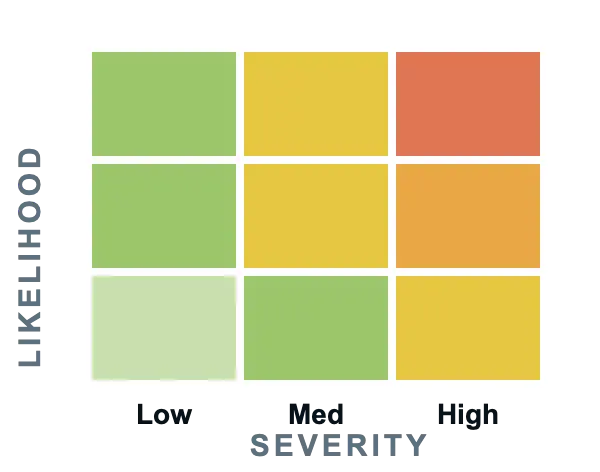
Who could be harmed, and how badly? Judge likelihood against severity before anyone opens the cap.
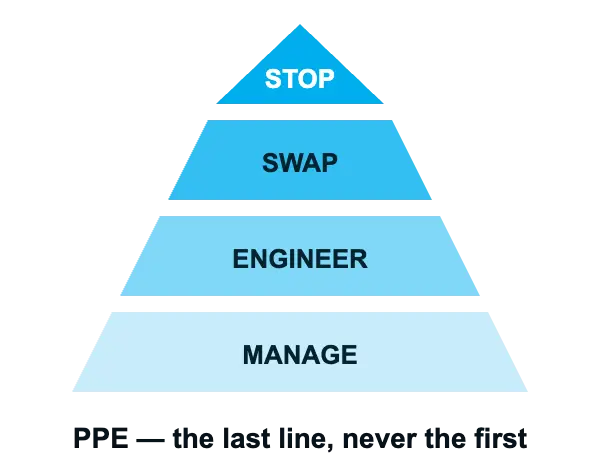
Eliminate or substitute first, engineer and organise next — PPE is the last line, never the first.

Keep the controls working: check ventilation, dosing equipment and storage stay as they should be.


Everyone who uses it knows the hazards, the correct dilution and the PPE — before the first shift, not after.

Products and processes change. Reassess when they do, and keep the record that proves it.