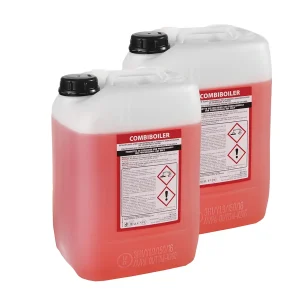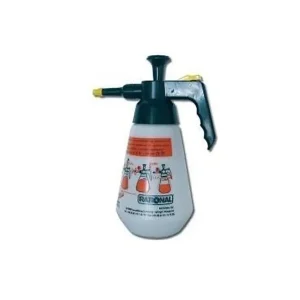

Why this cleaner earns its place
This is a cleaner supplied as a 30 ml concentrate rather than ready to use. The unit is the dose: one goes into the water, and the solution is made up from there. That is the whole point of buying cleaner this way — the strength is decided by the size of the unit, not by whoever is holding the bottle at the end of a long shift.
Free-pouring from a large container is where cleaning chemistry goes wrong in a working kitchen. Too much and you are paying for chemical that leaves a film somebody has to rinse back off; too little and surfaces get wiped rather than cleaned, which is the failure that shows up on a swab, not on the surface. A fixed unit takes that judgement out of the job, and it makes the cost per made-up bottle a number you can actually plan against when ordering. Concentrate also stores small — a shelf of 30 ml units holds what would otherwise be several ready-mixed bottles taking up the same cupboard a kitchen never has enough of. Once it is diluted and decanted, label the container with what is in it and at what strength; that is basic COSHH practice and the reason well-run kitchens colour-code by area.
COSHH: six habits of safe chemical use
Control of Substances Hazardous to Health — the routine every commercial kitchen and cleaning cupboard is expected to run.


SDS
Read the label and the manufacturer’s safety data sheet — the pictograms tell you what you are holding.
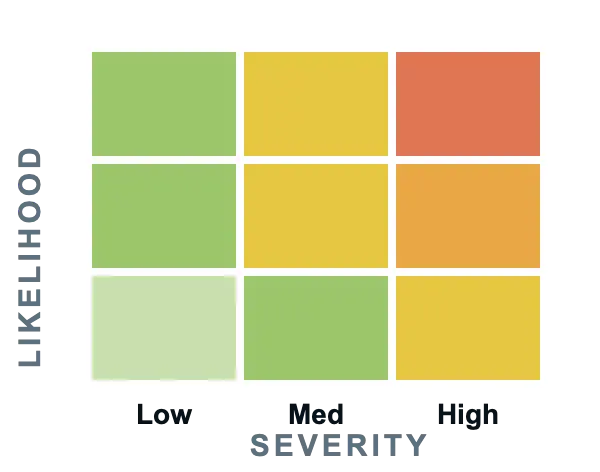
Who could be harmed, and how badly? Judge likelihood against severity before anyone opens the cap.
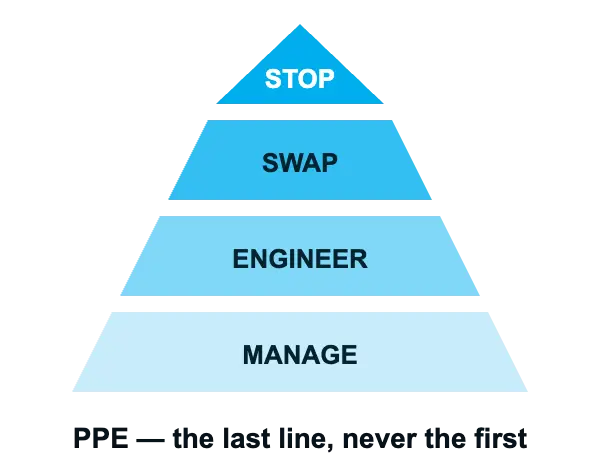
Eliminate or substitute first, engineer and organise next — PPE is the last line, never the first.

Keep the controls working: check ventilation, dosing equipment and storage stay as they should be.


Everyone who uses it knows the hazards, the correct dilution and the PPE — before the first shift, not after.

Products and processes change. Reassess when they do, and keep the record that proves it.