Why this glass cleaner earns its place
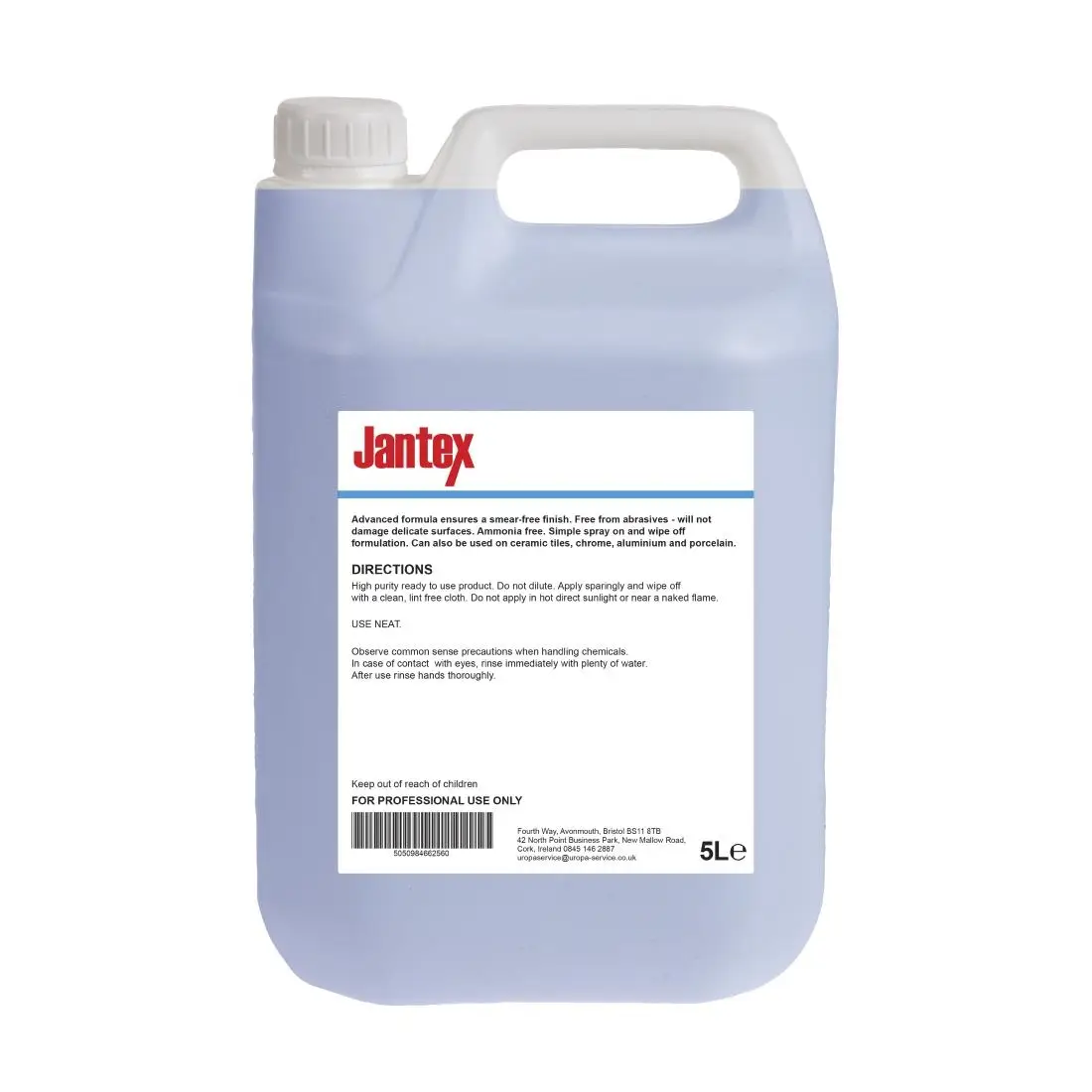
Jantex's Glass and Stainless Steel Cleaner is built around a simple job done well: spray it on, wipe it off, and it leaves glass, steel and other hard surfaces smear-free rather than filmed or streaked.
The advanced formula is free from abrasives, so it won't scratch or dull delicate surfaces the way a gritty all-purpose cleaner can, and it's ammonia-free, which matters both for the smell in an enclosed bar or kitchen area and for surfaces that don't get on with ammonia-based products.Coverage goes beyond glass and steel — it's also suited to ceramic tiles, aluminium and porcelain, so one bottle handles several surfaces around a kitchen or bar rather than needing a separate product for each. Being supplied ready to use means no time lost mixing or diluting before a cleaning round starts, which matters when glass needs turning around fast between covers.This 5-litre bottle is specifically sized as a refill: it's built to top up six 750ml spray bottles rather than being used as a single spray bottle itself, and it's designed to pair with Jantex's own CD816, CD817, CD818 and CD819 spray bottles, sold separately.
That makes it the economical option for sites getting through glass cleaner quickly across a bar, restaurant or hotel — buy the 5-litre refill, decant into trigger bottles as needed, and avoid repeatedly buying smaller ready-to-use sprays. Jantex's bottles are also moving over to 30% recycled post-consumer plastic, cutting virgin plastic use across the range.
COSHH: six habits of safe chemical use
Control of Substances Hazardous to Health — the routine every commercial kitchen and cleaning cupboard is expected to run.


SDS
Read the label and the manufacturer’s safety data sheet — the pictograms tell you what you are holding.

Who could be harmed, and how badly? Judge likelihood against severity before anyone opens the cap.

Eliminate or substitute first, engineer and organise next — PPE is the last line, never the first.

Keep the controls working: check ventilation, dosing equipment and storage stay as they should be.


Everyone who uses it knows the hazards, the correct dilution and the PPE — before the first shift, not after.

Products and processes change. Reassess when they do, and keep the record that proves it.