
Why this glass cleaner earns its place
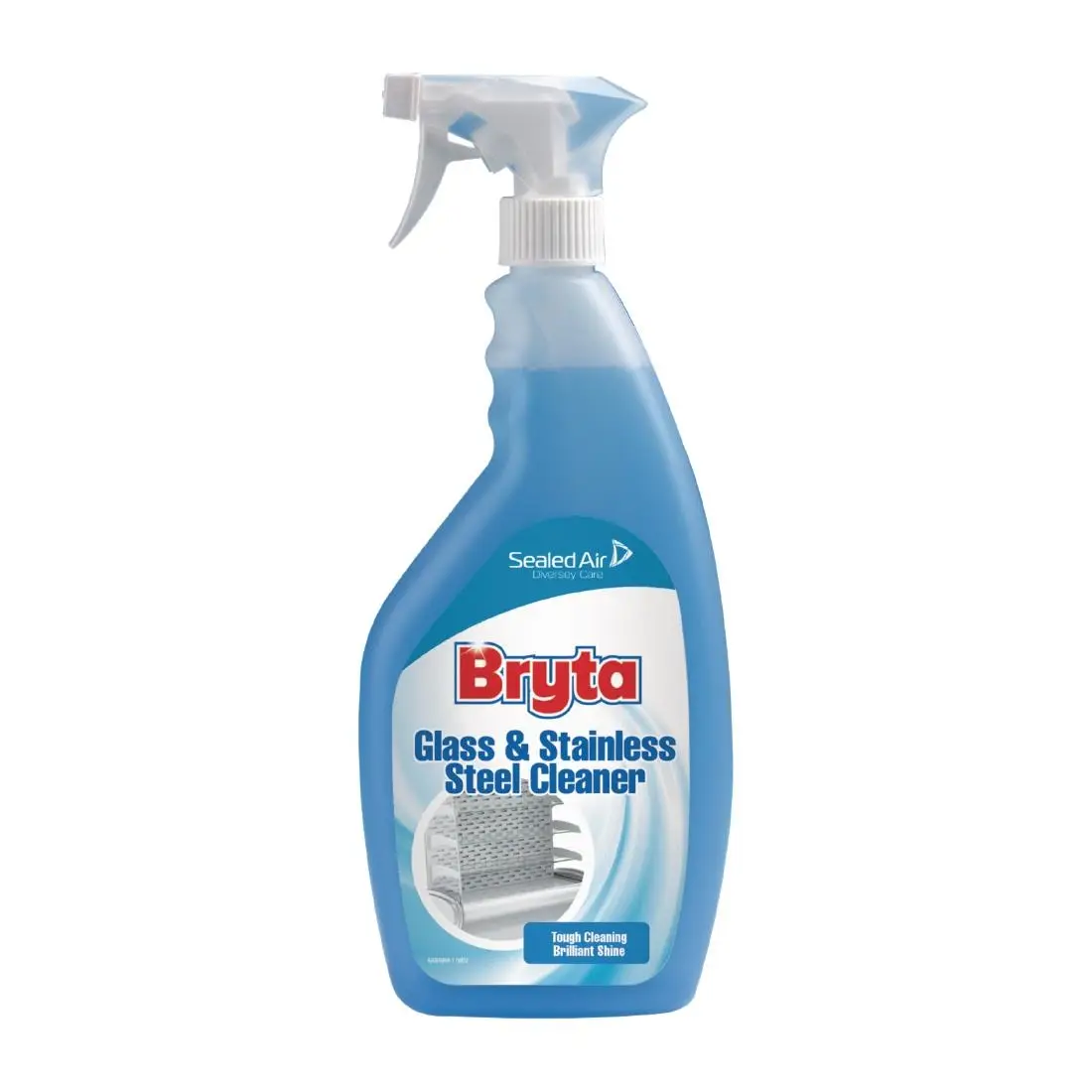
Bryta's glass and stainless steel cleaner is built for the surfaces that show every fingerprint and streak the moment they're not spotless — service counters, fridge doors, glass panels, and stainless steel worktops that need to look as clean as the kitchen actually is.
It's formulated to clean without leaving streaks behind, which matters most on the reflective surfaces where a poor cleaner leaves smears more obvious than the dirt it was meant to remove.Being unperfumed makes it a sound choice for food preparation areas, where a scented cleaner can leave a lingering smell on nearby surfaces or transfer onto packaging.
It's supplied ready to use, with no dilution needed, so it's straight out of the trigger bottle and onto the surface — no measuring, no mixing, no waiting on a diluted batch before starting a clean.The trigger-operated bottle itself is part of the practical appeal: controlled, even application across a wide surface without over-wetting it, which is exactly what keeps a streak-free finish achievable in a quick clean between services rather than a slow, careful one. It's supplied in a 750ml bottle, a sensible size to keep at a service point or cleaning station rather than in a bulk store.For any kitchen or front-of-house area needing glass and stainless steel kept consistently presentable through a working day, this is a straightforward, no-fuss way to do it.
COSHH: six habits of safe chemical use
Control of Substances Hazardous to Health — the routine every commercial kitchen and cleaning cupboard is expected to run.


SDS
Read the label and the manufacturer’s safety data sheet — the pictograms tell you what you are holding.

Who could be harmed, and how badly? Judge likelihood against severity before anyone opens the cap.

Eliminate or substitute first, engineer and organise next — PPE is the last line, never the first.

Keep the controls working: check ventilation, dosing equipment and storage stay as they should be.


Everyone who uses it knows the hazards, the correct dilution and the PPE — before the first shift, not after.

Products and processes change. Reassess when they do, and keep the record that proves it.