Why this floor cleaner earns its place
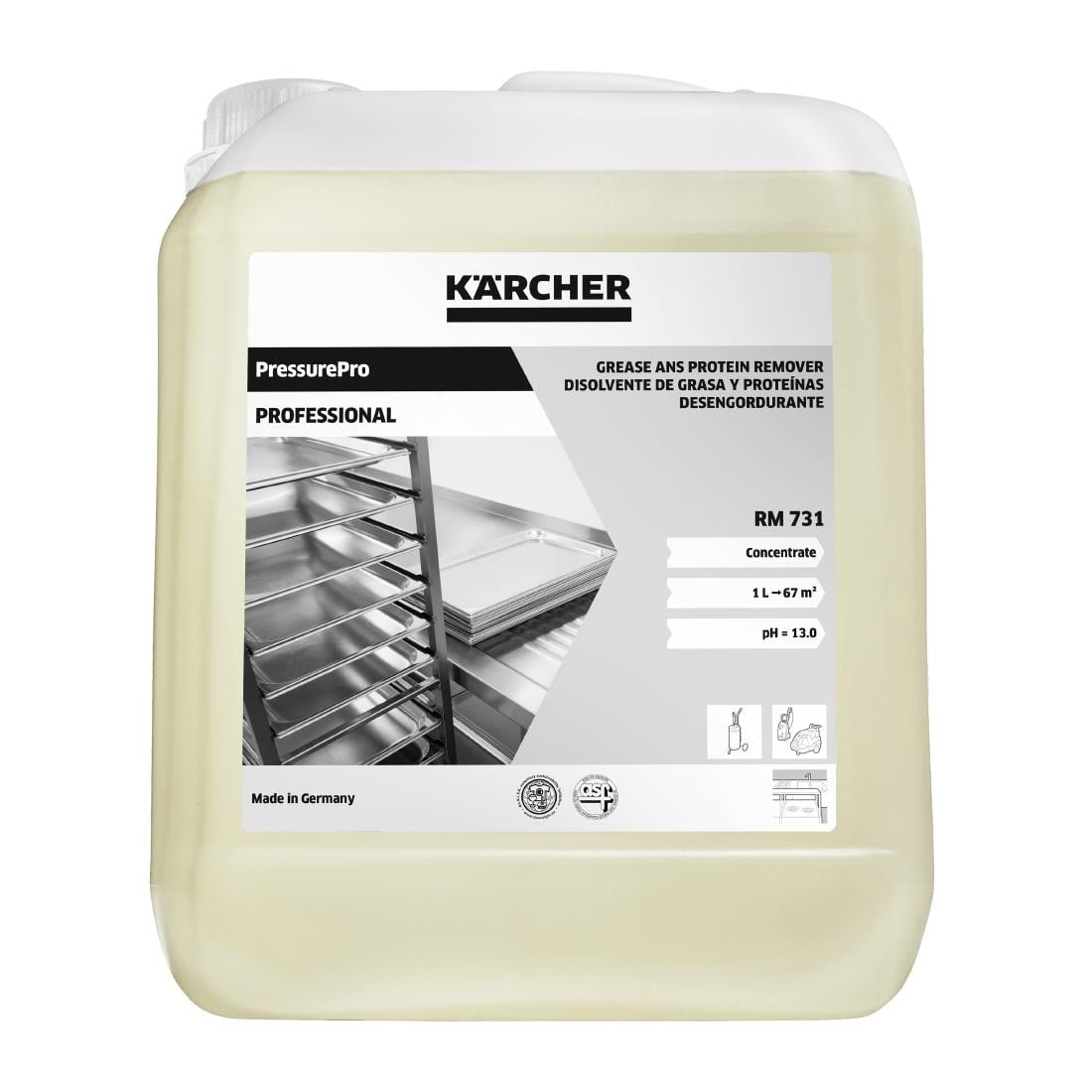
Karcher PressurePro Grease and Protein Remover RM 731 is built for the mess that food processing actually produces – not household grease, but the animal fat and protein build-up that coats everything in a butcher's shop, bakery or large commercial kitchen. It's rated for a genuinely wide surface range: stainless steel and plastic, tiled floors and walls, cold storage rooms, and equipment like extractor hoods and conveyor belts. It also handles heavily soiled utensils such as barbecue and smoking skewers, where baked-on residue is the norm rather than the exception.
It's formulated without fragrances or dyes, which matters in a food environment where you don't want a cleaning product leaving its own smell behind on surfaces that food will touch. It works across the full temperature range, so it performs whether it's going through a hot high-pressure wash or a cold manual application, and it washes off completely without leaving residue. Its tensides are biodegradable to EEC 648/2004, and the formula is NTA-free.
For anyone running an oil/water separator, RM 731 splits out quickly (rated 'asf' – easily separable), so it won't leave the tank clogged with an emulsified layer that needs manual clearing. It's designed to go through high-pressure washers and spray units as well as manual bucket-and-cloth application, so it fits both a scheduled deep clean and a spot job on a dirty conveyor belt. It comes in a 5 litre pack as an unperfumed, white liquid, and like other corrosive industrial cleaners it's covered by hazardous goods delivery rules.
COSHH: six habits of safe chemical use
Control of Substances Hazardous to Health — the routine every commercial kitchen and cleaning cupboard is expected to run.


SDS
Read the label and the manufacturer’s safety data sheet — the pictograms tell you what you are holding.

Who could be harmed, and how badly? Judge likelihood against severity before anyone opens the cap.

Eliminate or substitute first, engineer and organise next — PPE is the last line, never the first.

Keep the controls working: check ventilation, dosing equipment and storage stay as they should be.


Everyone who uses it knows the hazards, the correct dilution and the PPE — before the first shift, not after.

Products and processes change. Reassess when they do, and keep the record that proves it.