Why this washroom cleaner earns its place
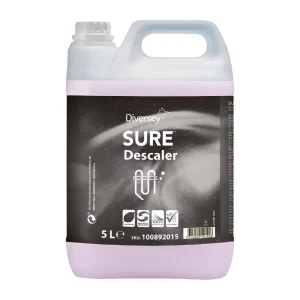
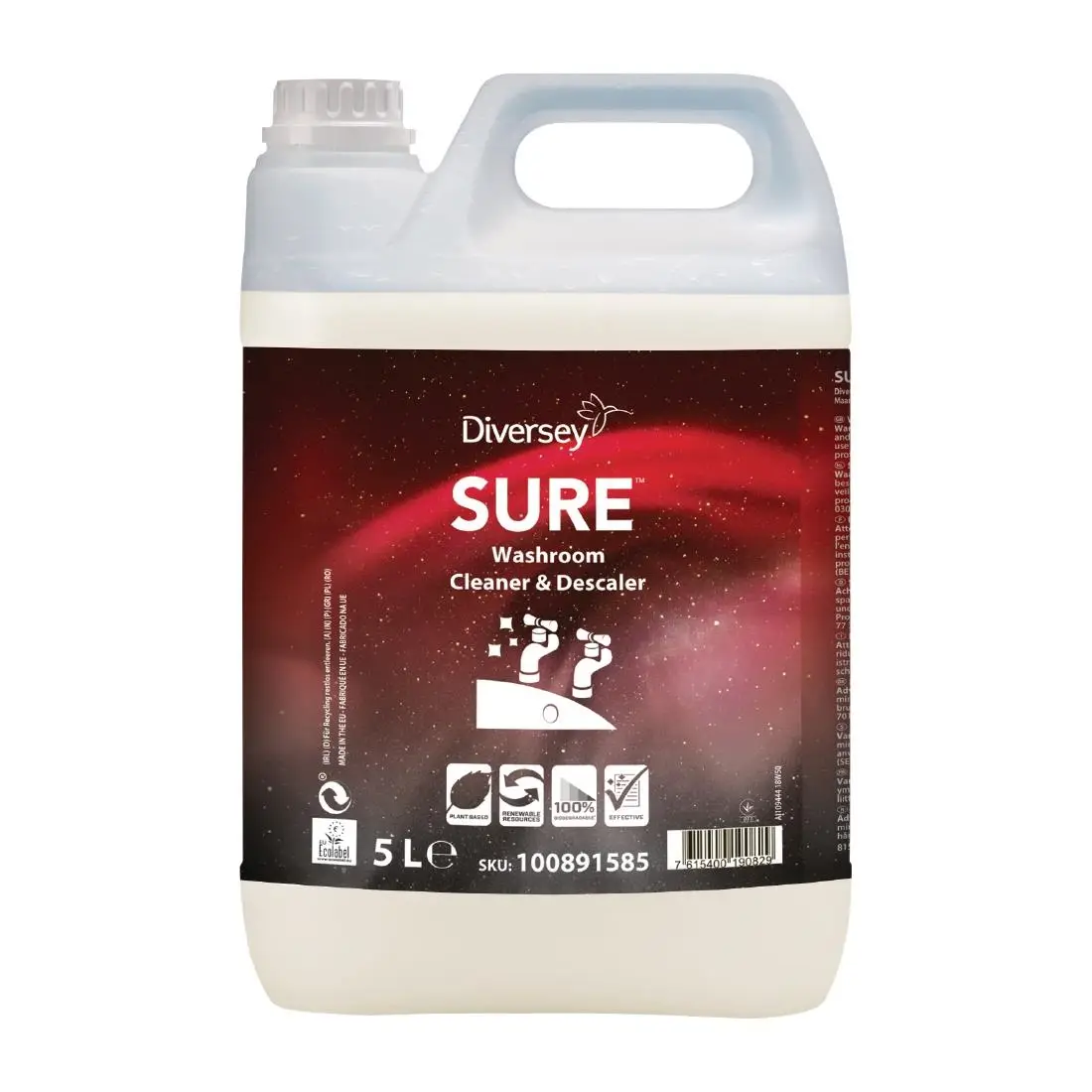
This is a concentrated washroom cleaner built for sites wanting to cut both their environmental impact and their chemical hazard exposure, without giving up cleaning performance on the water-resistant surfaces found throughout a washroom.
Made entirely from renewable, plant-based ingredients — sugar beet, coconut, maize, straw bran and wheat bran among them — the formula is free from hazardous substances such as artificial dyes, perfumes, quats, phosphates, chlorine and oxide compounds, and it's 100% biodegradable. It's designed to meet the lowest hazard classification available, which matters for staff handling it day to day, and it quickly clears dirt, grime and limescale from all the water-resistant hard surfaces a washroom throws at it.
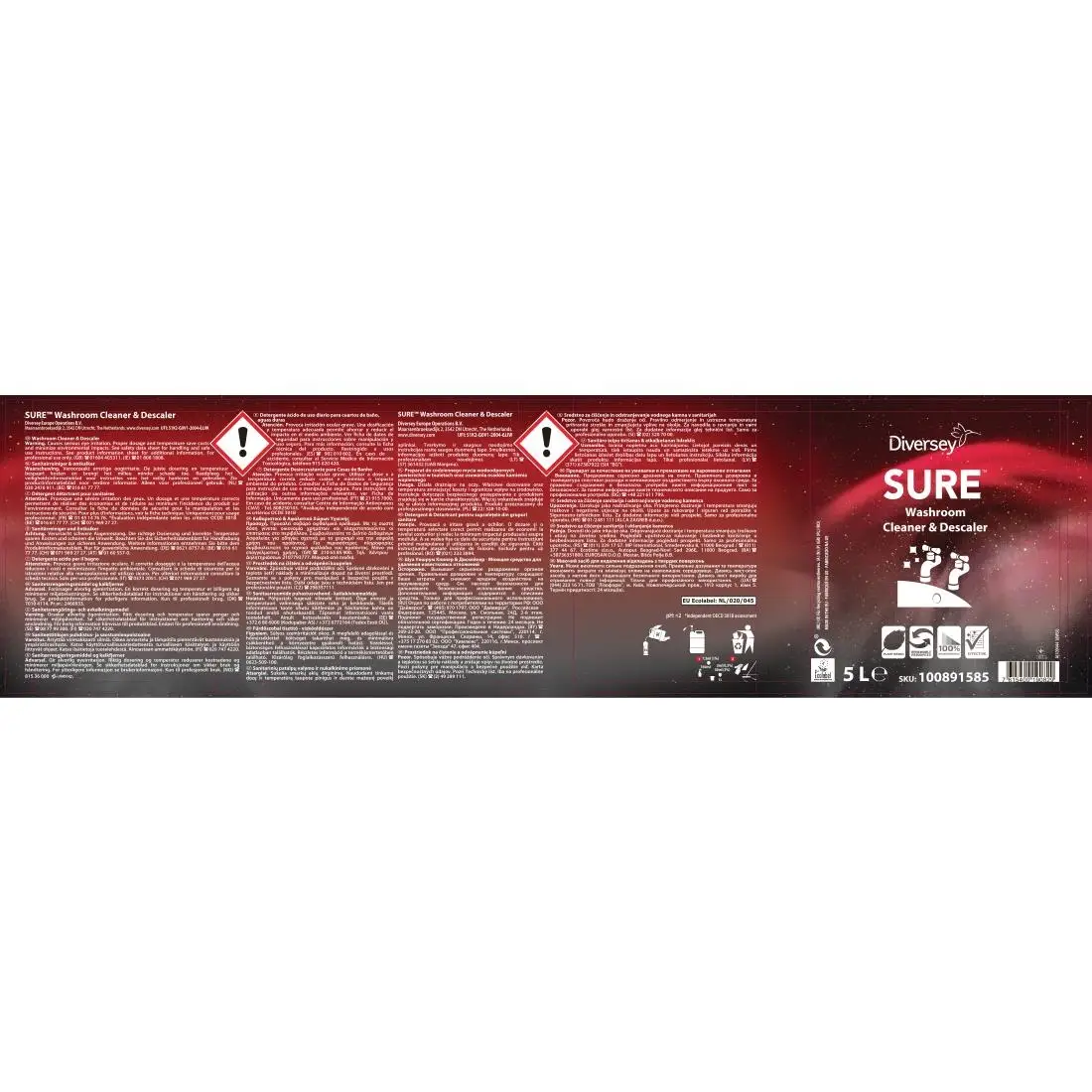
The colour-coded labelling makes the bottle easy for cleaning staff to identify correctly among other chemicals, and being a concentrate, it dilutes for use with dosing systems, keeping cost-per-use down and cutting the packaging waste that comes with buying ready-to-use bottles. It's designed to pair with the matching SURE refill bottle (FA400, sold separately) for topping up trigger sprays without repurchasing full concentrate containers.
COSHH: six habits of safe chemical use
Control of Substances Hazardous to Health — the routine every commercial kitchen and cleaning cupboard is expected to run.


SDS
Read the label and the manufacturer’s safety data sheet — the pictograms tell you what you are holding.

Who could be harmed, and how badly? Judge likelihood against severity before anyone opens the cap.

Eliminate or substitute first, engineer and organise next — PPE is the last line, never the first.

Keep the controls working: check ventilation, dosing equipment and storage stay as they should be.


Everyone who uses it knows the hazards, the correct dilution and the PPE — before the first shift, not after.

Products and processes change. Reassess when they do, and keep the record that proves it.