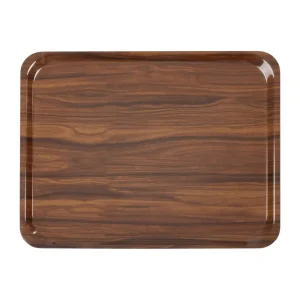
Why this serving tray earns its place
At 28 cm by 185 mm this is the size where a tray stops being an accent and starts doing the work of a plate. There is room across it for a bowl plus its accompaniments — a dip with breads around it, a cheese with fruit and crackers, a burger with fries beside it, a full brunch plate laid out rather than stacked. That width is also what makes it carry properly: a hand can take each end without a thumb landing in the food, which is what decides whether a tray goes out to a table or only ever gets used behind the counter.
The hammered finish is doing real work at this size, because a large flat area of polished steel is a mirror facing the ceiling — it picks up the lights, the extraction canopy and every fingerprint from the last person who moved it. Hammering breaks the surface into facets so light scatters, the tray reads as texture, and the food on top stays the brightest thing on the table. The same texture absorbs the marks a serving tray collects: cutlery drag, scuffs from plates being slid on and off, the dull patches that show on a mirror finish within a fortnight of real use. The 15 mm rim catches anything that runs — sauce off a board, melted ice, oil from a dressed salad — without walling the presentation in, and stainless takes all of that without staining or holding a smell into the next service.