Why this bucket earns its place
Oil transfer is the job where kitchen accidents come from, and it is almost never the carrying that causes them — it is the pour. A general-purpose bucket has no defined exit, so tipping it sends oil over the rim and down the outside, where it drips on the walk back and turns a tiled floor into the most dangerous surface in the building. A vessel built for oil handles that moment properly, and 7 litres is a sensible load: enough to shift a fryer's worth in a manageable number of trips, not so much that one person is fighting it.
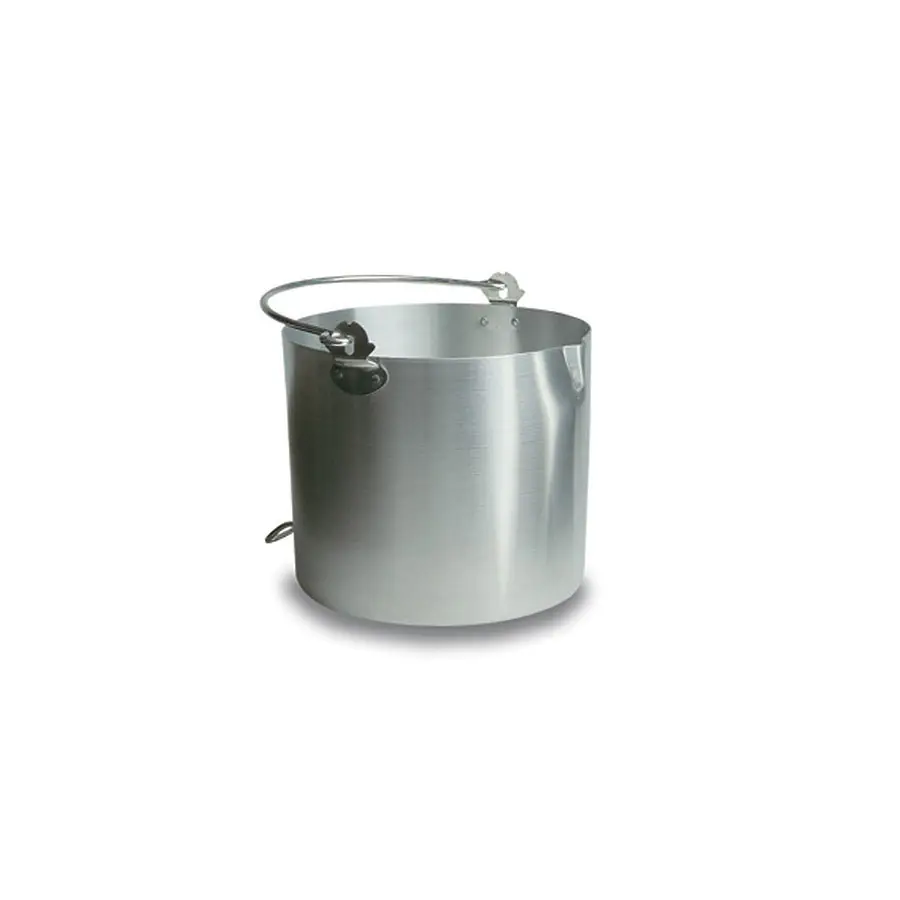
The two handles are why it pours under control. The bail carries the weight on the walk, and the steady handle turns the pour into a two-handed action — one hand takes the load, the other directs the lip and sets the rate. Pouring off a bail alone means tipping on a swinging pivot and hoping the stream lands where you want it. The pouring lip does the rest: it gives the oil a single defined exit so it leaves in one line rather than sheeting down the side of the bucket.
Aluminium keeps the empty bucket light, which counts for more than it sounds like — the full one is heavy enough on its own, and nothing should be added to that. It also wipes down properly instead of holding a film of old oil. The 200 mm diameter and 280 mm height make it a tall, narrow shape rather than a wide one, so it stands beside a fryer without spreading into a walkway. Wipe the outside down after every transfer, because that is where the slip risk collects, and wash it out so residue does not build in the base between uses.