
Why this manual earns its place
A blow lamp earns its place on a dessert section because it puts heat exactly where the plate needs it and nowhere else. Crème brûlée, a gratinated top, the last colour on a finished dish — all of it is surface work done in seconds. The flame here is stable at 1370 °C, which is the number that matters: hot enough to take sugar to glass before the heat has time to travel down into what is underneath. Fighting a cool or unsteady flame is how you end up with a warm brûlée and a soft top.
This is the manual model, and that is a fair trade in a section that runs wet and hot. There is no ignition mechanism to jam or fail on a torch that gets dropped, splashed and left on a bench through a whole service — you light it and go. From cold it is up to working temperature in a minute, so it can be picked up for one plate rather than lit at the start of service and left burning. Flame control is fine enough to drop right down for a single ramekin and open up for a tray, and it works at any angle, so a dish can stay where it is while the flame comes to it.
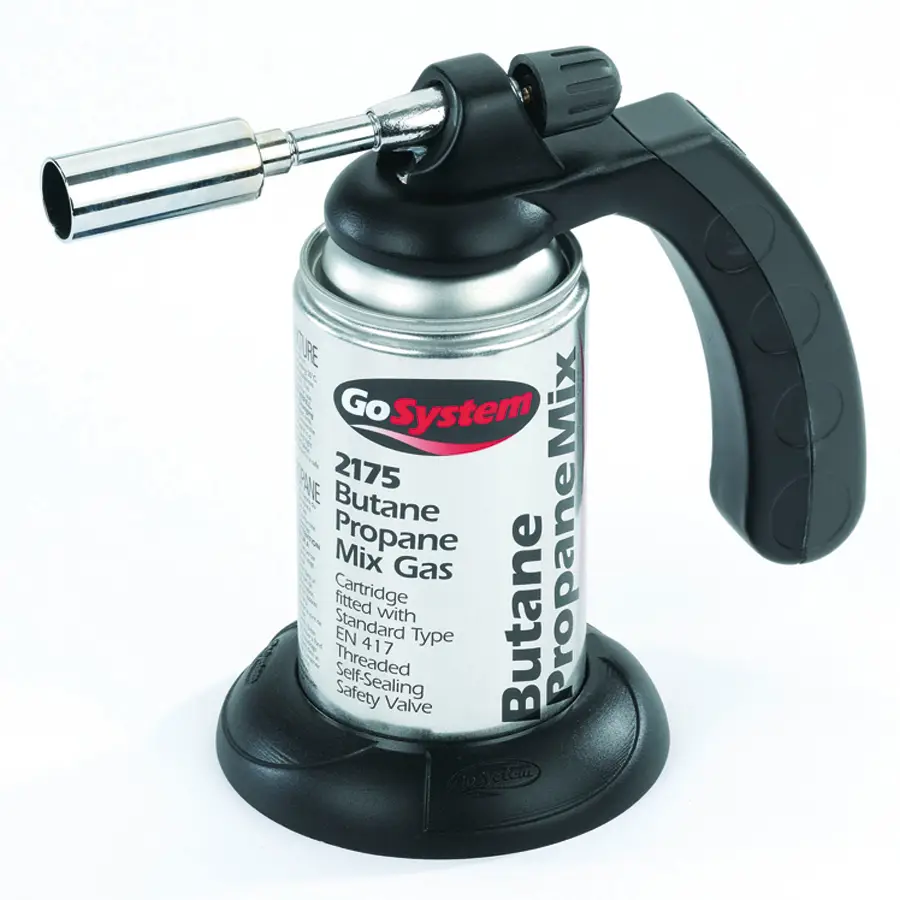
Order the cartridge with it. It runs on a butane/propane mix cartridge sold separately, and a spare or two is worth having — cartridges run dry at the worst point in a dessert run. The head is supplied with a stability base that holds the cartridge upright, so the torch stands on the bench between plates instead of rolling into something. An anti-flare safety feature is built into the head, which counts on a tool that gets angled and re-lit repeatedly through a service.


