
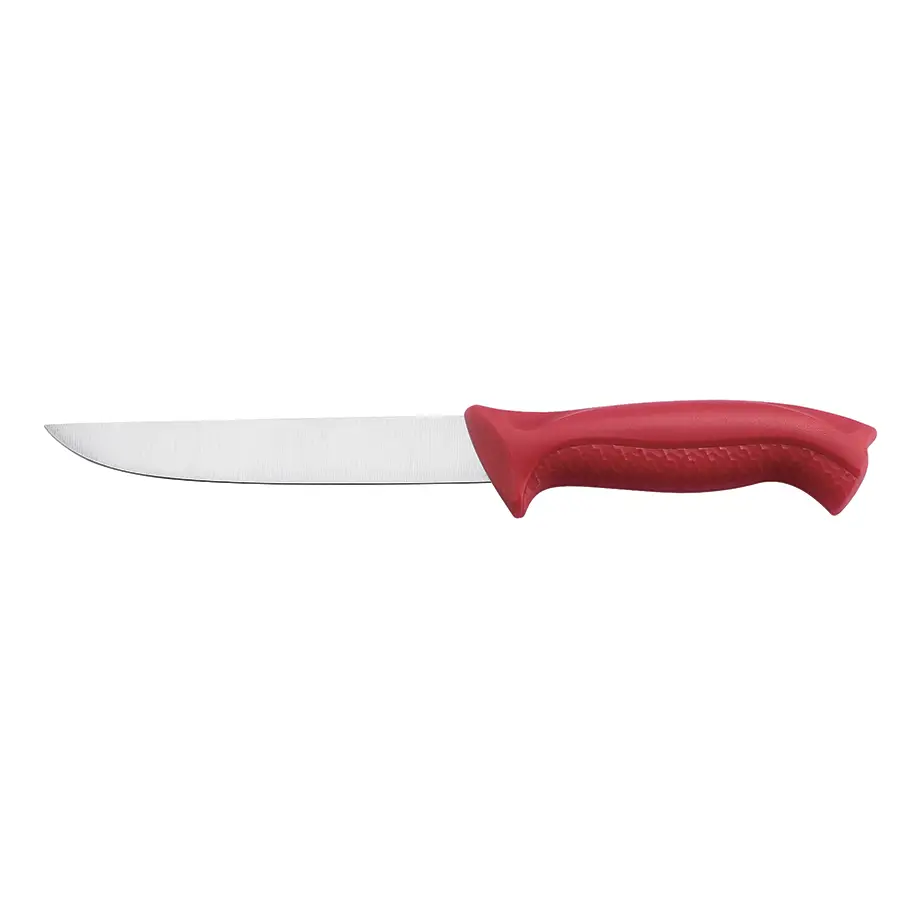
Why this knive earns its place
A boning knife earns its keep on the jobs a cook's knife cannot do. It works close to the bone — following a joint, releasing a shoulder, taking the ribs out of a rack, stripping silverskin off a fillet. At 6 in the blade is long enough to run the full length of most cuts in one pass and short enough that you keep the tip under control when you are working by feel rather than by sight, which is most of what boning is.
The blade is stainless steel, which is what you want on a knife spending its day in raw meat and blood. It resists the corrosion that constant wet work and washing bring on, and it takes a keen edge from a steel. Boning is edge-intensive work — bone contact dulls a knife faster than any board — so a few passes on a honing rod between cuts is normal practice and keeps the blade tracking cleanly rather than tearing through connective tissue.
The red handle is the whole point of a colour-coded range. Red is the raw-meat colour in the standard UK scheme, so this knife lives on the raw side of the line and never crosses to cooked. That separation is the simplest cross-contamination control a kitchen has: it needs no paperwork to enforce, a new starter picks it up in a shift, and an inspector can read your compliance off the bench without asking a question.


