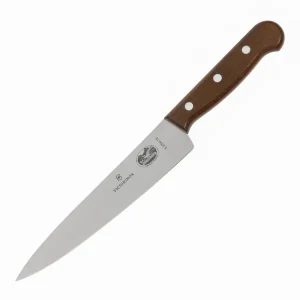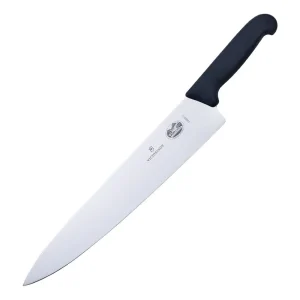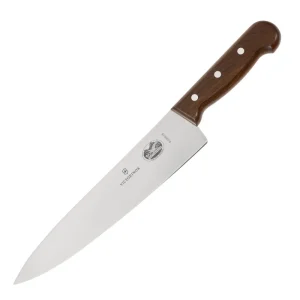



Why this carving knive earns its place
The carving knife is one of the most visible tools in a dining room. It's what separates the carver from the guests—long, elegant, and unmistakably professional. This Victorinox version is 447 mm tip to handle, with a 31 cm blade that's the traditional length for grand carving. The blade is carbon stainless steel, thin enough to slice meat paper-thin, stiff enough to work through joint and sinew without flexing. At 260 grammes, the knife carries substantial weight, but it's balanced so the handle sits naturally in your palm—the blade does the work, not your arm.
This is the knife you see at silver service, at carvery stations, and in the hands of butchers and game dealers processing large animals. The long blade allows you to slice a roast in sweeping strokes, each cut clean and even. The rosewood handle, riveted and finished, speaks to quality—it's the handle of a knife that will be used in public and expected to look the part. The stamped construction means it sharpens easily and holds an edge through service, then service again.
Paired with a carving fork (15 cm is traditional), this knife presents a roast to a table with ceremony and confidence. It's equally at home in a formal dining room, a fine-dining restaurant kitchen, or the prep station of a specialized butcher. These are the knives that professionals choose because they work reliably, cut beautifully, and build a reputation with careful use.