
Why this product earns its place
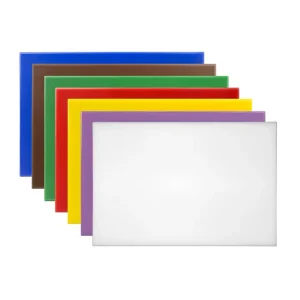
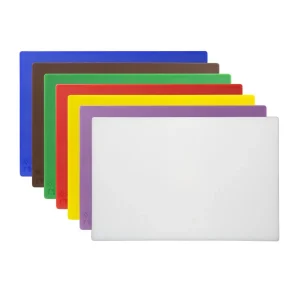
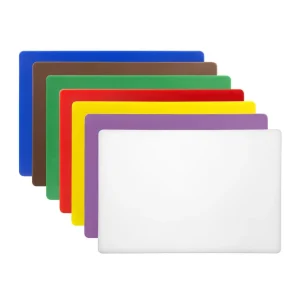
Yellow is the cooked meat board, and it sits on the clean side of the line. Everything cut on it has already been through its kill step and is going out as it is, so any contamination picked up here goes straight onto the plate with nothing left to correct it. That makes yellow the mirror image of the raw side of the system: not a board that needs protecting from what is on it, but a board that needs protecting from everywhere else in the kitchen. At 450 × 300 mm there is length to carve a joint and lay the slices out in order, which is the difference between a carvery portioning cleanly and a chef working over the edge of the board.
At 25 mm the board has real section to it. That thickness keeps it flat and stops it rocking when you are drawing a carving knife the length of a joint, and it gives enough depth for the surface to wear rather than cut through. Low-density polyethylene is the softer of the two polyethylene grades used for boards — non-porous, so juices sit on the surface, and gentler on a long carving edge than a hard composite or a glass surface, though it takes a visible score sooner. On a ready-to-eat board the scoring is what to watch: wash it hot and thoroughly, stand it on edge so both faces dry, and take it out of service the moment grooves hold residue through a wash.